




Grozev: Russian agents involved in the attempted terrorism in Montenegro are now recruiting new agents, Shishmakov in charge of Serbian universities
Interview by: Draško Đuranović

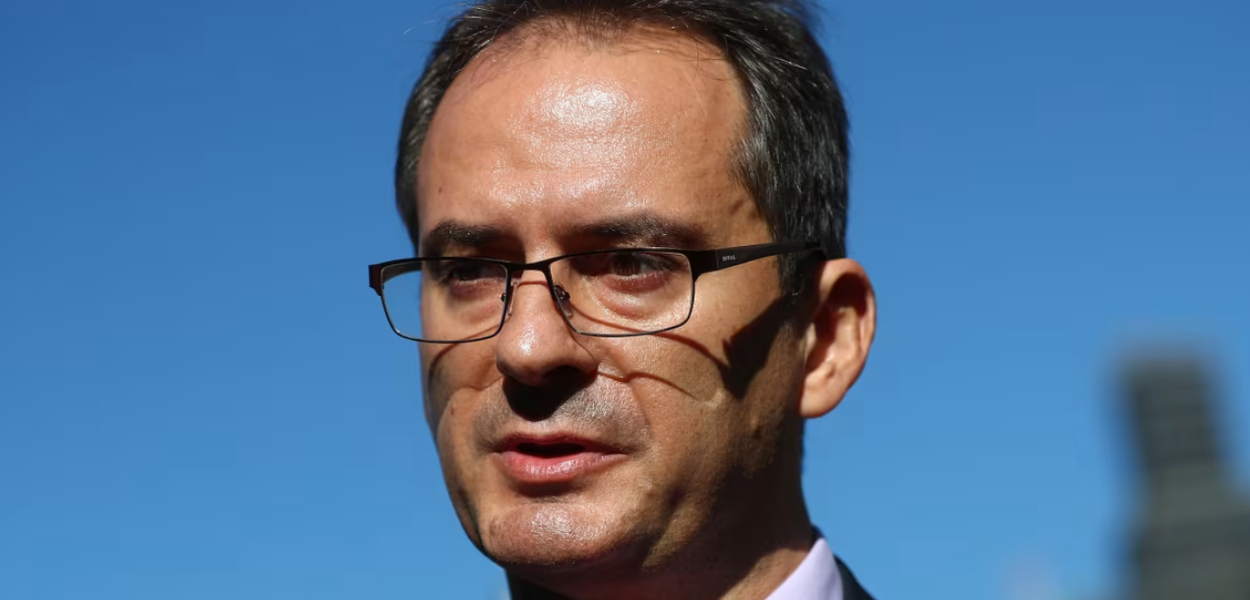
Eduard Shishmakov, one of the key figures in the attempted act of terrorism on the day of Montenegro’s parliamentary elections in October 2016, is now responsible, on behalf of Russian intelligence services, for recruiting people from Serbian universities. This was stated in an exclusive interview for Television E by the well-known investigative journalist Hristo Grozev.
Shishmakov, like other agents of Russia’s GRU, after the Bellingcat investigative team he leads revealed their identities in 2018, is now engaged in recruiting new operatives, whom they take to Russia.
- The same people are now training others. And this new wave of sabotage is even harder to detect. It is more difficult to identify someone who is not Russian and is now working for Russian special operations across Europe - Grozev said, having previously exposed in detail the roles of GRU agents Eduard Shishmakov and Vladimir Popov in the attempted terrorism in Montenegro.
The longtime editor at the British investigative outlet Bellingcat also reveals links between Russian regime-connected tycoons, certain organizations, and politicians of the Democratic Front Andrija Mandić and Milan Knežević, who were initially sentenced by the High Court to five years in prison each.
Grozev explains in detail how they uncovered the hidden and parallel identities of GRU agents Shishmakov and Popov, as well as the modus operandi of Russia’s Unit 29155, which carried out a series of operations across Europe.
TVE: In The Christo Files series, you fully exposed GRU agents Eduard Shishmakov, alias Shirokov, and Vladimir Moiseyev, alias Popov, as well as the links between Russian tycoons, pro-regime businessmen, and so-called non-governmental organizations in Montenegro, related to events from September to October 2016 and afterward. Ten years later, Montenegro still has no final judicial truth in this case. In 2019, the High Court sentenced Russian agents to 15 and 12 years in prison, along with 11 Serbian citizens and Montenegrin politicians Andrija Mandić and Milan Knežević, who were sentenced to five years each. In 2024, the High Court acquitted everyone. The Special Prosecutor appealed, and a decision is now pending. Are you surprised that there is still no final verdict in such a politically significant case?
GROZEV: Honestly, I am very surprised. In 2016 and 2017, Montenegro seemed like the only country in the world capable of properly prosecuting GRU crimes - no one else had done that at the time. What later happened in Salisbury with Skripal was two years later. Montenegro was the first country where prosecutors conducted a truly, truly detailed and proper investigation, not only preventing the crime that the Russian GRU was trying to commit by infiltrating the organizers. It was a perfect example of a professional small country conducting a very professional counterintelligence and police operation that many big countries can only dream of.
For me, it is shocking - after that success, with so much evidence collected and presented publicly, which allowed us and other investigators to track and independently confirm those findings. Personally, that investigation also led me to uncover the trail of this entire Russian intelligence unit and their other crimes across Europe.
So after 10 years of revelations about what these people who were in Serbia and Montenegro were trying to do - overthrow a government, and what else they did across Europe: murders, poisonings, explosions - it feels surreal that Montenegro is now pulling back and deciding to say: „Oh no, maybe that didn’t happen“. That feels surreal to me.
TVE: As part of Bellingcat and The Insider, you have exposed everything about GRU agents, not only Shishmakov and Popov, but everyone connected to them, and you have published extensively on Unit 29155. Is this unit still active? Does it still have influence? I’ve read that they had a base in France, near Switzerland. Are they still active?
GROZEV: They were active across Europe. Around 100 of them traveled across Europe for more than a decade, blowing things up, killing people, and operating from a base in France, as you mentioned. But after Bellingcat and The Insider exposed many of them in 2018 - not only individuals but also companies and passport numbers they used - this prevented further travel, because their identities were compromised. Any law enforcement agency could look at their border-crossing data and say: „Okay, this guy has already been here under this passport number from this series“. Even if they tried to come with a new passport number, they couldn’t do so under a new name, because the Schengen visa system does not allow that, they would be caught.
That’s why these people can no longer travel to Europe. They travel to the Middle East. They travel to Turkey. We still see them today. But what did the GRU do when they could no longer send the same people, like Shirokov or Popov, their pseudonyms? When they couldn’t send them, they used them to recruit and train other spies, and most of them aren't Russians.
What Unit 29155 is doing now is that part of the unit is focused on finding students from different parts of the world, bringing them to Russia under the pretense of studying, and training some of them as saboteurs.
For example, I can tell you something that I believe your audience is hearing for the first time - we have not published this - but Shishmakov/Shirokov is responsible for recruiting people from Serbian universities. That is his specialization. He brings them to Russia for recruitment so that at least some of them become operatives.
Other members of the unit are responsible for other countries. One is responsible for Uzbekistan, another for Kyrgyzstan, another for Belarus. That is what they do now. The same people now train others. And this new wave of sabotage is even harder to detect, because these are young, non-professional spies - some do it for money, others want to be spies - and it is harder to identify someone who is not Russian and is now working for Russian special operations across Europe.
TVE: I’ll ask you about the two Russians you mentioned. Popov was involved, as far as I know, in Russian actions in Moldova, similar to those in Montenegro in 2016?
GROZEV: That’s correct. In 2014, before the Montenegro operation, there was an attempt to provoke street protests and create a false perception that Moldova did not want to be part of the European Union. We specifically pointed to that operation. But over the years of investigation, I discovered much worse things he did. He was responsible for explosions at ammunition facilities in Bulgaria in 2012 and 2013. He was also involved in explosions in the Czech Republic. He is one of the most, I would say, successful GRU operatives, with a broad mandate ranging from political interference to blowing things up and carrying out assassinations.
TVE: So you have no doubt that the Russian state is behind the entire operation? That these were not individual acts?
GROZEV: No doubt at all. These people report to one boss. His name is Andrei Averyanov. We see him next to Putin in many, many videos. We see Averyanov traveling around the world as a representative of the Russian Federation. In phone calls we tracked, we see all these people - Shirokov, Popov - speaking daily with Averyanov as part of their job. So no, these are not rogue operatives, this is a government operation.
TVE: After the Serbian government announced that they were arrested in Serbia in October 2016, information emerged that Nikolai Patrushev, then an adviser to Vladimir Putin and former head of Russian intelligence, came to Belgrade and took these two and others from Russian units back to Moscow. Do you have any evidence of that?
GROZEV: Yes, we do. It’s slightly different from how it was reported at the time. But we see that Patrushev arranged a trip to Belgrade for a meeting. And before he traveled, the day before, they sent these spies back to Moscow on a special plane. We see that the tickets were purchased in the middle of the night, just before the flight. So yes, it is clear that there had to be an agreement: send these guys back, and I will come personally to apologize.
TVE: How strong is Russian influence today - not only in Europe, but especially in the Western Balkans?
GROZEV: It is very strong, especially because there are certain high-ranking members of Russian military intelligence who have friends in the region and understand how the region works. There is a senior deputy director of the GRU named Andrei Ilchenko, who has a close associate, I would say a close subordinate, who is actually from Montenegro, lives in Moscow, and is used as an adviser on how to interfere in elections and political processes in Montenegro.
We managed to obtain the phone directory of this Montenegrin GRU associate. And you can imagine how indicative the names and numbers in that directory are. Besides people convicted in 2019 who are now part of the government, unfortunately, we see members of the Serbian Orthodox Church, many pro-religious NGOs, and it is clear that the GRU operates through these organizations and individuals.
TVE: Montenegro’s political scene has changed, and the parliamentary majority is pro-Serbian, close to parties in Belgrade. For example, the President of the Parliament is Andrija Mandić, who led the Democratic Front in October 2016. Is it possible that such political changes could help Russia, given that Montenegro is a NATO member and shares classified information with NATO partners? Is Montenegro, in this configuration, some kind of Russian - or Serbian, but effectively Russian - spy inside NATO?
GROZEV: A difficult question. I am not Montenegrin, but I am very concerned that people we see traveling to Russia, meeting with Russian intelligence agents, and now holding government and parliamentary positions, have access to classified information of a NATO country.
Unless something has changed and they are now against Russia because of the war - maybe that happened, maybe their affinities changed - but at least until the end of 2021, we saw these people traveling to Russia and meeting Russian intelligence agents. That worries me, because this is a perfect situation for Russia. As a NATO country, Montenegro does not need to be expelled from NATO. It should remain inside. That serves Russia’s interest, because they gain access to classified information shared with Montenegro as a member state. Again, I cannot claim they are doing this, but I am concerned because these people had ties to Russian intelligence operatives in the past.
TVE: You have been doing very dangerous work for decades. You live in the United States, and I assume you are on the list of people toward whom Moscow is not exactly friendly. Do you think you are in danger, that your life is threatened?
GROZEV: I don’t think, but I know it is so. I know because there is currently a court case in Austria, where I lived for 20 years, against members of the local intelligence service who were arrested for selling information about me and my family to the Russians. As part of that investigation, it became clear that I was surveilled for almost three years, with attempts to kidnap me. One of those attempts actually took place in Montenegro in 2022. I was there at a conference, and it turned out they broke into my hotel room and tried to steal my laptop and phone. They also had a plan to kidnap me while I was there. So yes, danger is always around the corner. And also in your country in 2022. But fortunately, nothing happened.