




„Scheduled, busy, postponed: Prime Minister’s hour - an obligation on hold“: Spajić appeared in Parliament only 11 out of the 18 times foreseen
Since the beginning of the work of the 44th Government led by Milojko Spajić, this parliamentary oversight mechanism has been undermined in several ways - primarily through the postponement and cancellation of Prime Minister’s Hour sessions despite already scheduled dates. The Prime Minister often published written answers without an oral segment solely on the website of the Government of Montenegro, without responding in plenary session. There were also instances in which the opposition physically blocked the functioning of parliament, as was the case during the Prime Minister’s Hour session at the end of December 2024

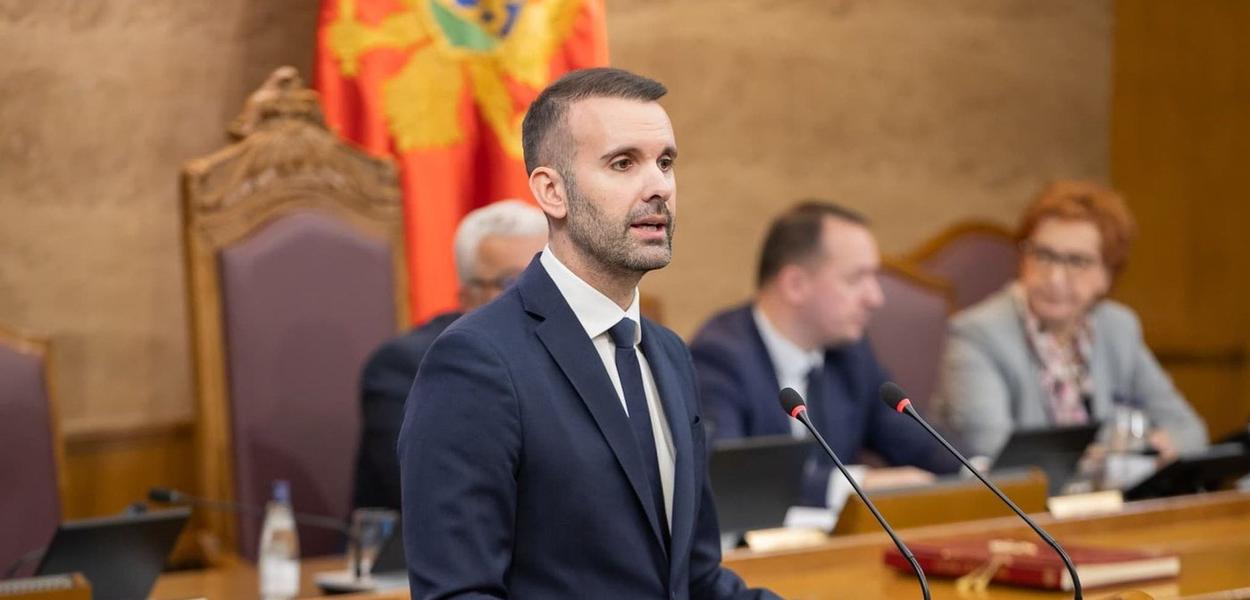
In slightly more than two years of the work of the Government led by Milojko Spajić, the Prime Minister appeared in the parliamentary plenary only 11 out of the 18 foreseen times (61 percent). Despite the established practice that Prime Minister’s Hour is held once a month during the regular session of Parliament, during 2025 Spajić answered questions of the members of Parliament only five out of the prescribed eight times, according to the analysis by the Institute Alternative.
The Rules of Procedure of the Parliament of Montenegro stipulate that Prime Minister’s Hour shall be held at least once every two months during the regular session of Parliament.
The Institute Alternative points out that, although such a provision may leave room for differing interpretations, neither the ruling majority nor the opposition disputes that the Prime Minister must respond to the invitation once a month - ultimately eight times a year, once for each month of the regular (spring and autumn) parliamentary sessions.
- This interpretation was fully respected by Spajić’s predecessors. The Prime Minister of the 42nd Government of Montenegro Zdravko Krivokapić answered questions of the members of Parliament eight times during his one-year mandate - four times during each four-month regular session of Parliament. His successor, Prime Minister of the 43rd Government Dritan Abazović answered MPs’ questions three times during the four months of his government’s duration. Despite the fact that after the fall of the 43rd Government Abazović remained in the position of Prime Minister in a technical mandate for more than a year, no Prime Minister’s Hour session was held during that period. According to media reports, it was an agreement of the heads of parliamentary clubs, which resulted in the fact that the executive power was not controlled in the parliament for more than a year - they emphasized.
They recalled that the Government led by the leader of the Europe Now Movement (Pokret Evropa sad), Milojko Spajić, was formed on 31 October 2023. During this period, instead of 18 times, Spajić answered questions of members of Parliament only eleven times. Moreover, as they explain, five Prime Minister’s Hour sessions were postponed once or several times over the past two years, and during 2025 only five of the prescribed eight Prime Minister’s Hour sessions were held.
- Since the beginning of the work of the 44th Government led by Milojko Spajić, this parliamentary oversight mechanism has been undermined in several ways - primarily through postponements and cancellations of Prime Minister’s Hour sessions despite already scheduled dates. The Prime Minister often published answers without an oral segment solely on the website of the Government of Montenegro, without responding in plenary session, and there were cases in which the opposition physically blocked the functioning of parliament, as occurred during the Prime Minister’s Hour session at the end of December 2024 - the Institute Alternative emphasized.
They add that the first Prime Minister’s Hour following the formation of the 44th Government was held on 28 December 2023.
The next one, they note, took place only four months later; Spajić fulfilled his procedural obligation at the beginning of April and May 2024.
- The scheduling of sessions was accompanied by numerous postponements, a lack of communication between the executive and legislative branches, and the alignment of dates with the Prime Minister’s previously assumed obligations. Thus, the Prime Minister’s Hour scheduled for 30 April 2024 was cancelled and moved to 9 May, when it was eventually held. This was just one of many postponements and subsequent cancellations of Prime Minister’s Hour sessions, which practically became a pattern of work - the analysis states.
According to the analysis, only 24 hours before the fourth Prime Minister’s Hour scheduled for 29 June 2024, Spajić informed Parliament and the public that he would not attend due to an official visit to Brussels, requesting that a new date be set for 1 July.
- The Speaker of Parliament Andrija Mandić opened the session on 29 June and announced its continuation on the date proposed by the Prime Minister, which was met with objections from part of the opposition MPs. On the first day of July, the session was continued - representatives of the opposition Democratic Party of Socialists did not allow the holding of this Prime Minister’s Hour, claiming that Spajić showed disrespect toward Parliament and the citizens of Montenegro by his prior cancellation. The Speaker of Parliament then scheduled new sessions for 19 and 26 July. Spajić again did not respond to the invitation - another postponement followed due to his trip to Paris for the opening of the Olympic Games, and the final date was set for 30 July, when the Prime Minister’s Hour was eventually held - the analysis notes.
By the end of 2024, two more Prime Minister’s Hours were held - on 29 October and 22 November. The final Prime Minister’s Hour of 2024, despite being scheduled, was not held on 22 December due to a boycott and physical blockade by opposition MPs. The Speaker of Parliament, Andrija Mandić, announced the imposition of sanctions against MPs for obstructing parliamentary work, while the Prime Minister published his answers to MPs’ questions on the website of the Government of Montenegro.
In 2025, it is explained, five Prime Minister’s Hour sessions were held. The March session also did not pass without a change of date - rather than on the 28th, it was held on 26 March due to the Prime Minister’s international obligations, as stated. Sanctions, including removal from parliamentary sessions for a period of 15 days, were imposed only on 3 February, despite the fact that they related to the actions of opposition MPs during the Prime Minister’s Hour session at the end of December 2024. However, Article 109 of the Rules of Procedure of Parliament also stipulates that „sanctioned“ MPs may not ask parliamentary questions at the first subsequent session dedicated to parliamentary questions, which caused objections from part of the opposition MPs.
- The continuation of postponements of Prime Minister’s Hour sessions also marked the one that was ultimately held on 28 July this year. Although it was originally scheduled for 27 June, Spajić soon informed Parliament that he would not attend due to an Intergovernmental Conference. On that occasion, the Prime Minister proposed a new date, 30 June, but received an explanation from the Speaker of Parliament, Andrija Mandić, that due to a previously scheduled visit, Parliament was unable to convene a Prime Minister’s Hour session. Ultimately, this Prime Minister’s Hour was held on 28 July, when Spajić stated that he would not answer MPs’ questions. Such a decision by the Prime Minister was met with objections from the opposition and the public, but also without an adequate reaction from the presiding officer Boris Pejović, Vice President of Parliament, as well as MPs from Spajić’s Europe Now Movement. A somewhat different attitude toward Parliament was shown by Spajić during the Autumn Session - one Prime Minister’s Hour session was held in October, November, and December 2025, without prior disputes or postponements. Nevertheless, the unpredictability of the Prime Minister’s attendance and the setting of conditions under which he will answer questions directly affect the (in)stability of parliamentary work and directly undermine the institution of Prime Minister’s Hour, whose primary function is oversight of the executive branch - the analysis adds.
The analysis was produced within the project „Strengthening public debate and improving the quality of public dialogue in the legislative branch“, which the Institute Alternative implements with the support of the National Endowment for Democracy. The analysis is the sole responsibility of the authors and does not reflect the views of the National Endowment for Democracy.