



Vojinović: Environmental issues in Montenegro still do not have the place they deserve among political and development priorities
Hundreds of kilometers of sewage networks need to be built, households connected, adequate treatment of wastewater and sewage sludge ensured, and the operation and maintenance of these systems financed for years to come. This is particularly important given that Montenegro's existing sewage network is, on average, more than 29 years old. In other words, we must expand the system while simultaneously renovating the infrastructure already in place. Without building new treatment plants and extending sewage networks, we cannot expect any significant reduction in the pressure on our rivers, lakes and sea - Vojinović emphasises

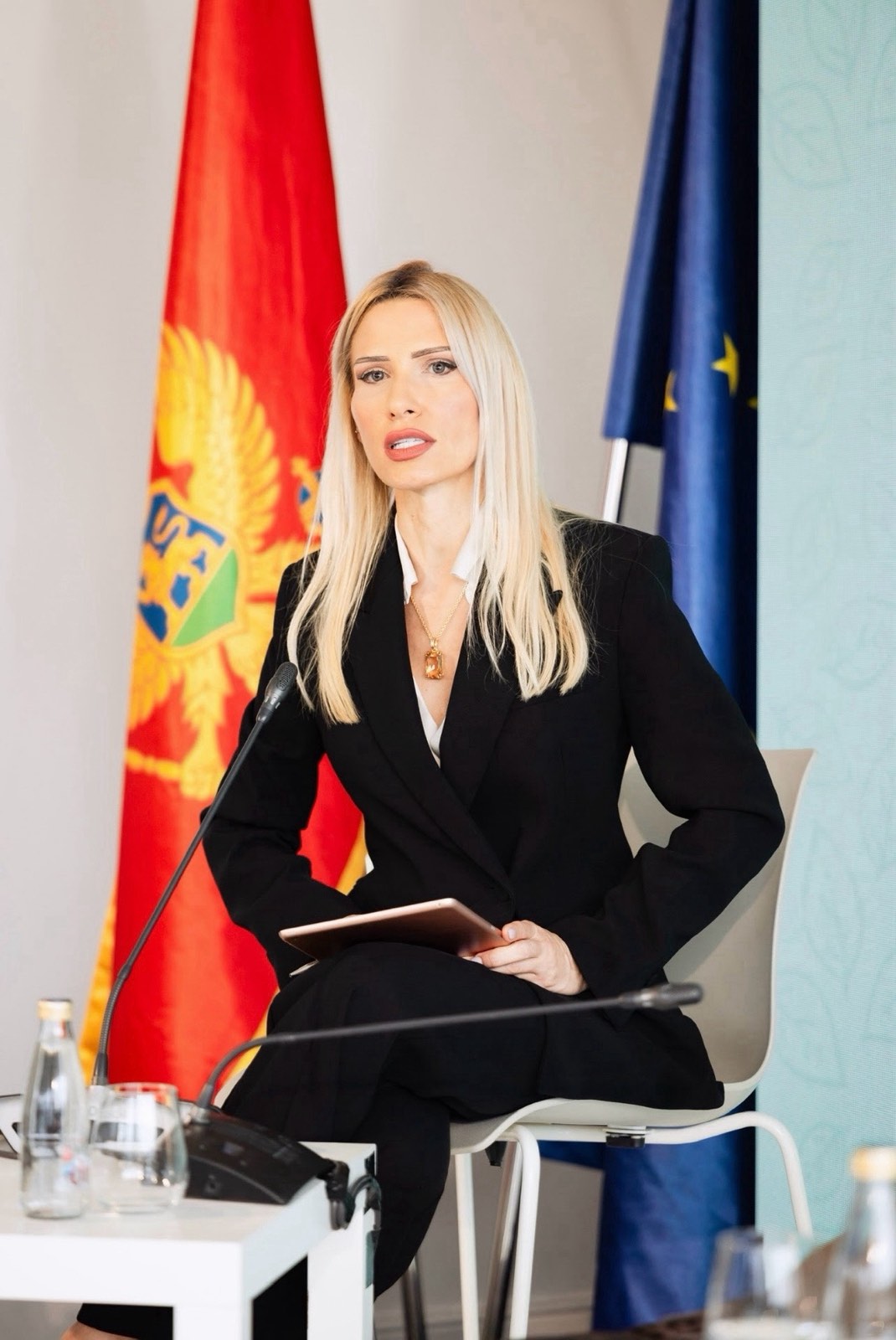
Environmental issues in Montenegro have yet to receive the place they deserve among the country's political and development priorities. Genuine political will is not demonstrated by adopting laws and strategies, but by the willingness to halt projects that threaten nature and sanction major polluters. This is the warning issued in an interview with ETV Portal by Director of the Centre for Climate Change, Natural Resources and Energy at the University of Donja Gorica, Ivana Vojinović. She emphasises that the closure of Chapter 27 does not mean the end of the country's obligations, the fulfilment of which will require between three and four billion euros.
Montenegro plans to provisionally close Chapter 27, which covers the environment and climate change, by the end of 2026. However, numerous challenges remain behind this political objective, ranging from underdeveloped infrastructure and limited administrative capacity to waste management issues, air quality and wastewater treatment. Although numerous laws and strategic documents have been adopted in recent years, their implementation has not delivered the expected results. Meeting the commitments undertaken will therefore require long-term investment and stronger institutions.
In her interview with ETV Portal, Vojinović highlights the distinction between the political objective of closing the chapter and achieving substantive progress in environmental protection. She warns that citizens must not be given the impression that the job is done once the negotiating chapter is closed, since the actual results of implementing European standards will be measured by the quality of the air they breathe, the cleanliness of their rivers, an organised waste management system and the preservation of natural areas.
- I would distinguish between the political objective of provisionally closing Chapter 27 by the end of 2026 and Montenegro's actual readiness to implement European environmental standards. Substantive progress and procedural progress are two different things which, of course, must be interconnected. On the one hand, an important procedural and political step forward was achieved last week with the adoption of the Negotiating Position for Chapter 27. This document provides for the alignment of legislation with the EU acquis, the planning of future obligations and the definition of how they will be fulfilled. Particularly importantly, it also includes requests for certain transitional periods. The adoption of the Negotiating Position does not mean that we have fulfilled all our obligations under Chapter 27, and certainly does not mean that the European Union has already approved the closure of the chapter. The procedure still requires the approval of all 27 EU Member States, followed by a formal decision at an Intergovernmental Conference - Vojinović said.
Substantive progress, she explains, requires effective enforcement of legislation, stronger institutions, adequate financial resources and tangible results.
- It is clear that we cannot resolve all waste management problems, build all the wastewater infrastructure, address every air quality issue, remediate industrial pollution and complete all the investments required by European standards by 31 December. This is precisely why transitional periods exist, particularly for obligations involving the most demanding infrastructure projects and financial commitments. A substantial part of the work will therefore continue for years after EU accession, and in some areas even for decades - Vojinović stressed.
For this reason, she warns, citizens should not be given the impression that closing the chapter means the work is finished.
- Citizens must not be told that closing the chapter means we have completed the job, particularly if they still see unmanaged waste disposal sites, lack access to an adequate wastewater system, breathe polluted air during the winter or live in a country where valuable natural areas are not effectively protected. Ultimately, the goal of Chapter 27 is not simply EU membership, but a better and healthier life for the people of Montenegro. That, after all, should be the very essence and true measure of success under Chapter 27 - Vojinović emphasises.
Speaking about the conditions that could affect the timetable for closing the chapter, Vojinović notes that Member States may request additional clarifications and amendments, and that the complexity of such requests could lead to delays. The decisive factor, she stresses, will be Montenegro's ability to provide convincing evidence that the commitments it has undertaken will be implemented.
- As I have already mentioned, through the adopted Negotiating Position, Montenegro has formally set out its obligations, its approach to fulfilling them and its requests for transitional periods. Member States may potentially request certain clarifications, additions and similar information. At this stage, the only factor that could potentially lead to a delay in closing the chapter is the complexity of such requests. It is up to the competent Montenegrin authorities to provide sufficiently convincing evidence that the commitments undertaken during the negotiation process will actually be fulfilled. The credibility of that evidence will be decisive in the Member States' decision on closing Chapter 27 - Vojinović stated.
She identifies insufficient administrative capacity as one of the most serious structural obstacles to implementing environmental policy. The European Commission has repeatedly highlighted this issue in its annual reports. In its 2025 report, it specifically called for urgent capacity-building at both central and local government levels, including additional recruitment and stronger inspection services.
- In its latest 2025 Report, the European Commission explicitly calls for the urgent strengthening of administrative capacity at both central and local levels, including additional recruitment and stronger inspection services. However, alongside increasing staff numbers, professional expertise, institutional stability, continuity of operations, interinstitutional coordination and the ability to consistently enforce European legislation in practice are equally important - Vojinović added.
As she points out, Montenegro needs specialised professionals in water and waste management, nature conservation, industrial pollution and climate change, as well as experts in the preparation and management of infrastructure projects. Strengthening inspection capacity is particularly important.
- The environmental sector requires specialised knowledge that takes years to acquire, while frequent institutional reorganisations and staff turnover seriously undermine the continuity of reforms. European standards will ultimately be implemented by the people and institutions responsible for enforcing them, including after Montenegro joins the European Union - Vojinović added.
A significant share of the obligations will have to be implemented at the local level, where administrative, technical and financial capacities are often even more limited, she explained.
- For example, we may have a high-quality Waste Management Law, but if local governments lack appropriate infrastructure, specialised services and financial resources, its implementation will not deliver the expected results. Another challenge is that Chapter 27 is not the responsibility of a single ministry. It requires the involvement of numerous government bodies, local authorities, regulatory institutions and businesses. This makes institutional coordination essential if they are to respond simultaneously to such complex requirements - Vojinović said.
Billions of euros for European environmental standards: Who will pay, and do we have the capacity?
Full implementation of European environmental standards represents the most financially and infrastructurally demanding part of the accession negotiations. Estimates of the required investment range between three and four billion euros. Vojinović believes that this amount should not be viewed merely as an expense, but rather as an investment in public health, quality of life and the country's long-term sustainability.
- Chapter 27 is the most financially and infrastructurally demanding chapter in the EU accession process. However, we must not view the costs of implementing European environmental standards solely as a financial burden, but as an investment in public health, quality of life, business competitiveness and the country's long-term economic sustainability. An estimated investment requirement of approximately three to four billion euros is not surprising, particularly given the condition of our infrastructure and the scale of the obligations ahead of us - she added.
Vojinović also referred to data provided by the Ministry of Ecology.
- According to the Ministry of Ecology, approximately 900 million euros will be required to achieve air quality targets alone, while around 780 million euros will be needed for wastewater treatment infrastructure. Montenegro cannot finance these obligations exclusively through the national and local government budgets. A combination of national funding, EU grants, such as the Instrument for Pre-Accession Assistance (IPA), the Western Balkans Investment Framework, the Western Balkans Growth Plan, favourable loans from international financial institutions (the European Investment Bank, the European Bank for Reconstruction and Development and others), and private-sector investment will be necessary. Following EU accession, structural and cohesion funds will also become available - Vojinović emphasised.
However, Vojinović warns that money is not the only problem. Montenegro must also have sufficient capacity to prepare high-quality projects and make effective use of the available funding.
- The issue is not simply how much money we have at our disposal, but also how capable we are of using it. Without well-prepared projects, resolved property and legal issues, appropriate project documentation, efficient public procurement procedures and, above all, functional institutions, available funds cannot be translated into tangible results. It is not enough to have a list of projects and estimates of their costs. We need a realistic, multiannual investment plan with clearly defined priorities, funding sources, implementation deadlines and responsible institutions. In any case, environmental infrastructure must become a public policy priority, because the cost of postponement is often significantly higher than the cost of the investments themselves - Vojinović noted.
The official financing framework, including the precise distribution of costs between EU funds, the state, municipalities, businesses and citizens, has not yet been established. Vojinović explains that EU funding and loans from international financial institutions can play a decisive role, but they also require national co-financing, as well as funding for the maintenance of the infrastructure once it has been built.
- The state budget will have to cover part of the obligations relating to strategic infrastructure, institutional strengthening and the co-financing of international projects. Local governments and municipal utility companies play an important role in building and managing water supply systems, sewage networks and municipal waste management systems. Businesses will also have to invest in cleaner technologies, energy efficiency and pollution reduction, in accordance with the 'polluter pays' principle. As for citizens, certain costs will also be reflected in the prices of municipal services. However, it is extremely important that such adjustments are introduced gradually, considering people's ability to pay and providing appropriate protection mechanisms for socially vulnerable households - Vojinović explained.
Despite the numerous laws and strategies adopted, environmental problems have persisted for years. Vojinović believes Montenegro lacks a combination of inspectors, funding and accountability, but particularly highlights the lack of consistency in implementing public policies.
- I would say that we are lacking all three elements, but the problem of accountability and consistency in implementing public policies is particularly pronounced. Since 2012, when EU accession negotiations were officially opened, Montenegro has adopted a significant number of laws and strategic documents aimed at bringing its national legal framework closer to European standards. However, the adoption of legislation has often not been accompanied by adequate financial resources, administrative capacity or effective mechanisms for monitoring its implementation - Vojinović added.
She also identifies political will as an important factor, namely the willingness to make environmental protection one of the country's genuine development priorities rather than simply including it in legislative and strategic documents.
- We must not overlook the issue of political will, which is often decisive in achieving real progress in environmental protection. I believe that environmental issues in Montenegro still do not have the place they deserve in the hierarchy of political and development priorities. Political commitment cannot be demonstrated merely by adopting laws and strategies. It must primarily be demonstrated through the willingness to make and implement decisions that may not always be politically popular but are necessary to protect the public interest in the long term. This includes situations in which a project threatening a protected area must be stopped, a major polluter must be sanctioned, construction must be restricted and similar measures must be taken. In other words, legislation must be consistently enforced against all polluters, without exception, and there must be a willingness to ensure that environmental protection is not subordinated to short-term economic and political interests. Genuine political will is reflected in results, allocated budgetary resources and accountability for unmet obligations - Vojinović stressed in her interview with ETV Portal.
Air pollution, wastewater and landfills: Problems that legislation has failed to solve
In the areas of air quality, water protection and waste management, it is difficult to speak of any fundamental breakthrough that citizens can already clearly recognise in their everyday lives. Vojinović notes that this is also reflected in the assessments of the European Commission and the European Environment Agency, which, in its 2025 country assessment for Montenegro, particularly emphasises the need for significantly greater progress in waste management and air quality.
- When it comes to air quality, the greatest challenges remain in Pljevlja, Bijelo Polje, Nikšić and Podgorica, particularly during the heating season, when concentrations of particulate matter PM10 and PM2.5 increase. The sources of pollution vary from one area to another and include individual household heating systems, industrial sources, traffic and unfavourable meteorological conditions. Measures must therefore be tailored to local circumstances, with stronger monitoring of emission sources, modernisation of heating systems and improvements in energy efficiency - Vojinović pointed out.
In the water sector, she says, one of the biggest problems is the underdeveloped infrastructure for collecting and treating municipal wastewater. Vojinović warns that only part of the population is connected to sewage systems, meaning that a substantial volume of wastewater is discharged without prior treatment.
- In the water sector, European standards require us to know the ecological and chemical status of our waters, continuously monitor pressures and sources of pollution and, above all, prevent untreated municipal and industrial wastewater from being discharged into the natural environment. In Montenegro, the biggest challenge remains the insufficiently developed infrastructure for collecting and treating municipal wastewater. Wastewater collection services cover only around 54 per cent of Montenegro's total population, while the remainder are not connected to sewage systems at all. As a result, most of this wastewater is discharged into receiving water bodies without treatment - Vojinović added.
According to Monstat data cited by Vojinović, 54.4 per cent of recorded wastewater from settlements was discharged untreated into rivers during 2025. Approximately 317,000 residents in agglomerations were connected to the sewage network, while the target is to increase that number to slightly more than 500,000 by 2035.
- Montenegro currently has 16 wastewater treatment plants, some of which, including those in Pljevlja and Herceg Novi, are experiencing operational difficulties. In Podgorica, construction of a new treatment plant has already begun. By 2035, all 37 agglomerations are expected to be equipped with appropriate wastewater treatment systems. These are expensive and technically demanding infrastructure projects that cannot be completed overnight. The fact that Montenegro requested the longest transitional period for the construction of wastewater treatment plants clearly illustrates the timescale involved - Vojinović explained.
However, she emphasises that building treatment plants is only one part of the task.
- It is not enough simply to build a treatment plant. Hundreds of kilometers of sewage networks must be constructed, households connected, adequate treatment of wastewater and sewage sludge ensured, and the operation and maintenance of these systems financed for years to come. This is particularly important given that Montenegro's existing sewage network is, on average, more than 29 years old. In other words, we must expand the system while simultaneously renovating the infrastructure already in place. Without building new treatment plants and extending sewage networks, we cannot expect any significant reduction in the pressure on our rivers, lakes and sea - Vojinović emphasised.
Examples of the deteriorating status of water bodies, she says, include the Morača, Zeta, Lim, Ibar, Bojana and Ćehotina rivers.
- The deterioration in water status cannot be attributed to a single source of pollution. Rather, it results from a combination of different pressures, ranging from municipal wastewater, industry and urbanisation to agriculture and other forms of diffuse pollution. The true indicators of success will be the proportion of the population with access to a functional sewage network, the volume of collected wastewater actually treated to the required standard, the number of treatment plants genuinely in operation and what happens to the sludge after treatment - Vojinović said in her interview with ETV Portal.
According to her, waste management is perhaps the most visible example of the gap between legislative obligations and the situation on the ground.
- The adoption of the new Waste Management Law and the State Waste Management Plan for 2025–2029 represent progress in terms of legislation and planning. However, we continue to face an underdeveloped separate waste collection system, low recycling rates, illegal dumping and a lack of adequate infrastructure for treating different waste streams. In other words, we need to establish a functional system covering everything from primary and secondary waste sorting to recycling and reuse, as well as the development of appropriate infrastructure and the closure of unmanaged disposal sites - Vojinović stressed.
Natura 2000 as a success, infrastructure as the biggest failure
Vojinović identifies progress in establishing the European ecological network Natura 2000 as one of the most significant tangible achievements in Montenegro's progress towards EU membership in the environmental sector.
- This was an exceptionally complex, multi-year process involving the identification and mapping of habitats and species of European importance, the collection of extensive scientific data and the preparation of the technical and scientific basis for the future protection of these areas. The process began in 2016 and was completed in 2026. Natura 2000 covers 44.15 per cent of Montenegro's territory. However, completing the identification of these areas does not mean the process itself is over - Vojinović explained.
However, she points out that completing the mapping process does not mean that the work of protecting these areas has also been completed.
- The real challenge will be to ensure the effective management of Natura 2000 sites. We will have to demonstrate that we can reconcile nature conservation with spatial planning, tourism, energy, transport and other development policies. In other words, the state must be capable of preventing projects that could jeopardise Natura 2000 values - she added.
Vojinović identifies the failure to provide complete infrastructure for municipal wastewater collection and treatment and waste management as Montenegro's greatest shortcoming, despite years of investment, strategic planning and international support.
- This is particularly problematic for a country whose development relies heavily on tourism, natural beauty and environmental quality. Every year that the construction of this infrastructure is postponed means continued pressure on ecosystems, additional environmental risks and potentially higher costs in the future - Vojinović noted.
For Montenegro's European environmental agenda to become a reality rather than remain merely declarative, the country must, according to Vojinović, change the way it measures success. Instead of focusing on the number of laws and strategies adopted, priority must be given to tangible results, pollution reduction, infrastructure improvements and the protection of natural resources.
Vojinović identifies five priorities: strengthening administrative and inspection capacity, establishing a long-term and financially sustainable investment framework, accelerating the construction of environmental infrastructure, consistently applying the “polluter pays” principle and protecting Montenegro's natural capital.
- The first priority must be a substantial strengthening of administrative and inspection capacity. Without qualified professionals, functional institutions and effective supervision, even the highest-quality legislation will fail to deliver the expected results. The second priority is establishing a long-term and financially sustainable investment framework for Chapter 27. It is essential to determine precisely how much it will cost to fulfil each individual obligation, what the sources of funding will be, what the implementation timetable will look like, and which institutions will be responsible for carrying out the projects - Vojinović stressed.
She identifies accelerating the construction of environmental infrastructure as the third priority.
- The fourth priority is the consistent implementation of the “polluter pays” principle and the improvement of the environmental liability system. We cannot expect the state and citizens to bear indefinitely the costs of pollution generated by individual businesses. The fifth priority is protecting Montenegro's natural capital. Establishing the Natura 2000 network, strengthening the management of protected areas and preserving biodiversity must be integral parts of development policy, rather than obstacles to be circumvented whenever particular investment interests emerge. Finally, I believe it is essential to ensure continuity in environmental policy, regardless of political changes, clear institutional accountability, transparent reporting on results and the involvement of experts, the academic community and civil society in monitoring the implementation of commitments - said the Director of the Centre for Climate Change, Natural Resources and Energy.
Regarding expectations that Chapter 27 will be closed by the end of 2026, Vojinović calls for realistic caution combined with moderate optimism. The provisional closure requires the consent of all 27 EU Member States, while the adoption of the final Negotiating Position represents an important part of Montenegro's preparations for the final stage of negotiations.
According to her, environmental protection must not depend on changes in political priorities, changes in leadership or the duration of a single term in office. It must be a long-term state policy, with clearly defined institutional responsibilities and measurable results.
- We must approach this with realistic caution or moderate optimism, because the provisional closure of Chapter 27 requires the consent of all 27 EU Member States. As I already mentioned in my answer to the first question, by adopting the final Negotiating Position for Chapter 27, the Government completed an important part of the country's preparations for the final stage of negotiations. Closing the chapter by the end of the year would confirm the work carried out over more than a decade to align Montenegro's legislation with the EU acquis. However, I believe it is equally important that this achievement be accompanied by a realistic plan to accelerate the implementation of the commitments undertaken. We must also bear in mind that Chapter 27 is specific in that most of its actual effects will not become visible at the moment of its closure, but rather over the following years, through infrastructure development, stronger institutions and the implementation of European environmental standards. In any case, the key question for me is not simply whether we close Chapter 27 in December 2026 or a few months later, but whether, once it is closed, we will have the institutions, financial resources and political accountability necessary to genuinely implement European environmental standards - Vojinović concluded in her interview with ETV Portal.