




Montenegro’s state leadership remains silent while the country is under attack from Vučić’s „black propaganda“
While the Montenegrin public is outraged by the brutal, pro-fascist film „Referendum - The Story of an Imagined Freedom“, produced by a Serbian organization close to Aleksandar Vučić, there has been no reaction from Montenegro’s state institutions, above all from the State Prosecutor’s Office. From the country’s top leadership, one can also hear only silence. And while it is clear why Chetnik duke Andrija Mandić remains silent in the face of a Chetnik revision of Montenegrin history, the silence of Prime Minister Milojko Spajić and President Jakov Milatović is incomprehensible - and socially unacceptable

On January 13, 1944, in Cetinje, at Balšića Market Square, beneath the branches of an elm tree, standing beside the gallows that had been set up in the square, German Sergeant Otto Meinhofer sneeringly asked twenty-two-year-old partisan Gojko Kruška, just before placing the noose around his neck: „Do you regret going to your death?“
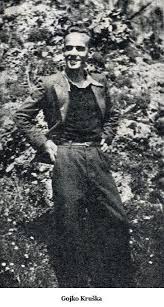
The black-shirted fascist immediately received a defiant reply: „No, because I am dying as a human being, while all of you will die as inhuman creatures!“
THE HERO’S SONG...
With the noose already around his neck, Gojko Kruška spotted his mother Milica and his ten-year-old sister Olga among those who had been forcibly brought to witness the execution: „Are you crying in front of these miserable criminals?!“
His mother suppressed her sobs, and Gojko began to sing: “O bright dawn of May/Our mother Montenegro/From Lovćen a fairy cries out/Montenegro, beloved mother…“ („Oj svijetla majska zoro/ majko naša Crna Goro / Sa Lovćena kliče vila/ Crna Goro majko mila...“)
That was all he managed to sing. Immediately afterward, the platforms beneath the feet of both him and his comrade Musa Bato Hodžić, a partisan courier, were kicked away.
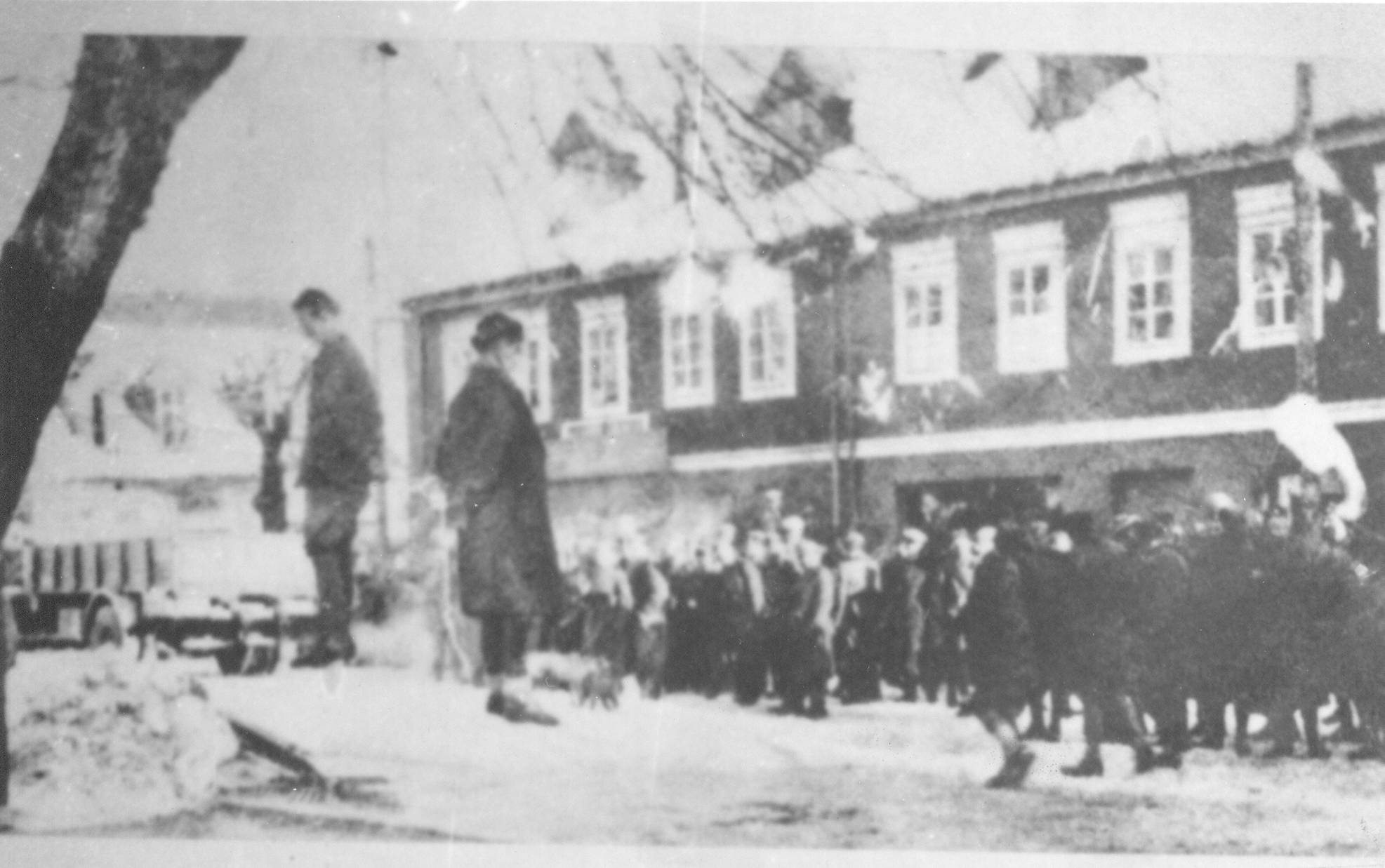
For three January days, while sleet drifted through the air, the bodies of the two young men hung from the elm tree. The occupying commander of Cetinje refused to allow their burial, so that even in death they would serve as a warning to the living who might dare to raise their heads.
When permission was finally granted to bury the young hero, his little sister Olga removed her coat and covered Gojko’s body so that he would not be cold there below, alone in the dark Montenegrin soil.
More than six decades later, when Montenegro had already turned toward a referendum and independence, Olga Kruška, by then married and known as Olga Jovićević, spoke about the final song her brother, the national hero, had sung: „Ever since I can remember, I have known of the bright May dawn, of Lovćen, of freedom... Today, whenever I hear that song as the national anthem, my heart trembles and tears sparkle in my eyes“, Olga told Pobjeda journalist Jovan Stamatović.
...AND THE SHAME OF HISTORICAL REVISIONISM
Gojko Kruška was one of the 49 National Heroes produced by Cetinje. Every tenth resident of Montenegro’s historic capital perished during the Second World War, either at the hands of the occupiers or their collaborators.
Why am I telling this terribly painful, yet honorable and heroic story once again?
Here is a quotation that explains the reason: „While the brave citizens of Cetinje were dying across the territory of the former Yugoslavia fighting for freedom, their families in Cetinje were protected by Italian soldiers, which is why the greatest demographic explosion after World War II was actually recorded in Cetinje…“
This is only one of many shocking quotations from the so-called documentary „Referendum - The Story of an Imagined Freedom“, which in reality is a brutal chauvinistic and fascist pamphlet. Formally, the work is attributed to an organization called the Fund for Social Stability, financed by both the Serbian Progressive Party and the Serbian state. Informally, but in reality, the disgraceful film was produced by obedient servants and lackeys of Serbian President Aleksandar Vučić.
That is why it is hardly surprising that Vučić sees nothing problematic in the film. The former radical associate of Vojislav Šešelj, the man who once advocated executing 100 Muslims for every Serb, the man linked to the „Sarajevo Safari“, knows very well that lies can be profitable. Instead of spending time in The Hague alongside Šešelj, Vučić remained in Belgrade and today serves as Serbia’s president.
And of course, he constantly speaks about morality and honesty.
The film was clearly created with a purpose: through a brutal revision of Montenegrin history - both from the period of the Second World War and from the years preceding Montenegro’s independence referendum - to erase antifascism and the Montenegrin spirit of freedom as the foundations of modern Montenegro.
A SERBIAN MONTENEGRO AS THE GOAL
There are many motives behind the current Serbian government’s bestial propaganda directed at the history of Montenegro and Cetinje - both personal and collective. There are also deep-seated complexes regarding Montenegrin independence.
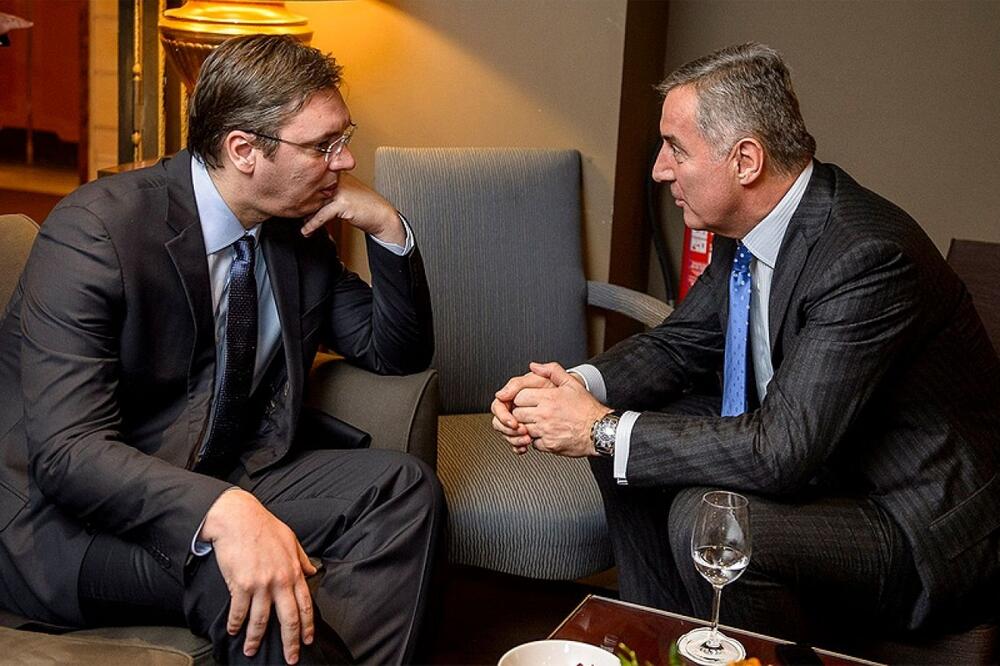
By voting for independence on May 21, 2006, Montenegro also made Serbia an independent state. Thus Milo Đukanović, the hated Montenegrin separatist, became the person most responsible for Serbia’s own independence. That must be particularly painful for Aleksandar Vučić and his Greater-Serbian associates.
That is why he needed his servants from the Fund for Social Stability to produce something capable of destabilizing Montenegro.
Historical revisionism has always been one of the most effective tools for creating instability. Vučić’s propaganda attack dogs needed the film „Referendum - The Story of an Imagined Freedom“ in order to erase Montenegro’s antifascist history.
Just as the Serbian nationalist elite has spent decades, dating back to the era of the Načertanije, attempting to erase the historical truth about Montenegro’s thousand-year statehood.
Yet this disgraceful film was not made merely to rewrite history retrospectively. Its key objective is to - chart a new future for Montenegro.
A Serbian Montenegro.
A Montenegro where monuments are erected to Chetnik executioners such as Pavle Đurišić; a Montenegro where the Serbian Orthodox Church appropriates and alters Montenegrin sacred heritage with impunity.
Such a Serbian Montenegro is intended to exist within the European Union and NATO - as a proxy of Aleksandar Vučić’s imperial Serbia and Vladimir Putin’s expansionist Russia.
The campaign to withdraw recognition of Kosovo, stretching from Zeta to Pljevlja and from Milan Knežević to Dario Vraneš, represents merely different versions of the same Greater-Serbian policy, all pursuing the same goal: if Montenegro’s independence cannot be revoked, then Montenegro should function as an envoy of the „Serbian World“ within the European Union.
Yes, history is being revised in order to shape Montenegro’s future according to the interests not of Montenegrin citizens, but of Greater-Serbian politics directed from Belgrade.
SHAMEFUL SILENCE
This is precisely why the absence of any reaction from Montenegro’s state institutions is incomprehensible. Above all from the State Prosecutor’s Office.
One need not be a distinguished legal expert or an experienced prosecutor to understand that it is unlawful when a film radiates hate speech, misogyny, ethnic and religious hatred, and when chauvinistic and fascist messages are broadcast on television channels with nationwide coverage.
The very same people who scrutinize the work of independent and critical media now appear to have no objections whatsoever to media outlets that, by broadcasting this scandalous film, strike at the foundations of civic Montenegro and its constitutional order.
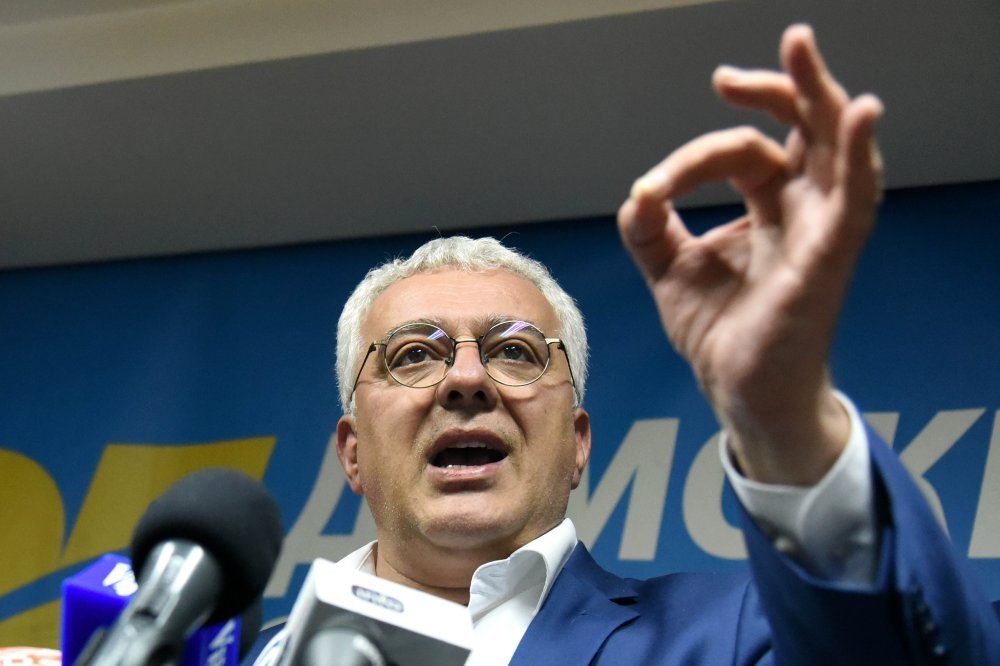
The silence of Montenegro’s state leadership is incomprehensible and should not be considered acceptable.
To be fair, we know why Parliament Speaker Andrija Mandić remains silent. The Chetnik duke thinks exactly like the Chetniks who produced the propaganda piece or the Vučić loyalists who commissioned this „black propaganda“. Therefore, Mandić’s silence is a sign of approval.
FEAR OF REPEATING THE WORST OF THE PAST
But what explains the silence of Prime Minister Milojko Spajić? Does he, like Zdenka Popović from Bečić’s Democrats, claim not to have watched the film, or is he simply uninterested in these „local affairs“ while negotiating the sale of shares related to the Adriatic-Ionian highway or making plans with the United Arab Emirates regarding the sale of Montenegro’s coastline?
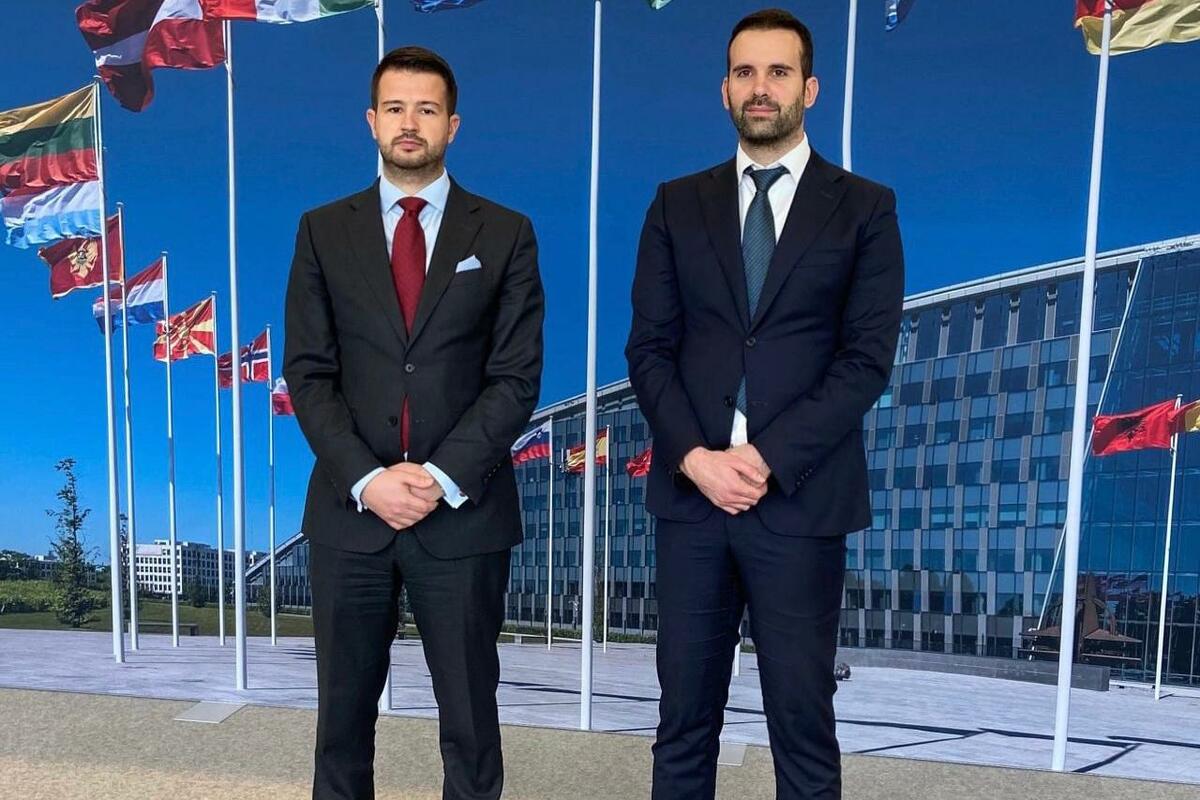
And what about President Jakov Milatović? For ten full days, until journalists pressed him with questions on the program „Crosswords“ („Ukrštene riječi“), he remained silent regarding the disgraceful film. Was it because he did not want to criticize Vučić - or because he did not dare?
Whatever the reason, the facts remain important: none of Montenegro’s leading state officials is defending - or willing to defend - the historical foundations of a freedom-loving, civic Montenegro. That is deeply troubling.
For it is well known: a society that forgets its past is condemned to repeat the worst parts of its history.