




Four years without answers
By: Attorney Veselin Radulović

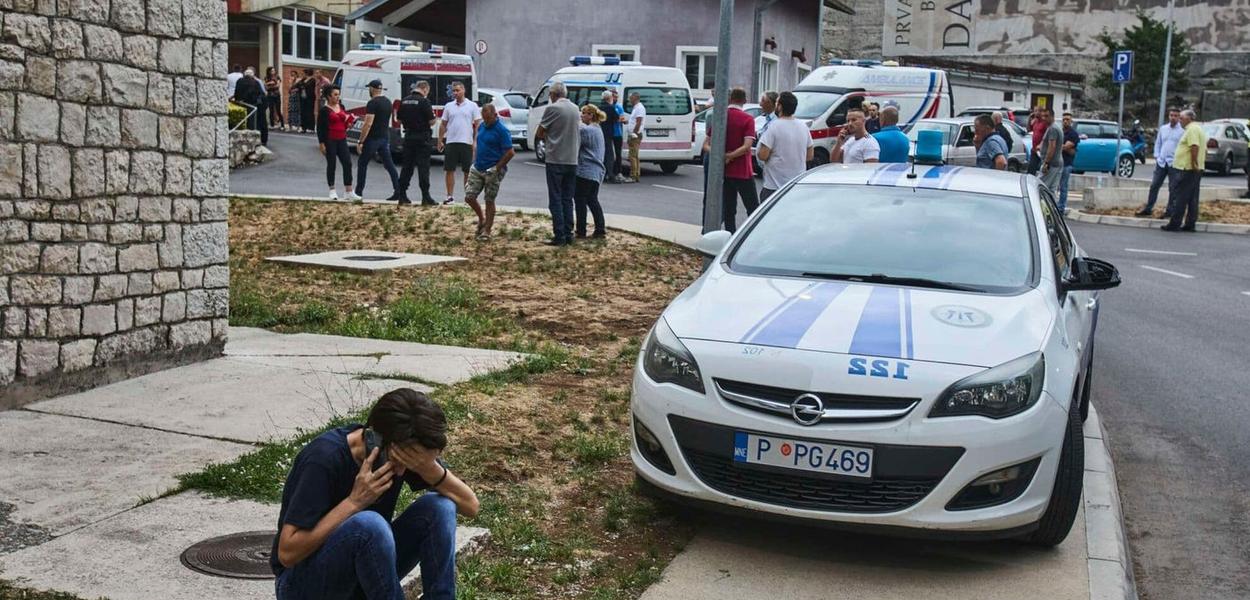
Today marks four years since the Medovina massacre. Four years since ten people were killed in Cetinje, including two children, and six others were wounded. Four years since we have been waiting for an answer to the most important question: who is responsible for the failures of a system that was supposed to protect its citizens?
This is not merely a question for the victims’ families; it is a question for every well-meaning citizen of Montenegro. The state is not responsible only for determining, after a tragedy, who pulled the trigger. It is also responsible for determining whether the perpetrator had accomplices or instigators, whether the institutions did what they were required to do before the tragedy, whether they responded as they were required to during the tragedy, and whether, after the tragedy, they did everything possible to establish the truth and hold those responsible accountable.
Four years later, none of these questions has been answered.
On that fateful day, 12 August 2022, one perpetrator killed ten people and wounded six others over the course of 48 minutes. Those 48 minutes were not merely the duration of a bloody rampage; they were the period during which the state apparatus had to demonstrate why it exists. Unfortunately, it failed to do so.
Who received the first report? When was it actually received? When did the police arrive? Who issued the orders? Who commanded the operation? Why did specialized police units not arrive while the attack was still underway? Why did precious time pass between certain orders? Why was there no clear coordination? Why were citizens left without adequate assistance during the shooting? Why did the police system have no clear plan for responding to a crisis situation? And, finally, has anyone borne any responsibility for all of this?
Four years later, the answer to the last question is devastating: there has been no accountability. According to the findings of the Ombudsman, the case files did not make it possible to determine who was in charge of the operation, what protocol was followed, what measures and actions were ordered, or what their outcome was. The Ombudsman concluded that the police response was not timely, effective, or coordinated, thereby violating the right to life of Nataša Martinović and her sons, Marko and Mašan.
Just as devastating as the failures themselves is the way in which they were subsequently explained. In the first days following the tragedy, the public was given information about the time of the first call and the arrival of the police that was later changed. Time in Medovina was not a technical detail. Time was a matter of life and death. Every minute during which an armed attacker remained active while citizens were left unprotected had to be the subject of the most precise reconstruction possible. Instead, the public received different versions of events, while the victims’ families were forced to seek answers themselves. It is unacceptable for the state to turn families who have lost their loved ones into the sole investigators of their own tragedy.
Medovina is not merely a story about the 48 minutes of a bloody rampage. It is also a story about what preceded those minutes. The institutions knew that Vuk Borilović had retained both his firearms licence and his weapon after being convicted of violent behaviour. It is not enough to say that no one could have predicted that a massacre would occur. No one is asking for that. What is being demanded of the state is an explanation of whether it acted as it was required to act once it already had information about violent behaviour and the legal possession of a firearm.
The most terrifying evidence that all the lessons from Medovina had not been learned came on 1 January 2025. Cetinje once again experienced a mass killing. Thirteen people were killed. Once again, citizens asked the same questions: where was the police, when did it arrive, how did it respond, was the system prepared, did the second perpetrator have accomplices or instigators, and had the earlier failures truly been addressed? The second tragedy made the state’s responsibility following Medovina even greater.
Today, we must all ask those responsible: what did you do between the two tragedies to ensure that the same mistake would not happen again? After the first tragedy, there were no resignations and no assumption of moral responsibility at the top of the system. There was none after the second massacre either. Yet the new leadership of the security sector went „one step further“ in its shameless conduct, labelling students who demanded accountability as collaborators of criminal clans.
Four years later, there is still no accountability, but there is self-congratulation. We hear talk of historic achievements. We see the security sector presented as a system supposedly achieving results that Montenegro has never seen before.
It is good when the police achieve results. It is good when murders are solved. It is good when criminal groups are prosecuted. But there is something that anyone leading the security sector must understand. Results in the fight against crime do not erase the state’s responsibility for failures in protecting the lives of its citizens. A system that has still failed to answer questions surrounding the 23 lives lost in Cetinje cannot be proclaimed a system of „historic achievements“. I will go so far as to say that this is shameful. Public trust cannot be built on statistics while the families of the Medovina victims have been waiting four years for answers.
Finally, it is deeply inappropriate for the leadership of the security sector to speak of its own „historic achievements“ at a time when the victims’ families are gathering to mark the fourth anniversary of a tragedy that the state has still failed to explain. This is a matter of basic institutional responsibility, but also of basic decency and respect for the victims.
Medovina is therefore much more than the anniversary of a massacre. It is a test of the state, a test of the prosecution, a test of the police, and a test of political responsibility. It is a test of our ability, as a society, to say that no citizen’s life is a statistic. The victims’ families are not asking for the impossible. They are not asking the state to return what was taken from them. They are asking it to tell them the truth. Who knew? Who was required to act? Who failed to act? Who was in command? Who made mistakes? Who is responsible? And why, four years later, has no one been held accountable for these failures?
These are the questions that all of Montenegro should be asking today. If the state has no answers to them, then it must humbly and painfully admit to its citizens that it has still failed to prove that it is ready to protect their future. Four years after Medovina must not become yet another anniversary followed by more years of silence.
Today, on the day we remember the victims of Medovina, we owe them our collective and lasting compassion, and we owe their families our support in their search for the truth and for the answers they have been waiting for for four years.
Families have a right to the truth, and it is the state that owes them that truth.