




Čirgić: Patients are paying the price for the collapse of public healthcare

The public healthcare system in Montenegro is not in crisis due to a series of unfortunate circumstances, but rather as a result of a number of deliberate political and fiscal decisions that have undermined its foundations for years. Instead of patients, short-term political interests were placed at the center of decision-making, and the consequences of such an approach are now felt most strongly by citizens - especially the most vulnerable.
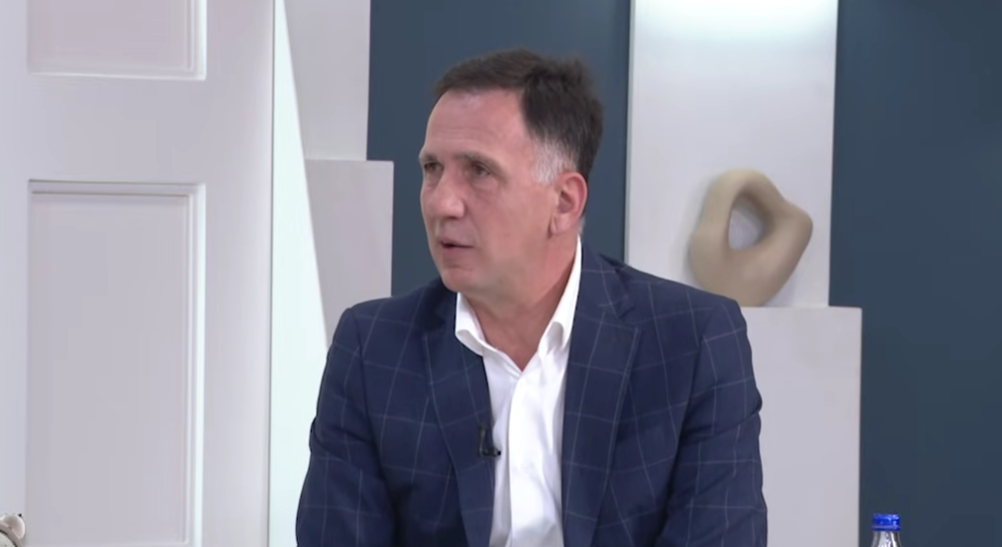
Former Director of the Health Insurance Fund Sead Čirgić in an interview with Portal ETV points out that Montenegro’s public healthcare system is facing a serious and long-lasting crisis.
- The public healthcare system in Montenegro is in a state of chronic instability that is not the result of chance, but rather the consequence of misguided fiscal and political decisions, where the focus was not on patients but on achieving short-term political goals - Čirgić added.
Europe Now 1 and the undermining of financial foundations
As one of the key decisions that further destabilized the system, Čirgić highlights the Europe Now 1 program, which abolished health insurance contributions.
- The Europe Now 1 program stands out in particular, as it abolished health insurance contributions, thereby seriously undermining the financial foundations of the healthcare system - Čirgić emphasized.
Functional collapse
Although he stresses that the system has not been irreversibly destroyed, Čirgić warns that it has been deliberately brought into a state of functional collapse, from which solutions are increasingly sought outside the public sector.
- This does not mean that the system has been irreversibly dismantled, but it does mean that it has been consciously brought into a state of functional collapse, from which the way out is increasingly offered through the private sector,” Čirgić added.
- To, međutim, ne znači da je sistem nepovratno srušen, ali znači da je svjesno doveden u stanje funkcionalnog kolapsa, iz kojeg se izlaz sve češće nudi kroz privatni sektor - dodaje Čirgić.
In such an environment, the public healthcare system takes on the most socially and financially demanding patients, while the private sector selectively provides services to those who can afford them.
Expansion of private clinics
According to him, the condition of the public system is most clearly reflected in the rapid growth of the private healthcare sector.
- The accelerated growth of the private healthcare sector best illustrates the state of the public system. Private clinics that were on the brink of survival back in 2019 are now experiencing strong expansion, which is a clear indicator of the weakness and systemic erosion of public healthcare - Čirgić noted.
Structural causes of the crisis
Čirgić identifies the key causes of the current problems as a chronic lack of financial resources, inadequate needs planning, limitations of the existing public procurement system, an unsustainable financing model, and pronounced centralization of the healthcare system.
- The growth of private clinics in itself is not negative, but it becomes a serious problem when the private sector no longer complements the public system, but replaces it - he explained.
Healthcare increasingly paid out of pocket
An additional problem lies in the way the system operates, as the share of direct out-of-pocket payments for healthcare services by patients increases year after year.
- A healthcare system that functions in waves increases, year after year, the share of healthcare services paid directly out of patients’ pockets - he stressed.
This, he notes, indicates a gradual slide toward a market-based healthcare model.
- This is one of the key indicators that Montenegro is slowly drifting toward a market-based healthcare model, similar to the American or Singaporean systems, in which the state covers only 30-40 percent of total healthcare costs - Čirgić stated.
In such a context, it is realistic to expect that citizens will in the future be forced to purchase health insurance policies from private insurance companies.
A model without economic foundations
However, Čirgić warns that Montenegro lacks the economic prerequisites for such a model.
- Average household incomes do not allow for widespread purchase of private health insurance policies, which means that such an approach would inevitably lead to social exclusion and seriously jeopardize the right to healthcare - Čirgić emphasized.
The most vulnerable bear the greatest burden
The greatest consequences of this situation are borne by the most vulnerable groups of the population, primarily pensioners and chronically ill patients, who rely most heavily on the public healthcare system.
- Shifting part of healthcare costs onto patients further threatens their standard of living and deepens inequalities in access to healthcare services - he pointed out.
As he particularly underlined, pensioners are especially affected, those who contributed to health insurance throughout their entire working lives, yet today are often unable to afford even basic medicines or necessary medical services.
Without substantive reforms, the trend of erosion of the public system and the gradual privatization of healthcare will continue, as the needs of the healthcare system grow year after year, while the state is already struggling to cope with such an increase in healthcare spending.
One reform measure as a solution
Čirgić points to a single reform step that could have a significant impact.
- If the state were to decide on just one reform measure - paying public healthcare institutions at the primary level through a capitation system, and at the secondary and tertiary levels through the DRG model, that is, based on performance, more than half of the problems would be resolved - Čirgić concluded.