




CCE condemns Knežević’s speech: Humiliating citizens from the parliamentary podium must not go without an institutional response
The same MP publicly stated in May this year that he would kill anyone who called him a homosexual. Even then, there was no institutional response. The absence of consequences after each individual statement creates space for new and more severe forms of hate speech - Knežević emphasized

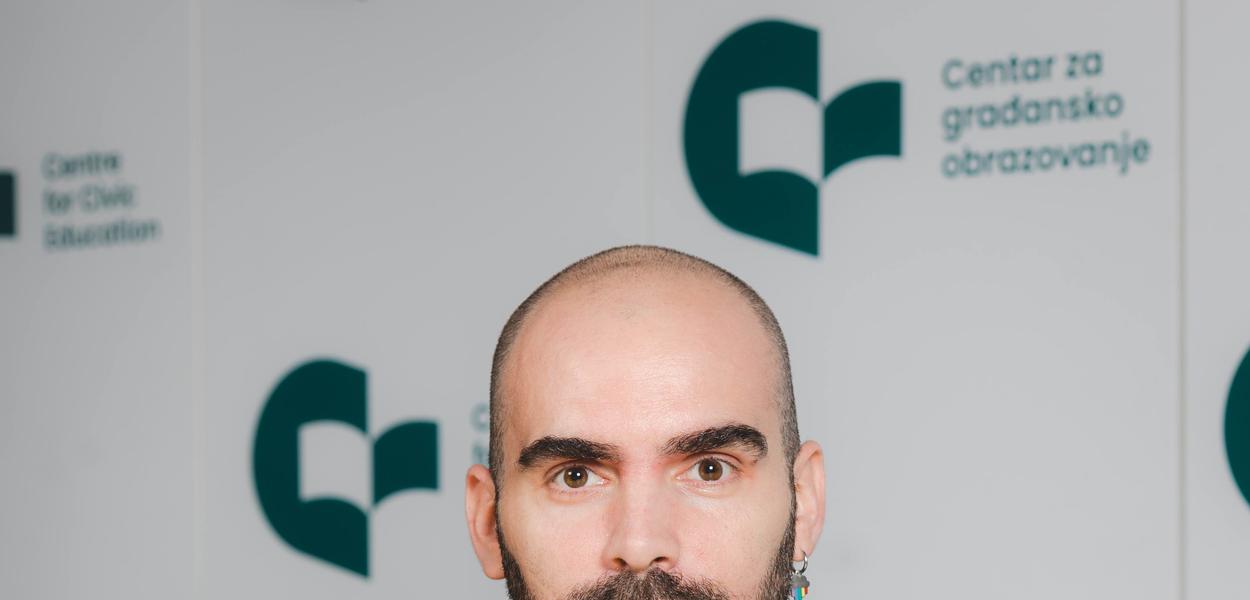
The Centre for Civic Education (CCE) condemns the speech delivered by Milan Knežević, Member of Parliament and President of the Democratic People's Partyduring the session of the Parliament of Montenegro held yesterday, July 28, and calls for proceedings to be initiated, in accordance with the Code of Ethics for Members of Parliament, to determine his responsibility - said Development Coordinator at the organization Miloš Knežević.
He pointed out that none of the five draft laws debated yesterday concerned the establishment of same-sex unions. Rather, he stressed, they were exclusively aimed at technically harmonizing legislation with the 2020 Law on Life Partnership of Same-Sex Persons, a fact also confirmed during the debate by Minister of the Interior Danilo Šaranović.
- The core of the problem is not merely the insults, although there were many - from vulgar language to fabricated claims about weddings on the beaches of Budva. The entire speech was constructed to portray same-sex couples as competitors to citizens of Serbian ethnicity who do not hold Montenegrin citizenship, deliberately setting two groups of citizens against one another. No one's rights are diminished when someone else enjoys equal rights, and politics that claims otherwise does not solve problems - it deepens divisions - Knežević stated.
He added that when Parliament presents the historical persecution of people because of their sexual orientation as an example of a desirable social order, it pushes the boundaries of what is considered acceptable public discourse.
- Such messages, delivered from the country's highest political platform, contribute to the normalization of discrimination and intolerance and therefore require a clear institutional response - Knežević assessed.
He recalled that the same MP publicly stated in May this year that he would kill anyone who called him a homosexual.
- Even then, there was no institutional response. The absence of consequences after each individual statement creates space for new and more severe forms of hate speech - Knežević emphasized.
It is additionally concerning, he noted, that Montenegro dropped nine places compared to 2024 in the latest Rainbow Map published by ILGA-Europe.
- The report concludes that the rights guaranteed under the Law on Life Partnership of Same-Sex Persons have still not been fully implemented six years after its adoption and recommends that the legislation finally be fully harmonized - Knežević said.
The Centre for Civic Education also regrets, he added, that the Speaker of Parliament did not respond to the content of the speech, and that the session was interrupted only after mutual insults and the prevention of a physical altercation.
- It is equally concerning that no parliamentary caucus publicly condemned the views expressed, leaving public attention focused on the incident itself rather than on the messages directed at one group of citizens - Knežević said.
The Parliament of Montenegro, he stressed, is not a place where the dignity of citizens may be insulted with impunity because of their personal characteristics.
- If the Code of Ethics is not applied when there are reasonable grounds to believe that its fundamental principles have been violated, namely the prohibition of discrimination, responsible conduct, and the protection of Parliament's reputation, then it loses its purpose - Knežević stated, calling on the Parliamentary Committee on Human Rights and Freedoms to demonstrate that the rules apply equally to all Members of Parliament.
According to him, freedom of speech in Parliament does not exclude political and ethical responsibility for speech that insults the dignity of citizens or encourages prejudice and intolerance.
- The Code of Ethics obliges Members of Parliament to act in accordance with the principles of responsibility, mutual respect, and the preservation of Parliament's reputation. Article 5 prohibits discrimination, including discrimination based on sexual orientation, while Article 6 stipulates that Members of Parliament must perform their duties in accordance with moral principles, professional standards, and the public interest. Oversight of the implementation of the Code is entrusted to the Parliamentary Committee on Human Rights and Freedoms - Knežević stated.
He concluded that equality is an obligation Montenegro has assumed through its own legislation and in the process of accession to the European Union.
- It is not a favor the state grants to certain individuals, but a debt it owes to all of its citizens - Knežević concluded.