




AT THE ORDER OF THE AUTHORITIES: Prosecutorial criminalization of critical media
The document signed by Turković, Vukotić, and Vukašević-Petrušić is not an indictment but a political pamphlet wrapped in legal language. First and foremost because the text lacks what every indictment must contain - a specific criminal offense, a clear action, and a consequence. Particularly dangerous is the attempt to criminalize the very principle of journalism: freedom of speech, working with sources… When criminal law begins to punish „media image“ and „influence“, we are no longer talking about justice - we are talking about an attempt to control public expression

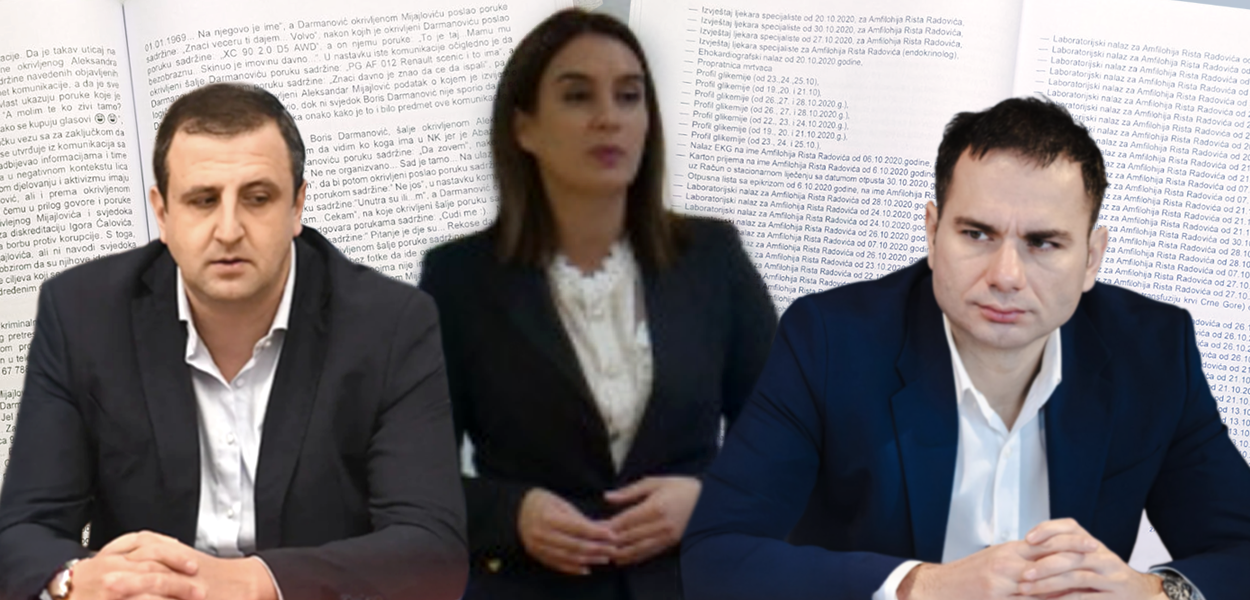
An indictment in the clutches of petty politics. This is the only way to assess the involvement of Montenegrin media in the indictment against businessman Aleksandar Mijajlović, police officers Drago Spičanović, Vladan Lazović and Milovan Pavićević, state prosecutor Andrijana Nastić, as well as politician and official of the Democratic Party of Socialists Predrag Bošković.
The political coloring is revealed by the fact that in the April 1 indictment, Mijajlović is charged as the organizer of a criminal organization that allegedly operated from 2020 to February 2024 - supposedly using seven Montenegrin media outlets in his criminal plan to exert unlawful influence.
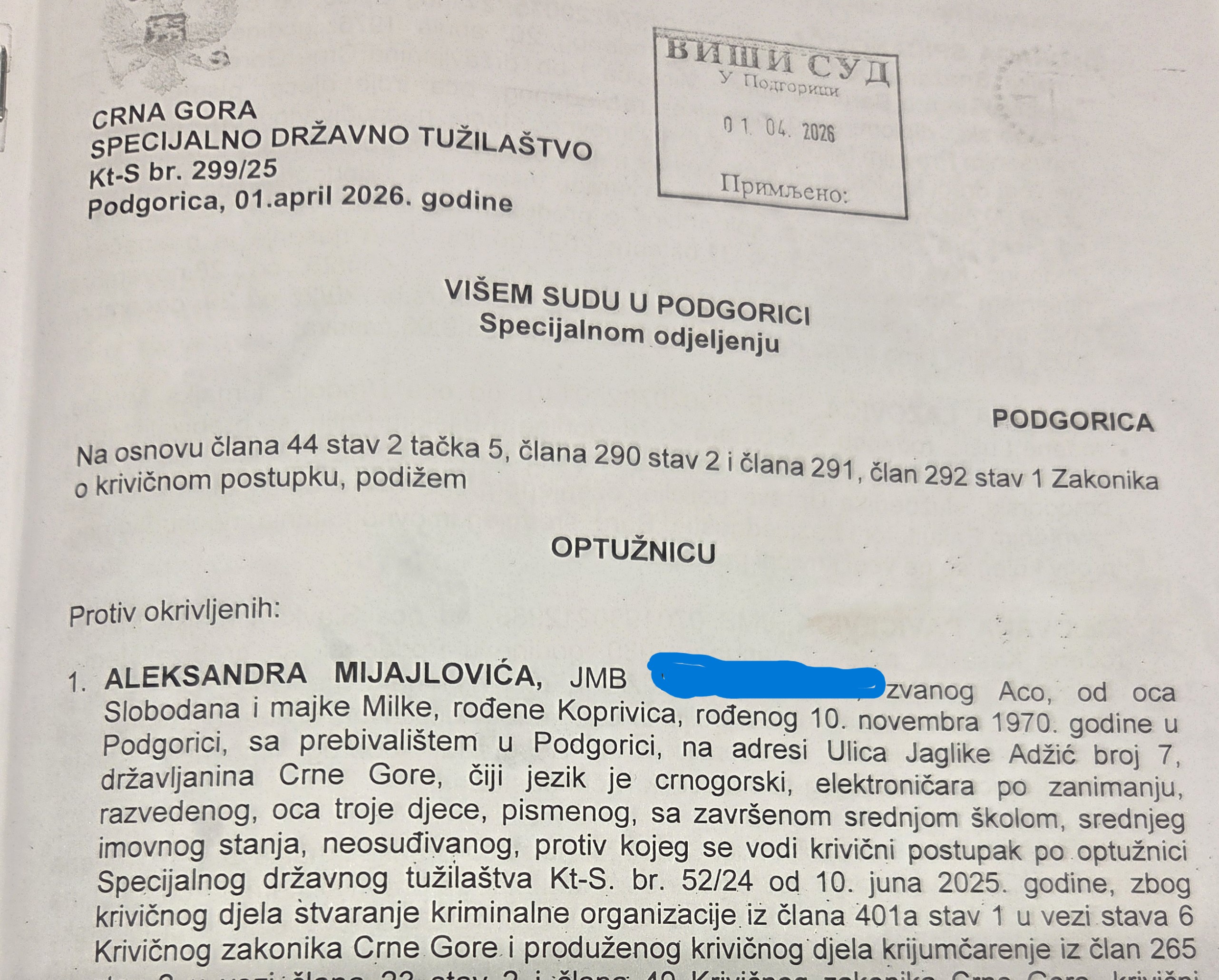
The prosecutorial trio - special prosecutor Miroslav Turković, state prosecutor Jovan Vukotić, and state prosecutor Ivana Petrušić Vukašević - state that the criminal organization aimed, quote, „to commit criminal offenses punishable by four or more years of imprisonment“.
However, only two specific criminal offenses are listed: abuse of office under Article 416 paragraph 1 of the Criminal Code of Montenegro, and disclosure of secret information under Article 369 paragraph 1 in connection with paragraph 4 of the Criminal Code of Montenegro.
„MIJAJLOVIĆ’S INFLUENCE“
How were media outlets entangled in the activities of the alleged six-member criminal organization, and what was the goal of these criminal activities? This is attempted to be explained - through a description of Mijajlović’s (mis)use of Montenegrin media that critically report on the government.
- Mijajlović organized the group with the intention of influencing the editorial policies of public information outlets, namely: „Mportal“, „TV E“, as well as the portals „CdM“, „Standard“, „Portal Analitika“, „Pobjeda“ and „Antena M“, and used the obtained information to gain unlawful power for himself and the criminal organization, creating public opinion and shaping a media image solely to suppress competition and to personally and professionally discredit individuals, religious, political, and economic organizations whose opinions and actions were contrary to the goals and interests of the criminal organization - the indictment of April 1 states, among other things.
DID THEY DELETE, THEN ADD „PORTAL ETV“?!
This is not an April Fool’s joke: already on the first pages of the indictment it is noticeable that special prosecutors tried to correct some major mistakes identified by the critical public in the order to conduct an investigation - such as listing the media allegedly influenced by Mijajlović.
Thus, the order also mentioned Portal ETV, which only began operating in September 2024, a full four months after the alleged criminal organization of Aleksandar Mijajlović had ceased to exist!
At the same time, the prosecutorial trio selectively read messages from the temporarily seized phone of Aleksandar Mijajlović, so the order does not mention communication with „Vijesti“ executive director Marijana Kadić. The exchange of messages with some other journalists, with whom negotiations were conducted about transferring programs from other television stations to Television E, was also omitted or concealed.
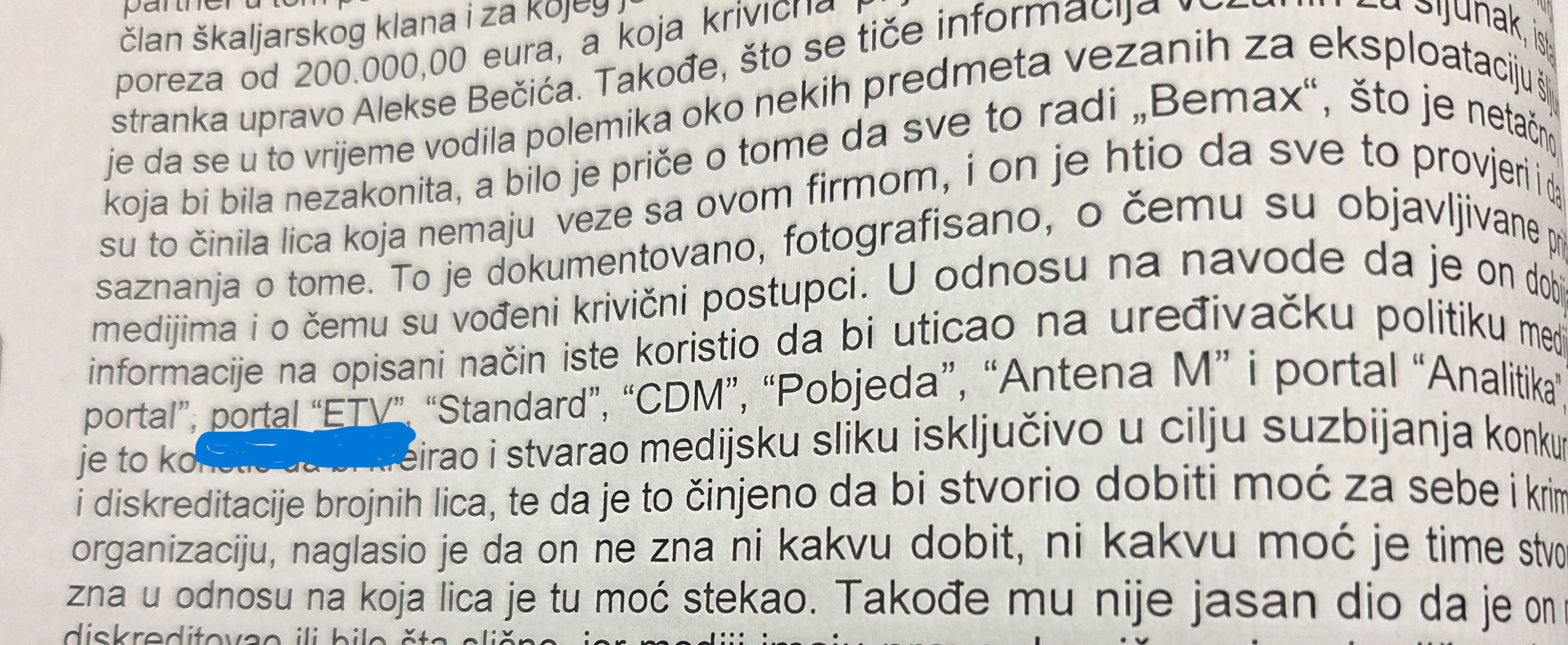
The special prosecutors dealt only with deleting their mistake from the order - removing the name of Portal ETV. Therefore, at the beginning of the indictment, Portal ETV was removed from the list of media allegedly influenced by Mijajlović.
However, the job was not done very well: on page 42 of the indictment, Portal ETV appears again!
Regarding the claims that he used the information obtained to influence the editorial policies of the media „M portal“, „Portal ETV“, „Standard“, „CDM“, „Pobjeda“, „Antena M“, and „Portal Analitika“, and that he used this to create and shape a media image solely to suppress competition and discredit numerous individuals - it is stated in the indictment, in the part where Mijajlović’s statement is presented.
WHEN MEDIA EDITORS TESTIFY…
The indictment signed by the prosecutorial trio is essentially an elaboration of the order to conduct an investigation from October 5 last year. But without real concretization.
And just as it was missing in the Order, in the extensive indictment prosecutors Turković, Vukotić, and Petrušić-Vukašević do not specify anywhere the criminal offense allegedly committed, i.e., the one Mijajlović is charged with in relation to the alleged misuse of private media.
It is even harder to conclude any involvement of media editors in any dishonest or unlawful actions.
„Aleksandar Mijajlović exchanged information with editors or directors of Montenegrin media: Boris Darmanović from CdM, Draško Đuranović, then editor-in-chief of Pobjeda, Jasmina Muminović, editor-in-chief and owner of the Standard portal, Tinka Đuranović, executive director of Portal Analitika, Darko Šuković, editor-in-chief and owner of Antena M, Marijana Bojanić, executive director of Vijesti, and Olivera Lakić, owner of the Libertas portal.”
„INFLUENCE“ AND „CREATING PUBLIC OPINION“ - CRIMINAL OFFENSES?!
In addition to listing leading media figures and citing their testimonies, the prosecutorial trio concludes that Aleksandar Mijajlović influenced the editorial policies of most of the listed media, not only as the owner of the media-buying agency „Monte media FZO“ but also as a journalistic source.
A very unusual and primarily politically colored interpretation of legal norms. Montenegrin legislation, like European legislation, does not recognize „influence over the media“ as a criminal offense. Nor does there exist a criminal offense called „creating public opinion“.
The attempt by the prosecutorial trio to criminalize the work of Montenegrin media critical of the current August government is directly contrary to Article 179 of the Criminal Procedure Code.

Article 179 of the Criminal Procedure Code stipulates: „Whoever unlawfully prevents or obstructs the printing, recording, sale, or distribution of books, magazines, newspapers, audio and video tapes, or other similar printed or recorded materials shall be punished by a fine or imprisonment of up to one year.“
And to make it even more interesting, paragraph three warns overzealous officials: „If the act referred to in paragraph 1 of this Article is committed by an official in the performance of duty, he or she shall be punished by imprisonment of three months to three years.“
CRIMINALIZATION OF PUBLIC SPEECH
Therefore, the Code does not criminalize the media for publishing information - it criminalizes those who try to prevent them from doing so.
It seems that the special prosecutors were aware of these legal limitations. Perhaps that is why in the 294-page indictment, not a single criminal offense allegedly committed through the use of media is specified.
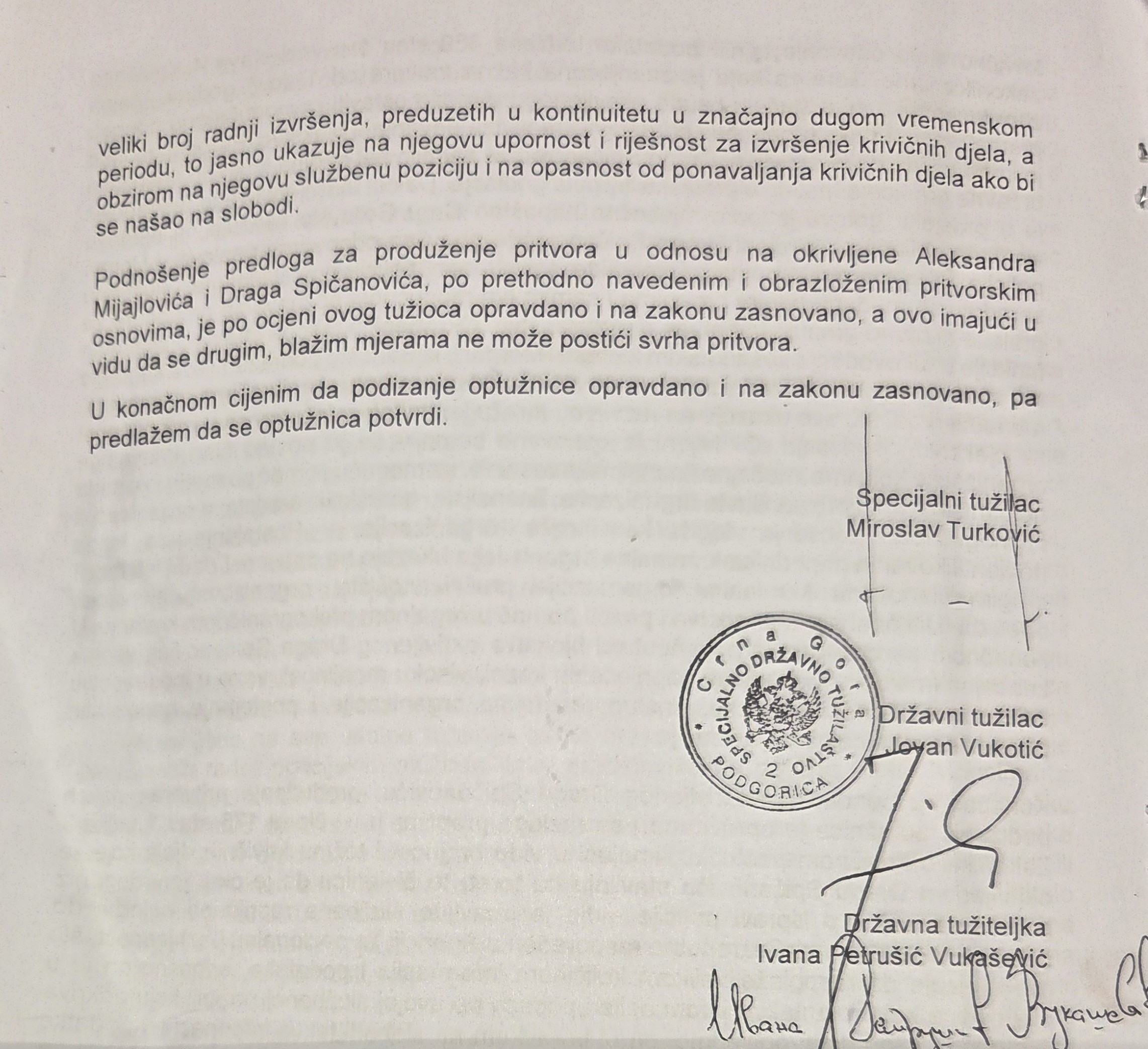
And that is precisely why it can be concluded that the document signed by Turković, Vukotić, and Vukašević-Petrušić is not an indictment but a political pamphlet wrapped in legal language. Above all because it lacks what every indictment must contain - a specific criminal offense, a clear action, and a consequence.
It is particularly dangerous that the very principle of journalism is being criminalized: working with sources. According to the standards of the European Court of Human Rights, journalists have the right to protect their sources and publish information of public interest. If someone within the system unlawfully disclosed information, responsibility lies with that person - not with the media that published it.
It is evident that the April 1 indictment was „carried out“ at the order of politics; as if the prosecutorial trio were fulfilling the ambitions of the Democrats of Aleksa Bečić, who have long fought against every critical voice in the media and tried to criminalize it.
Therefore, the indictment does not target a specific act - it targets a way of thinking, editorial policy, and the right to speak publicly. When criminal law begins to punish „media image“ and „influence“, we are no longer talking about justice - we are talking about an attempt to control public expression.