




A special task for a special prosecutorial trio: the criminalization of critical media
In another country, in a more orderly society, such brutal attacks by ruling politicians on media outlets that do not suit them, as well as attempts by so-called „liberators“ to free Montenegro from critical thinking - would be doomed to fail, they would be loudly and fiercely condemned. Here, in Montenegro, that is not the case. On the contrary: following aggressive statements by politicians - from Boris Bogdanović and Dritan Abazović to Jelena Nedović - a special prosecutorial trio from the Special State Prosecutor’s Office stepped in, clearly intent on carrying out the task of criminalizing the media - precisely according to a political directive.

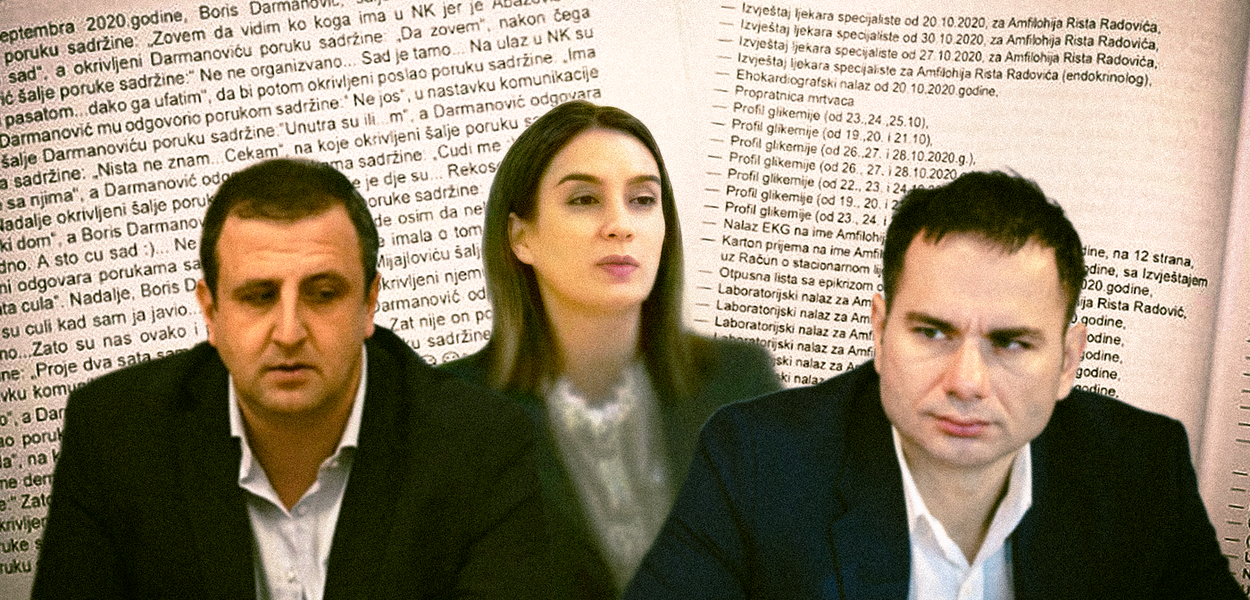
„Never do anything against your conscience, even if the state demands it.“
Had the trio from the Special State Prosecutor’s Office - Miroslav Turković, Jovan Vukotić and Ivana Petrušić Vukašević - ever taken note of this ethical principle by Albert Einstein, they would not have conceived, let alone drafted, anything resembling the indictment of April 1.
WHEN THE CRIMINAL CODE DOES NOT APPLY TO PROSECUTORS
Formally, the indictment charges Aleksandar Mijajlović and five others with forming a criminal organization which, according to prosecutors, sought to gain unlawful power by using politicians from the Democratic Party of Socialists and private media.
Informally, but in reality, the indictment is a legally invalid construct, a political pamphlet wrapped in the veneer of quasi-law, produced under the direction of ruling party officials.
How else can one explain the fact that the alleged head of a criminal organization is accused of attempting a coup, yet the indictment fails to specify any concrete criminal offense of undermining the constitutional order? It then goes on to claim that Mijajlović, „without choosing means in his pursuit of unlawful power, influenced the media and their editorial policies“.
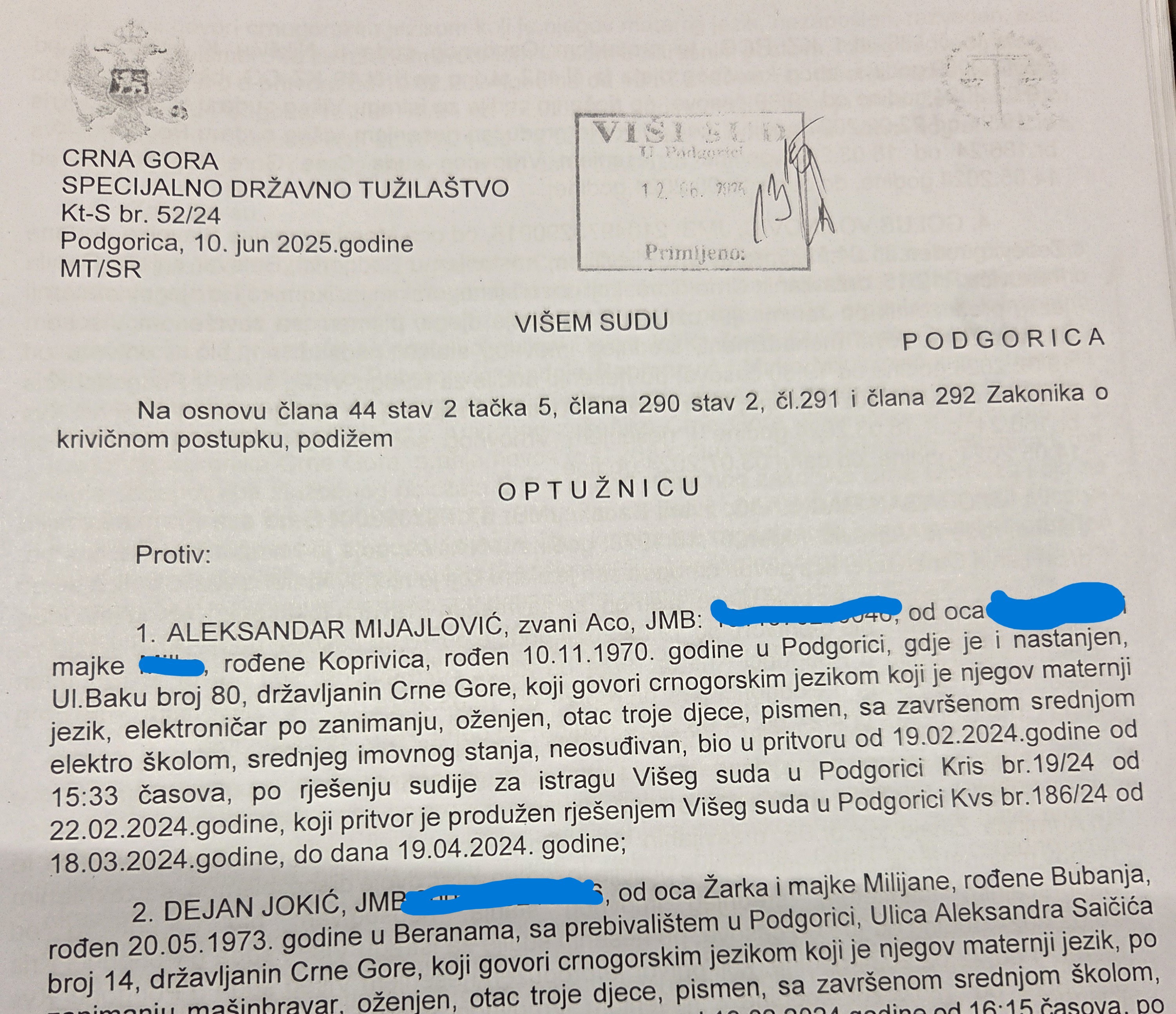
It would have helped if the special prosecutors had at least glanced at the Criminal Code. Montenegrin law does not recognize a criminal offense called „acquiring unlawful power“. Nor does it recognize „coordinating media editorial policy“, or any offense labeled „influencing the media“.
A COORDINATED ATTACK ON THE MEDIA
One day, this indictment may well be studied, but not as something the prosecutorial trio can take pride in. Quite the opposite: it should be a source of shame. And with good reason: because the April 1 indictment deliberately targets six media outlets, including Television E, simply for publishing information that does not please those in power.
In fact, the indictment is a continuation of attacks on the media that began with the „liberators“ of August. Much like the unscrupulous attack by the Democrats’ Boris Bogdanović, who seems to imagine himself as a political reincarnation of the infamous Lavrentiy Beria.
He brazenly claimed that a single article published by Television E, M Portal, or Portal Analitika is paid for by the Kavač or Škaljari clans - up to 8,000 euros per piece?!
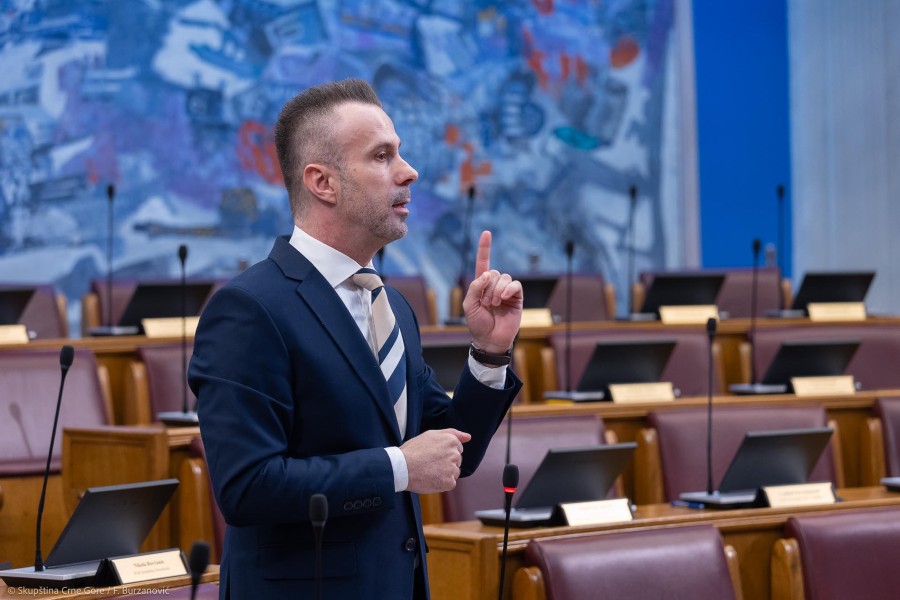
- Articles that protect corrupt police officers, officers and non-commissioned officers are not written to be read, they are written to be cashed in. Because the Kavač and Škaljari clans pay certain individuals up to 8,000 euros. Not weekly, not monthly, not annually, but per article - Bogdanović stated in the Montenegrin parliament.
All that was missing was for him to pin a yellow star on the sleeves of editors from media critical of the government, signaling that they should await the arrival of uniformed men.
WHEN ABAZOVIĆ AND NEDOVIĆ „SPEAK“
To be fair, the battle against independent media is not being waged by the Democrats alone. The targeting began as early as August 2022 - on the very day he lost a vote of confidence - when then-outgoing Prime Minister Dritan Abazović lashed out.
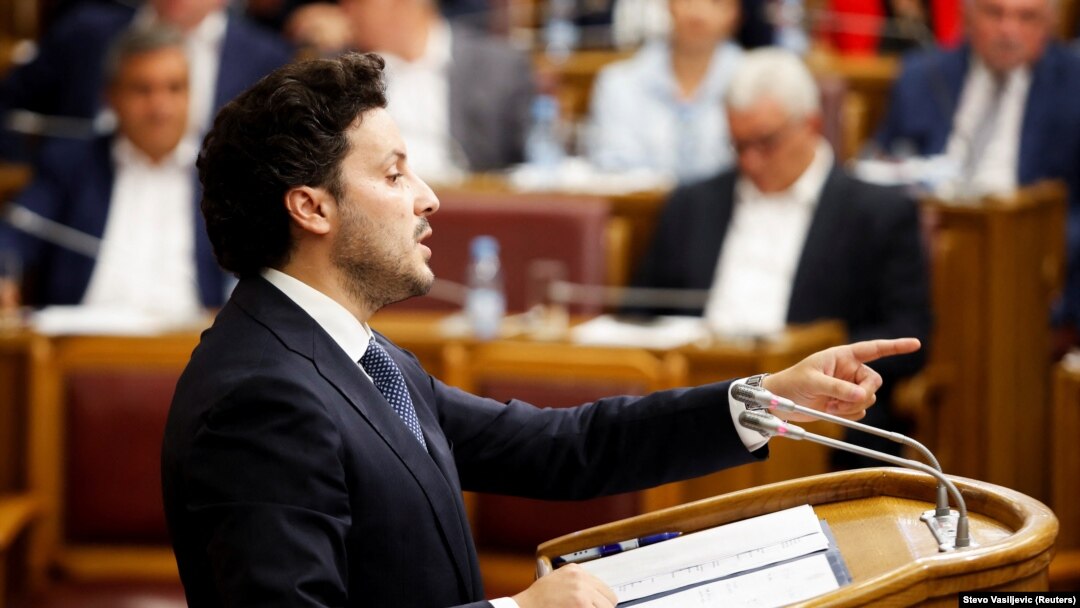
He first singled out the company Bemax, then personally targeted Ranko Ubović, and then named editors of private media who criticized him for signing the controversial Basic Agreement with the Serbian Orthodox Church.
In another country, in a more orderly society, such brutal attacks by those in power on media outlets that do not suit them, and attempts by so-called „liberators“ to rid Montenegro of critical thinking, would be doomed to fail, fiercely and loudly condemned, and swiftly shut down.
Here in Montenegro, however, they passed with only open criticism from part of the NGO sector and mild remarks from the European Commission. As if Brussels bureaucrats fail to grasp the seriousness of these intentions.
A LICENSE FOR TARGETING MEDIA WITH IMPUNITY
Local politicians clearly interpreted this as permission to further target private media beyond their control.
Thus, unprompted - and with notable lapses in logic and expression - Member of Parliament Jelena Nedović of Spajić’s Europe Now Movement joined in:
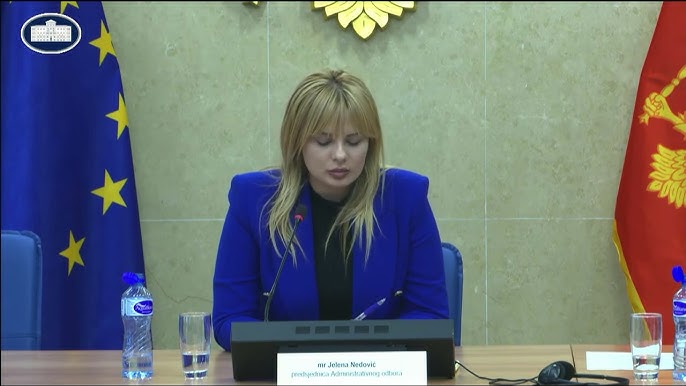
- We have so many private media outlets. So if you are a private outlet - you cannot tell me you work for the state or in the name of truth. Who knows who you work for - Nedović said at a press conference.
Following all these statements, the special prosecutorial trio appeared ready and willing to carry out their task, precisely as dictated by politics.
And not only to carry it out, but to do so thoroughly. They went a step further than merely listing undesirable media and editors. A dangerous step further: beyond citing routine and entirely normal phone communications between editors and Mijajlović, the prosecutors examined the domestic and foreign bank accounts of all six media outlets.
When they found nothing illegal, not even suspicious, they published the revenues and expenditures of these media companies as if exposing some hidden financial scheme.
This pitiful attempt at discrediting and criminalizing media leaders is nothing short of disgraceful.
A PROSECUTORIAL TRIO WITHOUT SHAME
Nothing was off-limits. Shielded by ruling politicians, the prosecutorial trio even misused a 7 million euros donation by Bemax for the construction of the „Novka Ubović“ elementary school. It was done with only one goal: to mention Ranko Ubović in the indictment as an accused, even though he is not one, just to label him as the informal owner of the construction company.
There is no criminal offense there, only a crude act of targeting. And it marks the prosecutorial trio’s path in one direction only: toward a moral low point.
That they had the backing of ruling politicians is clear. That even the head of the Special Prosecutor’s Office, Vladimir Novović, nodded in approval of this disgraceful action is - a logical conclusion, otherwise he would have reacted by now.
And it is evident that none of them, the prosecutors turned persecutors, have taken heed of Einstein’s warning cited at the beginning: never to act against one’s conscience.
Or perhaps the problem lies in something else: a shortage of conscience, and a surplus of loyalty to those in power.