




Stankov: Montenegrin officials should redefine partnership relations with Budapest

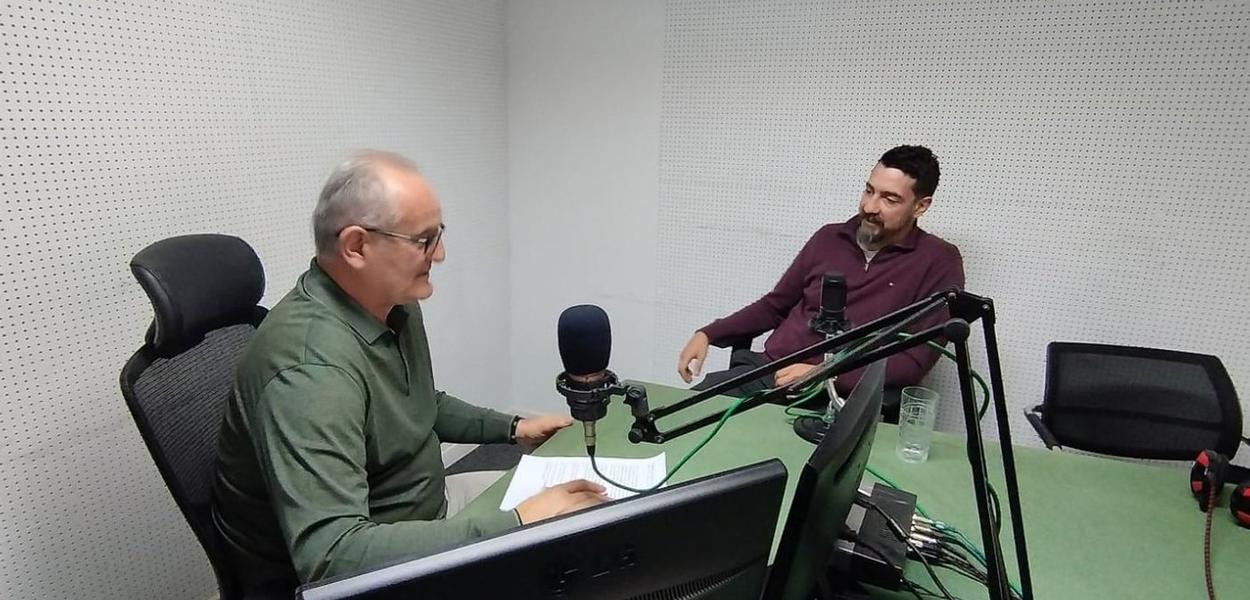
Montenegrin officials, especially following the recent contacts of Deputy Prime Minister Filip Ivanović (Europe Now Movement) with Hungarian Foreign Minister Péter Szijjártó, should redefine their approach to international partnerships in the context of relations with that country, particularly after Viktor Orbán’s defeat in yesterday’s elections - said associate at the Faculty of Political Science of the University of Montenegro and head of the Public Policy Research Department at the Center for Monitoring and Resaerch Nemanja Stankov, speaking on the program „Drugačija radio veza“ („A Different Radio Link“).
- I think they should try to build new partnerships with people who will take up positions in Hungary that are important not only for our integration process, but also for the future of the European Union’s integration process in general. Specifically, I believe that Péter Szijjártó was not a person of that profile - Stankov said.
The intensified diplomatic contacts between Montenegrin officials and Hungary in the recent period, as well as increasingly frequent political messages coming from Podgorica, have not gone unnoticed in Brussels, the Antena M interlocutor said, noting that there is also increased interest from European institutions in the political and institutional situation in Montenegro.
Speaking about the reactions of the European Union, Stankov particularly highlights a change in the dynamics of communication with the European Commission.
- We are now entering the final phase of the integration process, at least according to our plans. What the pace of that process will be by the end of this year remains to be seen. It seems to me that, regarding several key chapters, that plan is quite ambitious. I mention this because the way the European Commission deals with us has changed recently. Specifically, in Chapters 23 and 24, communication has now moved to a weekly level. That is, our institutions now communicate with and report to the European Commission on a weekly basis, which indicates increased interest in Brussels in Montenegro’s institutional and political developments. On the other hand, besides the government, the opposition has also had a somewhat more active diplomatic period in the past few months. So, a much greater amount of information about developments within Montenegro is currently available to Brussels than was the case in previous years - Stankov said.
Commenting on the relations of domestic political actors with regional and international leaders, including the contacts of Parliament Speaker Andrija Mandić with the leader of the Bosnia and Herzegovina entity Republika Srpska, Milorad Dodik, who openly supported Viktor Orbán, Stankov assesses that the European Union is currently pursuing a pragmatic policy and, for the sake of preserving the process, is willing, as he puts it, to „turn a blind eye“.
- I don’t think we are really talking about the fact that they are impressed with the Speaker of Parliament, but rather that there is a clear direction of action set in Brussels, and that direction indicates that it is of key importance for the survival of the European idea and the European project that enlargement takes place in the foreseeable future. In that context, they are ready to turn a blind eye to certain things in various candidate countries if it can lead to faster accession of some countries and demonstrate that the enlargement policy is alive - Stankov said.
According to him, in that sense, we can always expect a certain type of courteous statements lacking substantial political content when it comes to relations between high officials from Brussels and representatives of institutions in Montenegro.
- It is not realistic to expect a situation in which we will hear a direct statement or message that would affect the political position of one, another, or a third political option in Montenegro. I think such a scenario is almost impossible. They have information on the basis of which they can decide whether to turn a blind eye or not. What I am certain of is that there are enough communication channels to ensure that developments in Montenegro are not unknown - Stankov said.
Speaking about the possible implications of the Hungarian election results for the situation in Serbia, Stankov stressed that Aleksandar Vučić, despite all the control he has over the political system in Serbia, will never be in the position Orbán was in - a position that gave the former Hungarian leader enormous political capital, not because he was the Prime Minister of Hungary, but because he led a country with a seat in the European Council and the Council of Ministers.
- In that way, Orbán could block and shape policies not only of Hungary but of a system of 27 states, which became very important in the context of the war in Ukraine. That was one of the reasons why the political profile of Orbán’s regime grew globally. He often positioned himself against the dominant political line in the rest of the European Union. Vučić does not have that - Stankov said.
Speaking about the potential change of government in Serbia, Stankov noted that it must always come through some kind of organic movement within the country itself.
- A regime can be strengthened or weakened by external pressures, but there must be „cooperation“ or a movement within the country that gains mass support and has a mobilizing message that resonates with the population. Looking at the Hungarian case - would Péter Magyar be in this position if he had acted from a left-wing platform? Most likely not. I doubt he could have mobilized a sufficient number of Hungarian voters, even if he pointed out all the shortcomings and structural flaws of Orbán’s regime. But he offered them what he fundamentally is. Something that resonates with the electorate, and said he would remove what is not natural. In that sense, perhaps this is not pleasant for some to hear, but given the structure of the electorate in Serbia, a movement similar to what Vučić represented at the beginning of his mandate is the one most likely to gain enough support to replace him - Stankov concluded.