



Milatović asks Spajić for an assessment of the “Euro Model”

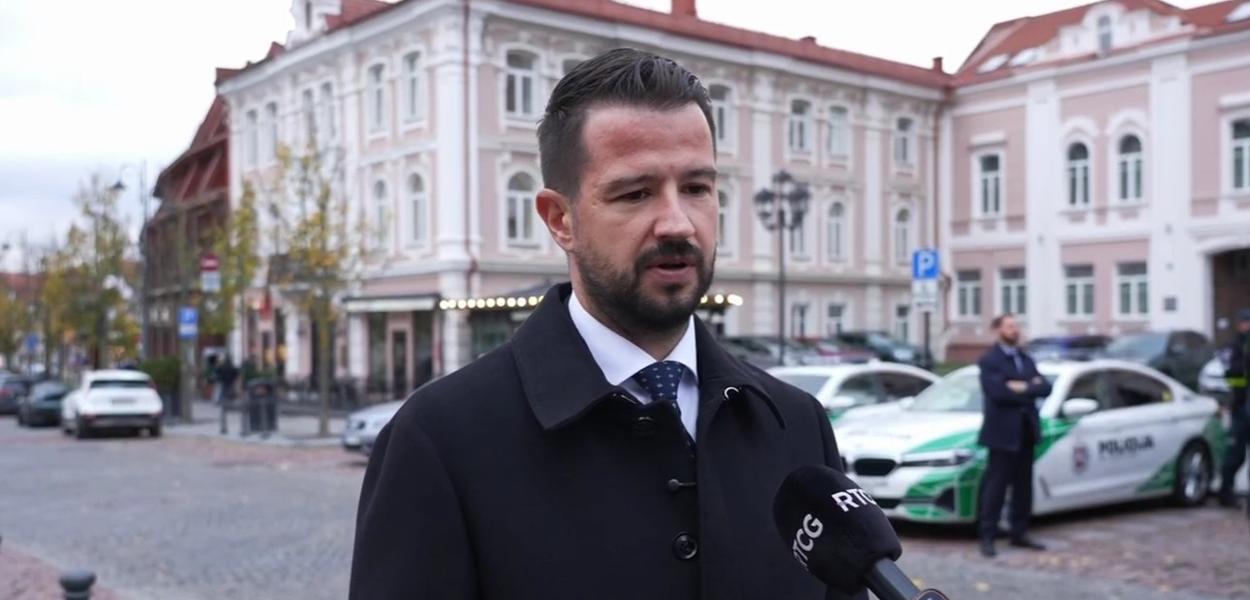
Montenegrin President Jakov Milatović has addressed Prime Minister Milojko Spajić, requesting a comprehensive assessment of the fiscal and economic effects of the “Euro Model”, an evaluation of its impact on the pension system and the resumption of social dialogue.
He stressed that he supports efforts to improve living standards, adding that such efforts must be based on responsible economic decisions, reliable assessments and dialogue with social partners.
- I am addressing you at an important moment for Montenegro's European future, when our country is closer to EU membership than ever before. At this stage of the accession process, it is particularly important that Montenegro's progress be accompanied by stronger institutions, high-quality and responsible public policies, and consistent fulfilment of the commitments undertaken towards the European Union - Milatović stated.
In this context, he also referred to the “Euro Model”, which the Government of Montenegro presented through the adoption of a package of legislative measures in September 2026.
- The objective of improving citizens' living standards and increasing wages is encouraging and socially desirable. However, given that reforms of this scale and significance must be based on reliable fiscal and economic assessments, prior expert and institutional scrutiny, and an inclusive consultation process, the way in which this model has been prepared and adopted so far raises questions to which the public expects answers - Milatović stressed.
Comprehensive assessment of the reform's fiscal and economic effects
He pointed out that the legislative package was not accompanied by a publicly available fiscal impact assessment or comprehensive multi-year projections covering the state budget, the Pension and Disability Insurance Fund and local government budgets.
- A reform of this magnitude should not be implemented without a detailed explanation of how it will be financed and how the long-term sustainability of public finances will be ensured. Furthermore, no appropriate economic analysis has been presented to citizens, including an assessment of the measures' impact on the competitiveness of our economy, price growth and the labour market - Milatović said.
Consequently, he emphasised, the public is unable to properly assess the costs, risks and distributional consequences of the proposed measures.
- Of particular concern is the fact that the Ministry of Finance did not support the adopted package, while the Fiscal Council has yet to issue its legally required opinion on the package of measures. At the same time, the “Euro Model” is not reflected in Montenegro's key fiscal and economic documents, including the Fiscal Strategy, the Economic Reform Programme and the Public Financial Management Reform Programme. This raises questions about the reliability of the economic and fiscal information Montenegro provides to the European Union - Milatović said.
Assessment of the reform's impact on the pension system
He said that the potential consequences of completely abolishing pension and disability insurance contributions were particularly concerning, given that such a move would fundamentally change the existing pension financing model as well as the economic nature of the system itself.
- Such a change would represent a fundamental restructuring of the pension financing system and raise important questions regarding its long-term institutional and financial architecture, including the relationship between accrued pension entitlements, the way they are financed and the state's responsibility to guarantee the regular payment of pensions - Milatović said.
Before making any decision involving such a significant structural change, he stressed, the Government would have to commission and publicly release a comprehensive, independent and long-term actuarial assessment of the pension system's sustainability.
Consultations with social partners
- Serious questions also arise regarding the way in which the proposed measures were prepared and adopted, particularly in terms of the quality of social dialogue and consultations with stakeholders. As you know, reforms of this scale require an inclusive decision-making process. Consultations with social partners are not merely a matter of good administrative practice; they are also a constitutional obligation and an important prerequisite for the legitimacy, quality and long-term sustainability of reforms - Milatović stated.
As he noted, the absence of meaningful consultations is difficult to reconcile with the principles of social dialogue, participatory policymaking and institutional accountability that Montenegro needs to strengthen further as part of its EU accession process.
- All of the above must also be considered in the context of the commitments Montenegro has undertaken in the area of responsible economic governance. I particularly emphasise that Montenegro's progress towards EU membership must be demonstrated not only through the formal fulfilment of benchmarks and the adoption of legislation, but also through the quality of public policies, the effectiveness of institutions and the consistent implementation of strategic commitments in concrete government decisions - Milatović said.
He proposed publishing a comprehensive fiscal impact assessment of the “Euro Model”, accompanied by an economic analysis.
- It is essential to prepare and publish a comprehensive assessment of the fiscal impact of the adopted measures. The analysis should clearly present the underlying assumptions and quantify the effects of each individual measure as well as those of the package as a whole. At the same time, the Fiscal Council must be given the opportunity, on the basis of complete information, to issue a formal, public and evidence-based opinion on the fiscal effects of the proposed legislative solutions, in accordance with the applicable Law on Budget and Fiscal Responsibility - Milatović stated.
His second proposal is to commission an independent, long-term actuarial assessment of the pension system.
- A comprehensive actuarial assessment of the pension system must be prepared and published, taking into account a scenario in which pension and disability insurance contributions are completely abolished. This assessment must be subject to expert and public debate before any legislative changes are made that would eliminate the existing revenue sources used to finance the pension system - he proposed.
Another proposal concerns the resumption of social dialogue.
- A consultation process must be initiated with relevant social partners, including the Employers' Union of Montenegro, the Chamber of Economy of Montenegro, representative trade union organisations and the Union of Municipalities of Montenegro. This would ensure that the final legislative solutions are the outcome of an inclusive process that takes different social and economic interests into account - Milatović said.
He stressed that he fully supports the objective of improving citizens' living standards and increasing employees' wages.
- It is precisely because of the importance of this objective that it is essential to ensure that the proposed reforms are financially sustainable, institutionally grounded and based on reliable assessments. Decisions whose consequences will extend far beyond the mandate of the current Government require particular responsibility, transparency and respect for institutional procedures - Milatović added.
As he concluded, he is convinced that the shared objective is to improve citizens' living standards while preserving the stability of public finances and the long-term sustainability of Montenegro's economic system.