




Knežević calls on the Montenegrin National Theatre to withdraw its play from the Bitef selection: When artistic freedom is threatened, neutrality becomes a choice and complicity

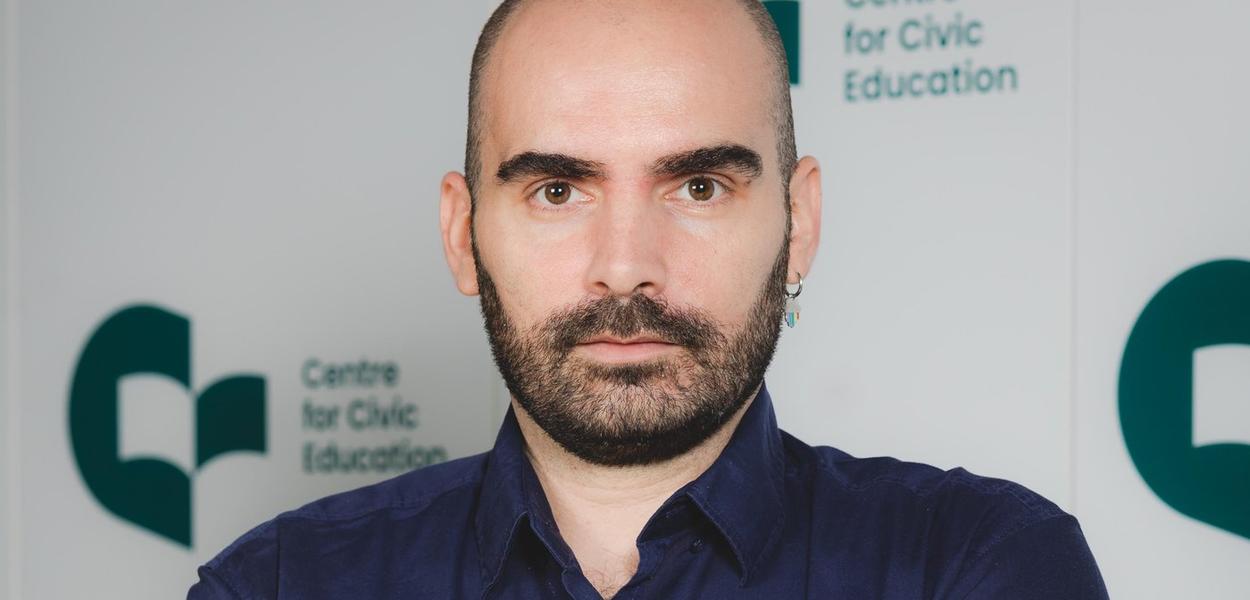
When artistic freedom is threatened, the neutrality of cultural institutions ceases to be neutrality - it becomes a choice and complicity – said Development Coordinator at the Centre for Civic Education, Miloš Knežević, calling on the Montenegrin National Theatre to reconsider its decision to participate in the 59th Bitef Festival and stand alongside artists who, by withdrawing, have made it clear that the festival cannot continue as if censorship had not occurred.
The non-governmental organisation is calling on the Montenegrin National Theatre to withdraw its production „Medea Subject“ from the selection of the 59th Bitef Festival and publicly explain the basis on which it decided to remain the only participant, alongside the Belgrade Drama Theatre (BDP), in a festival programme from which five of the seven productions have been withdrawn in solidarity with artists and other members of Serbian society facing political pressure.
- By remaining in such a programme, the Montenegrin National Theatre is no longer merely a participant in the festival, but is also assuming responsibility for the message that censorship and pressure on artistic freedoms can be overlooked without consequences - Knežević stressed.
He added that the German theatre collective Gob Squad rejected the invitation even before the programme was officially announced. Following the announcement, Teatro Praga from Portugal, the Slovene National Theatre Nova Gorica with its production „Anhovo“, the Italian theatre company Motus with „Frankenstein Diptych“, Lebanese artist Ali Chahrour with „When I Saw the Sea“, and Argentine artist Marina Otero with „Kill Me“ also withdrew.
- Their withdrawal is not a matter of artistic programming, but an act of professional and civic solidarity with those parts of Serbian society that are facing pressure and fighting for professional autonomy - artists, students, the academic community and activists seeking justice and freedom of expression. This follows last year’s decision by the Bitef Board of Directors to censor Miloš Lolić’s programme and reject a production by Swiss director Milo Rau - Knežević said.
It is also important to note that Oliver Frljić, the director of the production „Black Gold“, publicly stated that he was unaware that his production, which is being staged by BDP, had been included in this year’s Bitef programme. He said he learned about it through the media and did not want to serve as an alibi for forgetting last year’s censorship.
- So, in the case of one of the two productions that remain, we have the director’s unequivocal opposition to such a decision. It is only logical that the public should also know who made the decision in the Montenegrin National Theatre, and for what reasons, to continue participation in this edition of Bitef under such circumstances - Knežević stressed.
According to him, it is paradoxical that „Medea Subject“ was selected to open the 59th Bitef Festival.
- Festival selector Spasoje Milovanović explained that the production, drawing on Euripides’ tragedy, uses a contemporary partnership and the myth of Medea to raise questions of responsibility, guilt and the criteria by which we judge others. The Montenegrin National Theatre should apply precisely that criterion to its own decision - Knežević said.
He pointed out that the festival this production is supposed to open has lost a large part of its programme precisely because of questions concerning responsibility towards artists and their freedom.
- That is why the theme of „Medea Subject“ should be an additional reason to withdraw, rather than a backdrop for opening a festival burdened by the consequences of censorship. Artists and theatre companies from five countries have cancelled their appearances at the cost of visibility and the opportunity to meet audiences in order to send a message of solidarity, which is one of the few instruments available to them. Every institution that chooses to remain in the programme at such a moment weakens the impact of that solidarity and sends the message that the programme can continue regardless of the price others are paying to defend artistic freedom. By remaining in the selection, the Montenegrin National Theatre is taking the side of normalising such a state of affairs - Knežević said.
The problem, he added, does not end with one festival.
- If the places of those who withdraw because of censorship are simply filled by those who are willing to remain, solidarity loses its strength, while those responsible for exerting pressure receive confirmation that the cultural system can continue to function as though nothing had happened. Such a lack of solidarity affects the entire region, where the space for free, critical and independent cultural exchange has already been seriously restricted - Knežević said.
Art, and theatre in particular, has always been a space for rebellion, questioning and resistance to authorities that suppress freedom of expression.
- That role also carries responsibility. Artists and cultural institutions cannot pretend that what is happening to their colleagues in a neighbouring country is someone else’s struggle. Solidarity among theatres across the region is not a matter of collegiality or a gesture of goodwill, but a defence of the space for freedom on which the very possibility of critical art depends - Knežević said.
The Montenegrin National Theatre, as Montenegro’s national cultural institution, must, he added, be among those protecting that space, rather than among those whose presence helps make the consequences of its erosion less visible.