




Iranian hacker held in extradition detention in Montenegro awaits U.S. extradition request

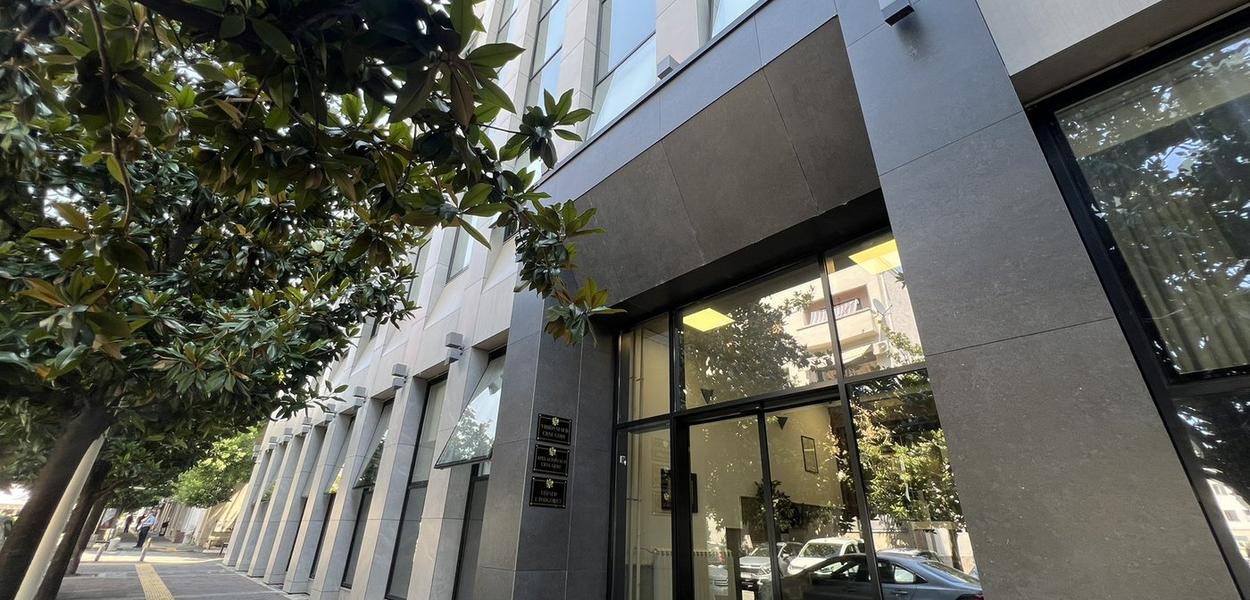
Amir Barati, whom the United States accuses of participating in large-scale cyberattacks against critical infrastructure that allegedly caused more than $3.4 billion in damages for the benefit of Iran's Islamic Revolutionary Guard Corps (IRGC), is being held in extradition detention in Montenegro while awaiting a formal U.S. extradition request, the High Court in Podgorica told the Beta news agency.
According to the court, the United States has a statutory deadline of 18 days to submit an extradition request or, where particularly justified circumstances exist, no later than 40 days from the date of Barati's arrest.
If no request is submitted within that period, Barati will be released from detention.
According to the Montenegrin Police Directorate, the arrest was carried out in cooperation with the U.S. Federal Bureau of Investigation (FBI). U.S. authorities accuse Barati of participating in cyberattacks targeting at least 150 American universities, as well as stealing confidential data and intellectual property.
Attorney Milena Knežević told Beta that Barati is neither a Montenegrin citizen nor does he hold temporary or permanent residence in Montenegro.
Beta reported that the attorney declined to answer questions about whether Barati had responded to the charges, whether he had been staying in Montenegro or was merely in transit, or whether he opposed extradition and, if so, on what legal grounds.
She also declined to say whether Barati is accused of committing any criminal offence in Montenegro, including whether he is suspected of involvement in cyberattacks against Montenegro's information infrastructure. Montenegro is a member of NATO.
- Given that the proceedings are at an early stage, as well as my obligation to preserve attorney-client privilege and protect my client's interests, I am not in a position at this time to comment on the case file, procedural steps, documentation held by the competent authorities, or the defence strategy - Knežević told Beta.
She added that the public would be informed in due course about any information that could be disclosed after the defence has reviewed the complete case file and when doing so is in the interests of both the proceedings and her client.
- We believe it is inappropriate for judicial proceedings to be conducted through the media or for legal positions to be presented in advance on matters that will be decided by the competent authorities - the lawyer said.
The name Amir Barati, who according to Montenegrin police holds both Iranian and Turkish citizenship, does not appear in previously published U.S. cybercrime indictments.
However, the allegations released by the Montenegrin police closely mirror the 2018 U.S. case against the so-called „Mabna Group“.
In that case, the Tehran-based Mabna Institute and nine Iranian nationals were accused of carrying out cyberattacks on behalf of the Islamic Revolutionary Guard Corps (IRGC) against more than 320 universities worldwide, including approximately 144 institutions in the United States.
The published indictment against the alleged Mabna Group also cited damages of $3.4 billion, the same amount referenced in the allegations against Barati.
None of the nine indicted Iranian nationals has been arrested or convicted, and U.S. prosecutors have stated that they remain beyond the reach of American law enforcement.
The Montenegrin Police Directorate and the High Court in Podgorica did not respond to requests from Radio Free Europe for additional details about the case.
Montenegro and the United States do not have a formal bilateral extradition treaty.
In recent years, however, the two countries have developed a practice of cooperation in extradition proceedings, including several cases in which individuals wanted by U.S. authorities were extradited to stand trial in the United States.
One of the most recent examples was the extradition of South Korean national Do Kwon, who was arrested in Montenegro in March 2023 and extradited to the United States in December 2024, following multiple court rulings and the final decision of the then Minister of Justice.