




Government reshuffle: A picture of Spajić’s weakness and Mandić’s strength
What happened in Parliament on Thursday, July 23, was not merely an increase in the number of ministers. No, the story of the Government reshuffle was simply a smokescreen for what actually took place that day: a reshuffling of power. It was the moment when the informal leader of the parliamentary majority, Andrija Mandić, finally demonstrated that he is the most powerful political figure within the ruling bloc. In doing so, the true political nature of present-day Montenegro was laid bare

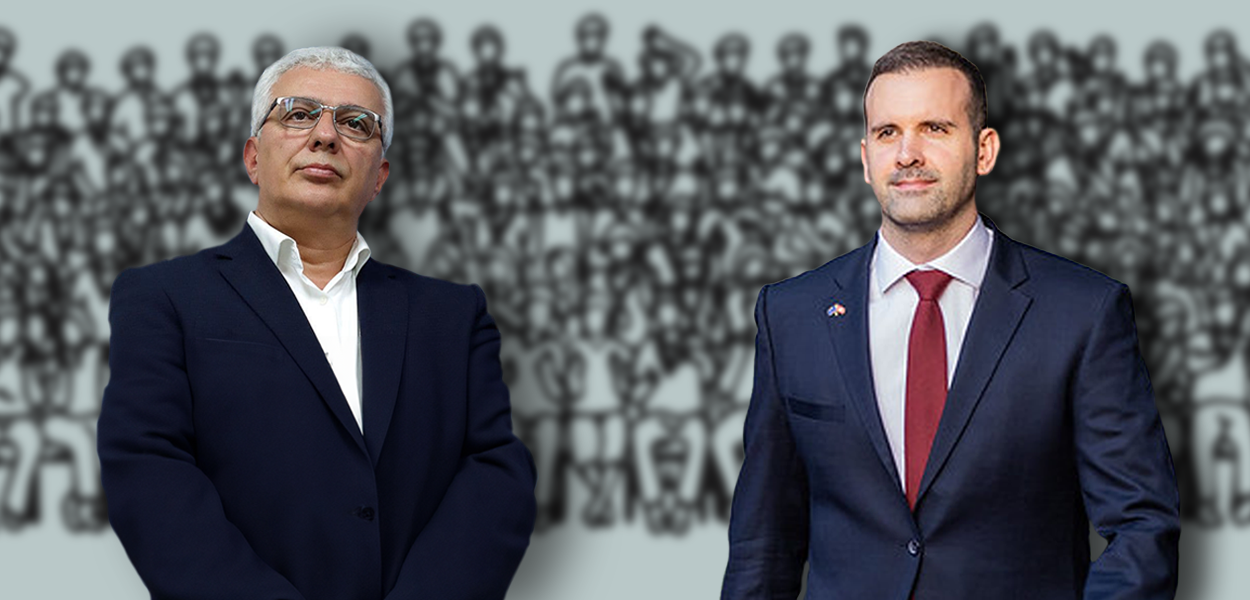
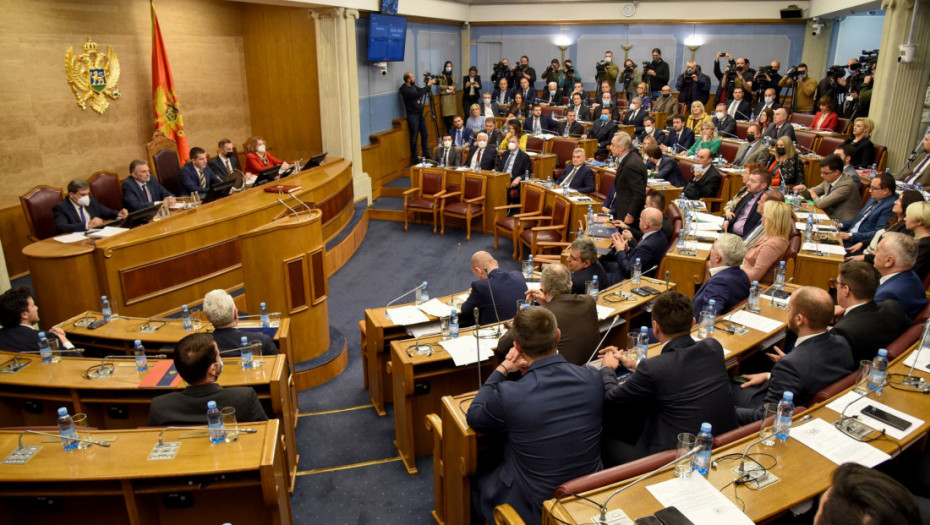
It would have been surprising, had there been anything to be surprised about. On Thursday, Parliament merely confirmed what everyone had already expected: the Government of Milojko Spajić, already the largest cabinet in Europe, became even larger. One prime minister, seven deputy prime ministers, twenty-seven ministers, more than fifty advisers, another fifty or so heads of directorates, and around 250 employees in the executive branch altogether.
A truly colossal government.
SO HELP ME GOD…
And all of it - with God's help, if one is to believe the newly appointed Deputy Prime Minister and the three newly elected ministers.
- I swear that I will perform my duties in accordance with the Constitution and the law, honestly, responsibly, and conscientiously. So help me God - those were the words of Jelena Borovinić Bojović as she took the oath of office as Deputy Prime Minister.
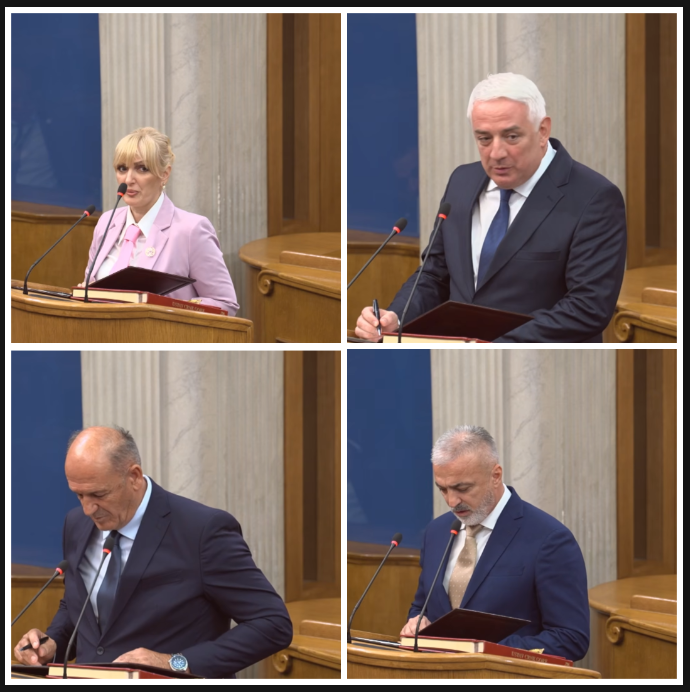
The same sentence was then repeated three more times, almost like a memorized nursery rhyme. First came Radoš Zečević, the new Minister of Transport, followed by Jovan Jole Vučurović, Minister without Portfolio, and finally Zoran Jojić, Minister of Sports and Youth. Each of them added the now customary phrase that is not prescribed by Montenegro's Constitution: „So help me God“.
Yes, all of them placed their hopes in divine assistance, although the real architect of the entire performance - Andrija Mandić - was standing only a few metres away. In the end, Mandić himself, wearing a carefully rehearsed smile, also invoked the highest authority.
- Now all that's missing is for God to bless Montenegro, and then we can move on - said the Speaker of Parliament, who, since Prime Minister Spajić was absent from the chamber, effectively directed the entire reshuffle process.
Whether God has the time to concern Himself with Montenegro is impossible to know. But one thing is beyond dispute: Montenegro is desperately in need of some kind of miracle, healing, or higher intervention.
Because this July spectacle, this political charade, amounted to nothing less than an insult to the country's citizens.
IS SPAJIĆ BEING BLACKMAILED - OR WAS THIS HIS OWN PLAN?
It is deeply humiliating for citizens when a prime minister - who has carried out his third government reshuffle in less than three years - does not even bother to appear before Parliament to explain why the cabinet should once again be expanded.
It would have been particularly interesting to hear Milojko Spajić explain how it is that Japan, where he studied, a country of around 122 million people, limits its cabinet to 19 ministers, while Montenegro, with only 620,000 inhabitants, can apparently have as many ministers as its prime minister wishes - already the largest cabinet in Europe, and perhaps as many as forty ministers before next June's elections.
Not a single word of explanation was offered. Nor did Spajić feel compelled to clarify his decision during Saturday's Prime Minister's Question Time.
This was not simply the prime minister's whim. The leader of the Europe Now Movement remained silent because he had nothing to say. The real decision-maker within the parliamentary majority is Andrija Mandić, leader of the New Serbian Democracy. It was Mandić, not Spajić, who decided which Serbian politicians from his party would enter the Government, and when.
Why, then, did Prime Minister Spajić bow his head? Is he being blackmailed? Do Mandić and his associates know something from Spajić's past that could politically compromise him? Just as happened when, during Spajić's attempt to run for President of Montenegro, information arrived from Belgrade revealing that he had falsely claimed to possess only Montenegrin citizenship, while in fact illegally holding both Serbian and Montenegrin citizenship.
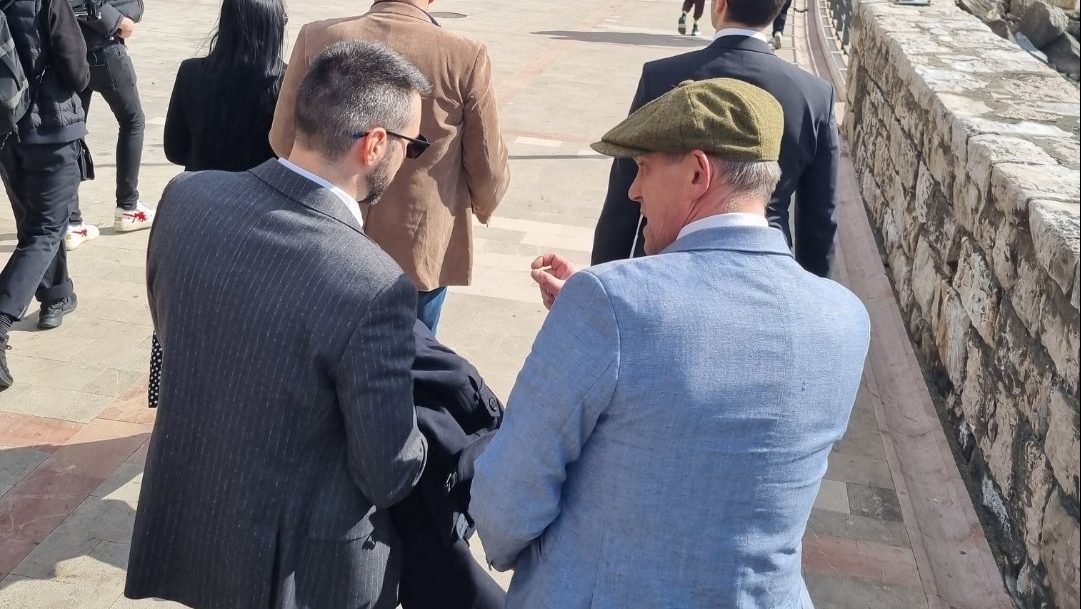
Perhaps Spajić now remains silent so that Mandić, or someone else, does not start talking about his connections with Do Kwon or his cryptocurrency dealings with Cottrell.
Whether that is the reason is ultimately less important. The essence is this: The Prime Minister accepted that someone else would shape, and repeatedly reshape, his Government, simply so he could remain at its helm.
GENOCIDE DENIAL AS A TICKET INTO GOVERNMENT
And so, the supposedly pro-European Prime Minister accepted, without a word of objection, that his Government should include ministers who deny the genocide in Srebrenica, the gravest crime committed on European soil since the Second World War.
- Let's be perfectly clear and honest: I believe there was no genocide in Srebrenica - that is what Jovan Jole Vučurović declared in the Montenegrin Parliament in June 2021. Mandić's trusted party official openly expressed what everyone in Mandić's New Serbian Democracy believes: the proponents of the „Serbian World“ project refuse to acknowledge crimes committed in the name of that very project.
Back in the summer of 2021, however, Vučurović could not have become a member of the executive branch. At that time, Minister Vladimir Leposavić was dismissed precisely because he refused to recognize the genocide in Srebrenica.
Today, evidently, times have changed. Genocide denial has become the very credential that secured Jovan Vučurović a ministerial seat.
It sounds like a cruel joke. But it is no joke. It is Montenegro's political reality. A reality that raises a deeply troubling question: what kind of state is Montenegro, and what kind of society has it become, if denying genocide has become politically rewarding?
HONOUR IS HONOUR, BUT POWER IS STILL POWER
And what do the representatives of Ervin Ibrahimović's Bosniak Party think about those who deny the Srebrenica genocide?
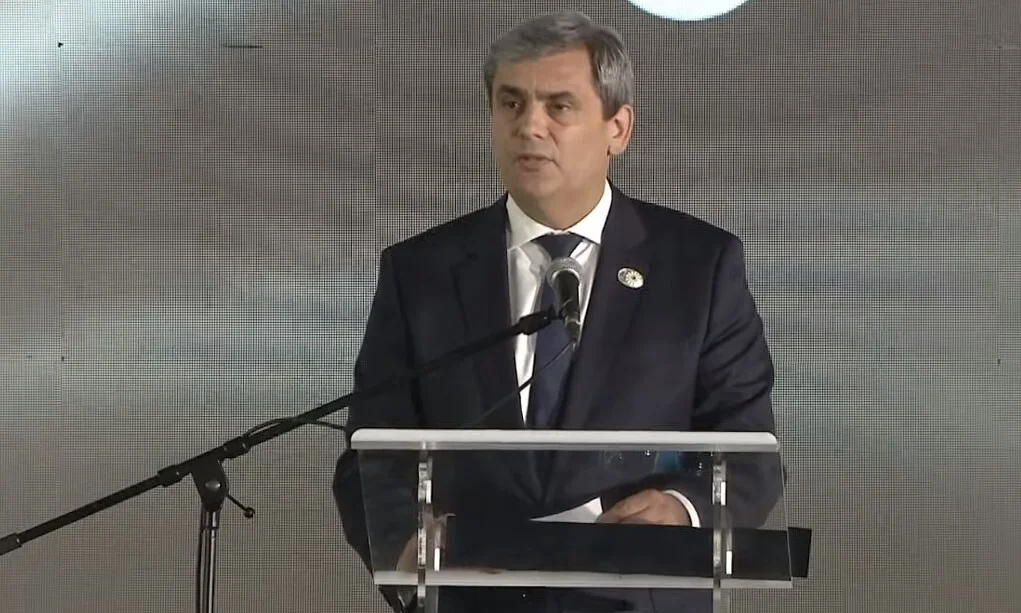
The answer became painfully clear on Thursday in the Montenegrin Parliament. Members of the Bosniak Party calmly, and without the slightest sign of embarrassment, voted in favour of appointing Vučurović, Zečević and the other genocide deniers to the Government.
Yet only a year earlier, Ervin Ibrahimović had spoken on behalf of Montenegro at the memorial ceremony in Potočari.
- If today, and every day, we fail to remember the victims of the Srebrenica genocide and their suffering; if we do not persistently demand that every perpetrator and every person responsible for this genocide be brought to justice, then I ask myself, and I ask all of you: what have we done to prevent someone from this generation, or those to come, from becoming the victim of another genocide - those were the words of the leader of the Bosniak Party.
Today, after members of his own party voted to make genocide deniers their partners in government, does Ervin Ibrahimović possess enough integrity, enough moral courage, to answer publicly the very question he asked in Potočari, standing among the mothers, sisters and relatives of the more than 8,000 victims murdered over several days in July 1995 simply because they belonged to a different faith and a different nation?
Indeed, can Montenegro's Minister of Foreign Affairs, and leader of the Bosniak Party, repeat that same question at a Government session?
Or has the promise of political power made him forget the pledge of honour?
WHEN JULY FIRES ILLUMINATE THE TRUTH...
There is something peculiar, fascinating, and profoundly significant, about Montenegro's July fires. They always illuminate the truth. They always reveal who is who in this country.
The July fires of 1796, more than 230 years ago, during the Battle of Martinići, united Old Montenegro beneath Mount Lovćen with the highland tribes - the Bjelopavlići and the Piperi. It was a battle that entered history and immortalized Montenegro, later celebrated in the famous poetry of Lord Alfred Tennyson.
You surely remember those celebrated verses: „O smallest among peoples! Rough rock-throne Of Freedom! Warriors beating back the swarm of Turkish Islam for five hundred years, great Tsernogora! Never since thine own black ridges drew the cloud and brake the storm has breathed a race of mightier mountaineers“.
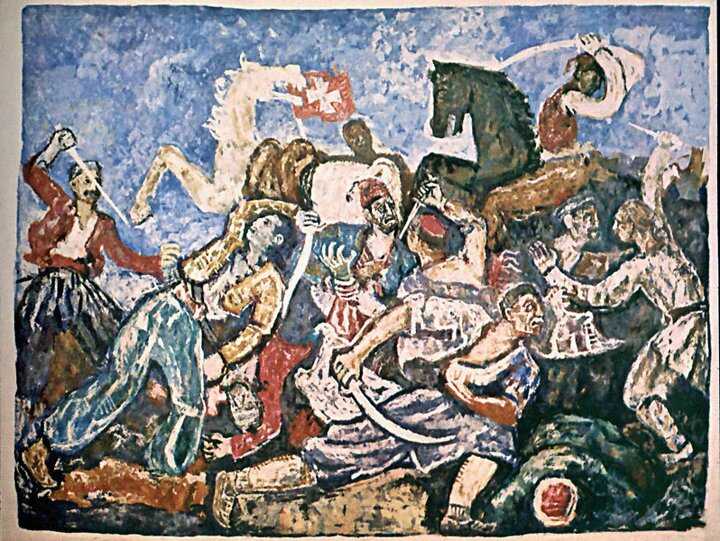
The second great July blaze came 150 years ago, with the famous Battle of Vučji Do, which demonstrated to the world not only the strength of Montenegrin heroism but also the greatness of Montenegrin ethics - an ethics that did not humiliate a defeated enemy. It was a prelude to the international recognition of a small principality that had bled for decades, for centuries, so that Montenegrins could walk with their heads held high.
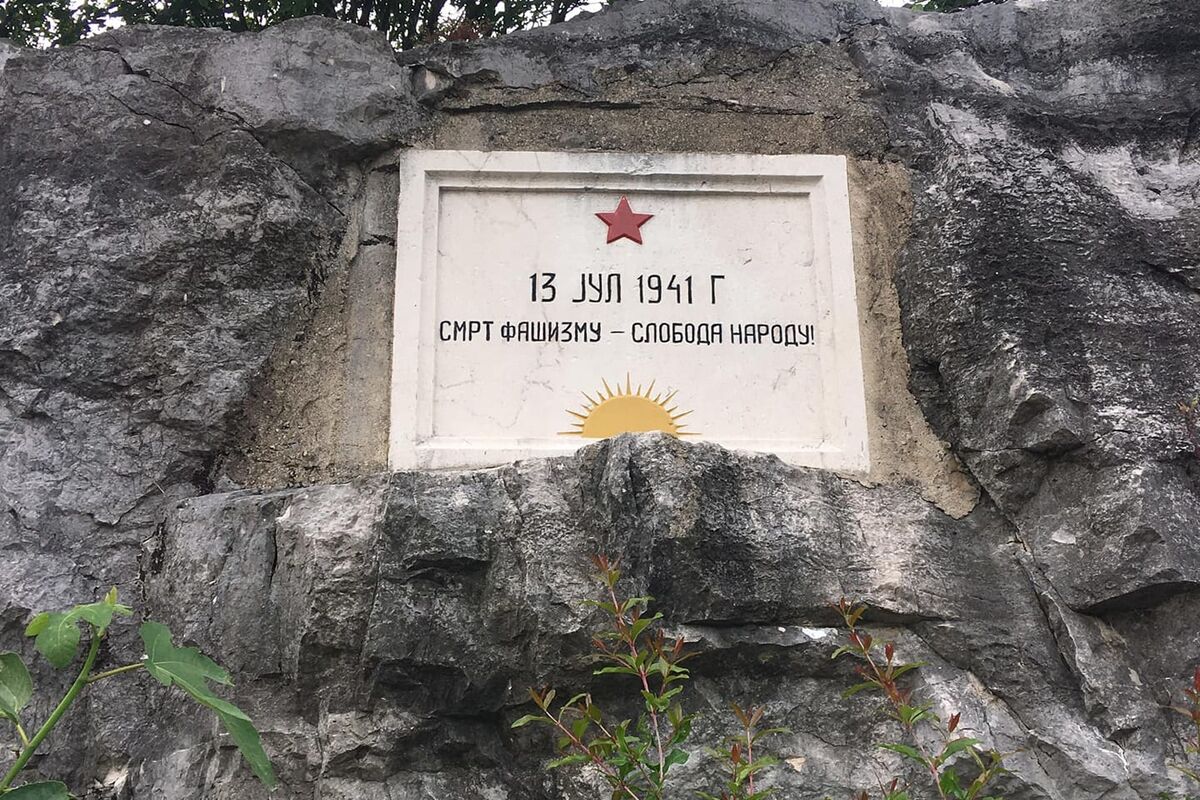
And then there was 13 July 1941, when Montenegro showed an occupied Europe, groaning under the boots of Hitler's and Mussolini's military forces, as well as the entire world, that it refused to live under fascist rule or accept humiliation. It was on that occasion that the renowned French philosopher Jean-Paul Sartre described Montenegro's July 13 Uprising as „one of the greatest events in contemporary Europe and of the twentieth century“.
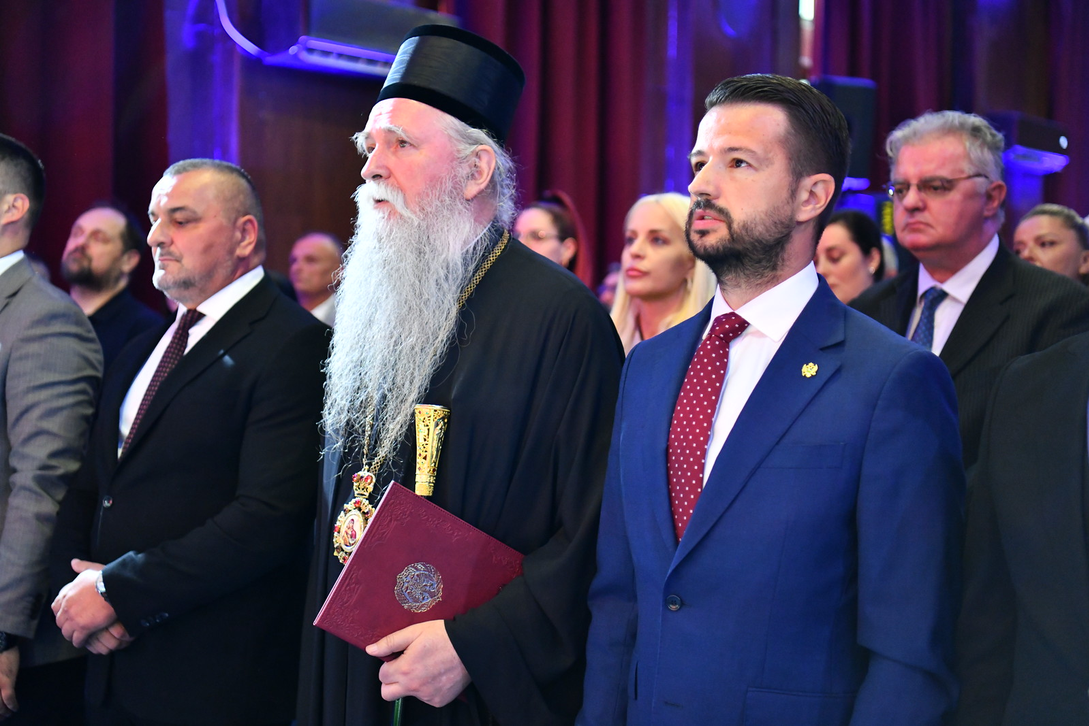
Yes, Montenegro's July fires illuminate the truth, for those willing to see it. There are, however, those who have learned nothing from them. One such example is Joanikije Mićović, Metropolitan of the Serbian Orthodox Church in Montenegro, who attended the commemoration of the Battle of Martinići at the invitation of President Jakov Milatović.
From there, he solemnly declared that Montenegro's victory at Martinići had ignited the torch of freedom, which later spread to „brotherly Serbia“ in 1804, when Karađorđe led the First Serbian Uprising.
- In that sense, it can be said that Karađorđe continued the work of Saint Petar of Cetinje. As always, a hero recognized another hero - Mićović concluded with evident self-assurance.
The self-important former repeat student from the „Stojan Cerović“ Gymnasium in Nikšić, who now presides from the Cetinje Monastery, demonstrated a basic ignorance of historical facts: Karađorđe, the man who supposedly „continued the work of Petar I2, died thirteen years before Petar I Petrović Njegoš, the architect of the modern Montenegrin state.
This example shows just how easily historical facts can be trivialized and manipulated for political purposes.
A CARICATURE THAT REVEALS THE TRUTH
Paradoxically, the July government reshuffle - caricatural in the way it was carried out - reveals the truth about the current parliamentary majority. About its true character.
What took place in Parliament on Thursday, July 23, was not merely an increase in the number of ministers. No, the story of the Government reshuffle served only as a smokescreen for what actually happened that day: a reshuffling of power, after which the informal leader of the parliamentary majority, Andrija Mandić, finally demonstrated that he is the most powerful political figure within the ruling bloc.
In doing so, the political essence of present-day Montenegro was laid bare. When a Chetnik commander confidently dictates the course of a supposedly pro-European parliamentary majority, Montenegro, a country formally on the threshold of European Union membership, comes to resemble an outpost of the „Serbian World“ project far more than a future member of the European Union, a community founded on democratic values and civic states.
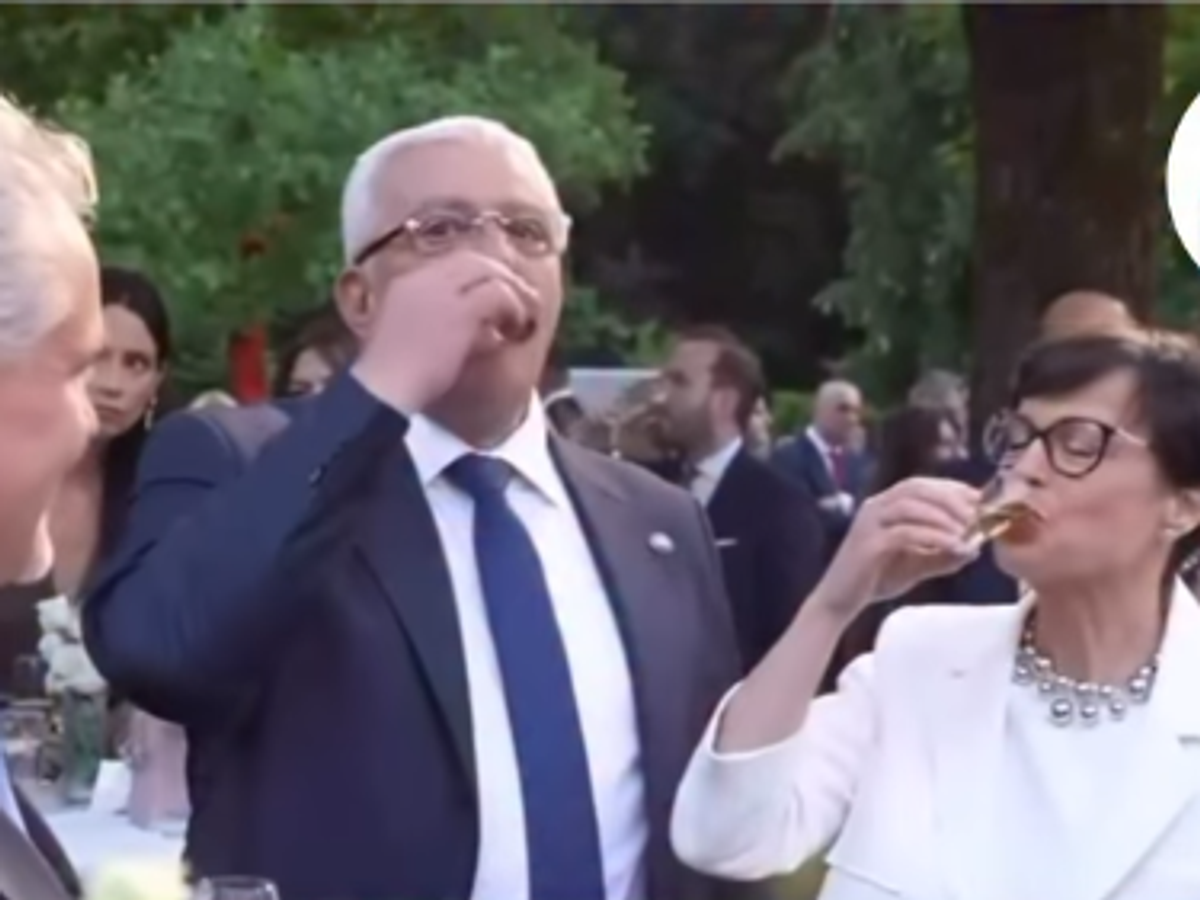
Perhaps Marta Kos knows this perfectly well. Yet after joining the gathering and celebrations with Mandić's supporters beneath Ostrog Monastery, and after downing glasses of plum brandy with them, she somehow finds it difficult to acknowledge that reality publicly.
And, truth be told, she probably does not care all that much. After all, this is now Montenegro's own choice, or - more precisely - the choice made according to the will of Mandić's Serbs in Montenegro.