




EC Report: Sustainability of Pljevlja Thermal Power Plant remains a concern, Montenegro urged to step up efforts towards its permanent closure
A strategic approach to a just transition is needed to ensure economic alternatives for communities that will be most affected by the gradual phase-out of coal. Work is under way to align legislation with the Directive on the Limitation of Emissions of Certain Pollutants into the Air from Medium Combustion Plants and the Industrial Emissions Directive, the European Commission document states

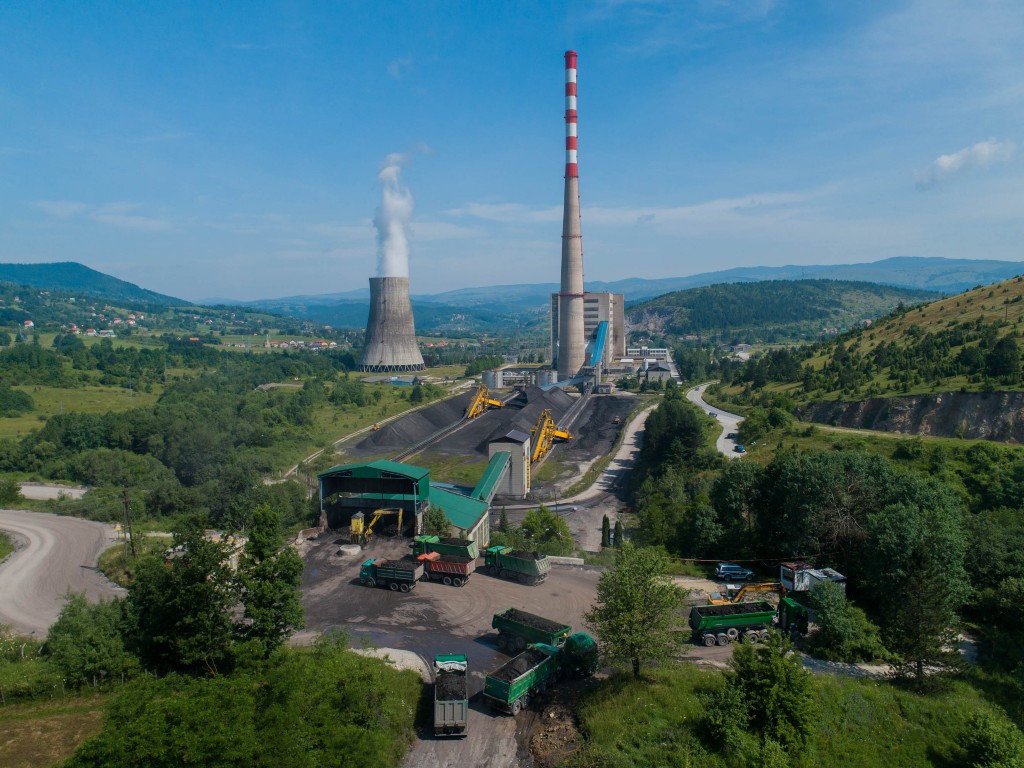
The environmental reconstruction of the Pljevlja Thermal Power Plant is under way, but concerns remain regarding key issues affecting its long-term sustainability, according to the European Commission's (EC) 2026 Report.
According to the report, Montenegro should step up its efforts to permanently close the power plant and meet EU emissions standards.
- A strategic approach to a just transition is needed to ensure economic alternatives for communities that will be most affected by the gradual phase-out of coal. Work is under way to align legislation with the Directive on the Limitation of Emissions of Certain Pollutants into the Air from Medium Combustion Plants and the Industrial Emissions Directive - the EC document states.
Further alignment needed
The report notes that in July this year Montenegro adopted amendments to the Chemicals Law to ensure compliance with the REACH Regulation, the Asbestos Regulation, the Prior Informed Consent (PIC) Regulation, the Regulation on Persistent Organic Pollutants (POPs), and the Volatile Organic Compounds Regulation.
- Further action is needed to complete alignment with the Biocidal Products Regulation. The National Helpdesk, the Chemicals Register and the Register of Biocidal Products have been established, although further improvements are needed in digitalisation, data quality and security to ensure interoperability with the systems of the European Chemicals Agency (ECHA) - the EC document states.
Montenegro has made good progress in the area of climate change by increasing the level of alignment of its legislation with the EU acquis. However, the European Commission points out that significant efforts are still needed to strengthen administrative capacities and ensure the adequate implementation and enforcement of regulations.
- In December 2025, Montenegro adopted the Climate Change Law, establishing a legally binding obligation to achieve climate neutrality by 2050. The law also provides a legal basis for the Monitoring, Reporting, Verification and Accreditation (MRVA) system, covering the sectors included in the EU Emissions Trading System (ETS1): electricity generation, industry, aviation and maritime transport, as well as the sectors covered by ETS2: buildings, road transport and small industry - the EC stated.
The law was further amended in May 2026, while eight additional rulebooks were adopted in July 2026, which will facilitate the implementation of the MRVA system across all sectors covered by the EU ETS by the end of 2026.
- Two regulated entities have submitted their monitoring plans, and one greenhouse gas (GHG) emissions permit was issued in June 2026 - the EC added.
All operators must obtain GHG permits by year-end
The European Commission is unequivocal that Montenegro must ensure that all regulated entities obtain their greenhouse gas emissions permits (GHG permits) by the end of 2026 and are ready to begin monitoring no later than 1 January 2027.
- Decisive steps are needed to improve existing national carbon pricing mechanisms in order to facilitate the transition to the EU Emissions Trading System following EU accession - the EC stressed.
In December 2025, Montenegro adopted its National Energy and Climate Plan, followed in February 2026 by the Low Carbon Development Strategy for the period 2026–2050. According to the report, the strategy establishes a long-term decarbonisation pathway towards 2050, in line with the Paris Agreement and Montenegro's commitment to achieving climate neutrality.
- Montenegro has adopted additional secondary legislation to strengthen alignment with the EU Regulation on the Governance of the Energy Union and Climate Action, as well as with the EU acquis concerning emissions from the land use, land-use change and forestry (LULUCF) sector. It has also improved the timeliness and completeness of the reports required under the adapted Governance Regulation, adopted within the framework of the Energy Community Treaty - the EC stated.
The Commission also noted that Montenegro still needs to align its legislation with the EU acquis in the areas of ozone-depleting substances, fluorinated gases, the carbon removal certification framework, and climate legislation relating to road transport, including CO₂ emission performance standards, car labelling and fuel quality.
The report further notes that Montenegro adopted a Plan in June this year for establishing mechanisms for the transposition, implementation and enforcement of the EU climate acquis. The plan is intended to enable full alignment with EU legislation and prepare Montenegro for its full implementation.