




Brussels prepares the EU for new member states: What the new plan means for Montenegro

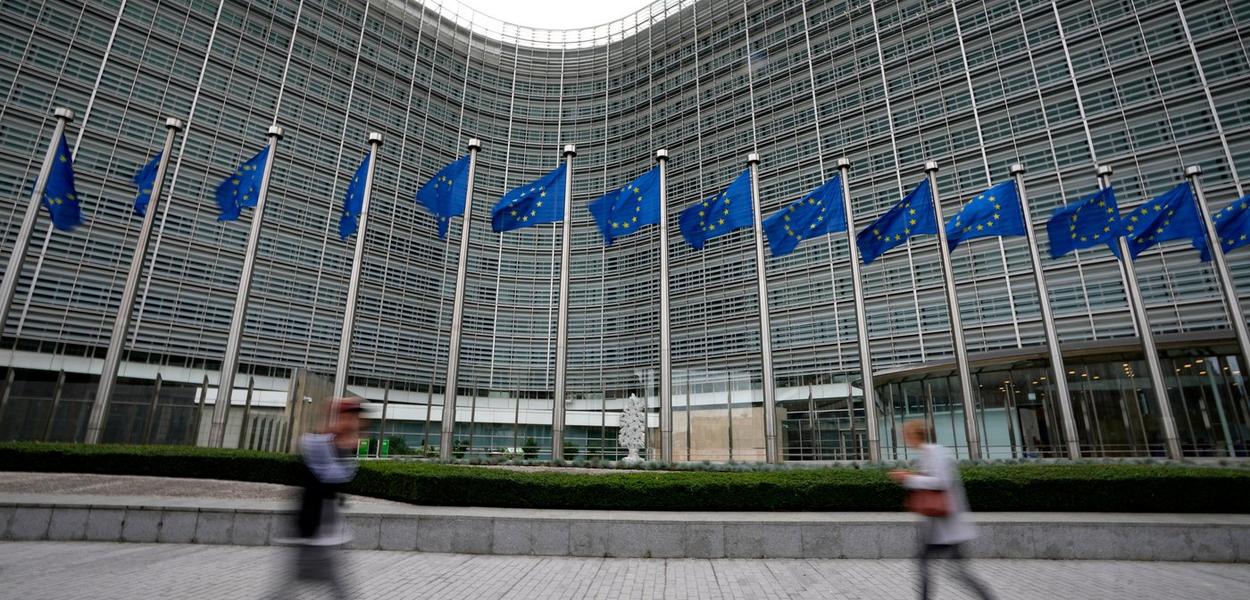
The European Commission has adopted a package of pre-enlargement policy reviews, setting out policy guidelines and measures needed to prepare the Union for future enlargements.
As President Ursula von der Leyen announced in her 2023 State of the Union address, and based on the mandate of the European Council, the measures presented today prepare the Union’s governance system, policies and budget for enlargement, while at the same time strengthening the protection of the Union’s values and the rule of law.
- Europe’s future depends on the choices we make today. The enlargement of our Union is a geopolitical imperative. Today, we are laying the foundations to ensure that a larger Union is also a stronger one - more resilient, more effective and firmly anchored in the values and rules that define us. As the countries involved in the enlargement process make progress on their reform path, the EU must be ready to welcome them. This means that we need to prepare our institutions, adapt our policies to new circumstances and ensure that our budget reflects our shared ambitions - von der Leyen said.
In the package presented today, the Commission provides a detailed assessment of its policies in light of the forthcoming enlargements. It sets out how the existing Treaty framework and future accession treaties can be used to prepare the Union for a larger number of member states.
The package also proposes a series of safeguards for future accession treaties, including stronger sectoral safeguards and a new institutional safeguard clause, to ensure that commitments undertaken during accession negotiations continue to be consistently fulfilled after accession.
- The package further strengthens the process of gradual integration by making it more coherent, structured and predictable. This enhanced process will further help candidate countries prepare for membership by allowing them to participate earlier in certain Union policies, provided that they meet the relevant conditions. This can help build administrative capacities, increase accession readiness and, even before membership, deliver concrete benefits for citizens and businesses both in the EU and in the enlargement countries. Participation would continue to be merit-based, conditional and reversible, and would depend on readiness in specific policy areas and strategic alignment - the European Commission said.
The package presented today will be the subject of a strategic discussion among the Member States on enlargement and reforms, including at the European Council meeting in October. The package will also guide work with the European Parliament and the Council on the institutional and operational adjustments needed for future accessions.
Adapting policies for a larger Union
The policy reviews presented today show that the Union can accommodate a larger number of Member States within the existing Treaties and accession treaties.
Across different policy areas, the most common needs concern strengthening administrative capacities and implementation, both within the EU and in the enlargement countries. Skills, regulatory and supervisory capacities, interoperable systems and cooperation between administrations need to be strengthened ahead of accession, and this will be done.
As regards budgetary arrangements, the policy review emphasises that there is room in the Union budget for new Member States while continuing to finance the Union’s existing priorities.
In line with the proposal for the next Multiannual Financial Framework for the 2028-2034 period, candidate countries would be financed before accession under the Global Europe instrument. Upon accession, they would move to national and regional partnership plans as new Member States, with additional funding for cohesion, agriculture, home affairs and Interreg.
As regards Ukraine, given the size, structure and very high productivity of its agricultural sector, targeted arrangements should significantly limit financial support and market access for sensitive agricultural products, while at the same time helping Ukraine regain access to its traditional export markets in third countries.
Strengthening governance for a larger Union
In the current geopolitical context, the EU needs to adapt its governance system so that it can take decisions more quickly and effectively. By making full use of all the possibilities provided by the Treaties, the Union can strengthen its capacity to act, prepare for future Member States and be better equipped for the future.
To this end, the Commission will continue to advocate the use of the so-called passerelle clauses, which would allow qualified majority voting to replace unanimity in key areas such as sanctions, tax fraud and fiscal measures in the energy sector. In addition, the Commission will review proposals that are still under consideration to determine in which cases the enhanced cooperation mechanism could help overcome long-standing deadlocks.
In the area of enlargement, the Commission proposes using qualified majority voting for opening negotiating clusters and adopting other interim decisions in accession negotiations, thereby giving greater momentum to the process.
The Commission also proposes exploring with the European Parliament and the Council ways to conduct procedures under Article 7 more efficiently, including possible time limits. Annual reports on enlargement and the rule of law will remain the main monitoring instruments, while rule-of-law reporting will also be extended to other candidate countries once they are ready.
Gradual integration of candidate countries into the EU
As explained by the Commission, closer integration should bring concrete benefits to citizens and businesses both in the EU and in the candidate countries.
The Commission will map existing gradual-integration instruments and identify opportunities to deepen integration in strategic sectors such as energy, transport, the digital sector and defence.
- This will complement and strengthen the accession process, build administrative capacities and mutual trust, while integration will remain conditional and reversible. The Commission will launch annual dialogues with enlargement partners to monitor progress, identify opportunities and address shortcomings in the gradual integration process - the Commission explained.
Sectoral and institutional safeguards
As announced in the 2025 Communication on the EU Enlargement Policy, future accession treaties should contain stronger safeguards in the event of serious backsliding in meeting the commitments undertaken during accession negotiations.
Today, the Commission is proposing a common framework for these safeguards. Future accession treaties would strengthen existing sectoral safeguards and introduce a new institutional safeguard mechanism. Specifically, the period during which safeguards can be activated in areas such as the economy, the internal market, and justice and home affairs would be significantly extended after accession.
A specific institutional safeguard mechanism would address serious breaches of the values set out in Article 2 of the Treaty on European Union (TEU) and the principle of sincere cooperation. In the most serious cases, measures could include the suspension of voting rights in the Council. Transitional arrangements could also apply where necessary, including in the areas of the free movement of workers and services, agriculture, sensitive products, financing and participation in common systems. A new Member State could also, for a limited period, undertake not to block future enlargements because of bilateral disputes.
Next steps
The Commission has called on the European Council and the European Parliament to continue discussions and institutional preparations and policy measures.
As part of the 2026 Enlargement Package, the Commission will present indicative roadmaps for Montenegro, Albania, Moldova and Ukraine, provided that they maintain the momentum of reforms. It will also present a coherent approach to gradual integration, including an overview of strategic areas.
The Commission will also work with Member States and candidate countries to align accession negotiations with the Union’s internal preparations.
Context
In her 2023 State of the Union address, President von der Leyen called on the Union to show the same determination as the enlargement countries and announced a review of pre-enlargement policies. The Granada Declaration, adopted that same year, established parallel commitments: countries involved in the enlargement process to make progress in implementing reforms, and the Union to undertake the necessary internal preparations. The Commission’s March 2024 Communication on the pre-enlargement policy review set out a work programme covering four areas: values, policies, budget and governance. In June 2024, the European Council adopted a roadmap for further work on internal reforms and invited the Commission to present detailed policy reviews, with operational elements in these four areas.
In its Political Guidelines for 2024-2029, the Commission committed to putting forward proposals to strengthen the Union’s capacity to act. At the same time, the European Parliament set out its position through its 2023 proposals for Treaty reform, as well as through its 2025 report and resolution on the institutional implications of enlargement negotiations.