




Azemović for Portal ETV: More than one billion euros arrive in Montenegro each year from the diaspora

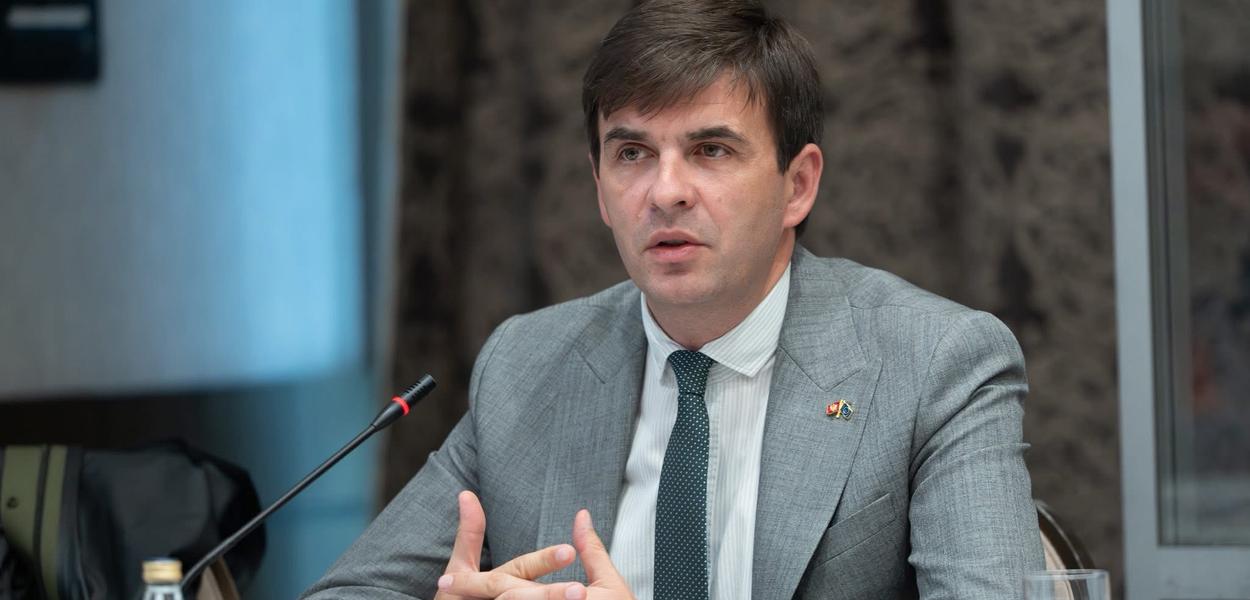
For decades, the Montenegrin diaspora has represented a strong pillar - economically, culturally, and in terms of identity. Today, amid accelerated global changes and European integration, the role of the diaspora is gaining additional strategic importance. Speaking to Portal ETV about the state’s plans to systematically include this potential in Montenegro’s development, the preservation of language and identity among young people abroad, regional development, investments, and concrete projects is the Minister of Diaspora Mirsad Azemović.
Preserving language, culture and identity among young people in the diaspora
Portal ETV: What steps do you plan to take to preserve Montenegrin culture, language, and identity among younger generations in the diaspora?
AZEMOVIĆ: There are numerous activities in this field. We would particularly highlight that the Ministry has, for the first time, launched an online language course. This is a project implemented with technical support from the Bureau for Education Services. It is intended for members of the diaspora residing in the USA, Canada, and European countries who are older than seven.
Classes recently began and will last for three months. Interest among young people has been significant, with more than 170 participants enrolled. The highest number of applications came from the United States. Classes are taught by certified teachers of the Montenegrin-Serbian-Bosnian-Croatian (CSBC) language.
We also emphasize that the Ministry, in cooperation with diaspora associations, implemented more than 100 projects over the past year alone aimed at preserving our cultural identity. These programs were carried out in host countries, with approximately 320.000 euros allocated for this purpose.
Youth in focus: strengthening ties with Montenegro
Portal ETV: How can young people from the diaspora be engaged and encouraged to strengthen their connection with Montenegro?
AZEMOVIĆ: Young people are at the center of our activities, and we maintain intensive cooperation with them. We particularly highlight the Summer School of Montenegrin Language and Culture, intended for the children of emigrants from Montenegro. The school, titled „Montenegro - My Homeland“, lasts 10 days and is held in July at Ivanova Korita.
We are proud of the young participants of this school, who took part in numerous program activities with love and enthusiasm, learning about the language, culture, and traditions of Montenegro.
With the new Law on the Diaspora - Emigrants a quality normative framework for cooperation with students in the diaspora is finally being established. The knowledge and experience of young people in the diaspora are extremely important for Montenegro’s development. This is a generation that has acquired education, work habits, and professional standards in developed environments, and this knowledge can be a powerful driver of innovation, institutional modernization and economic growth. We are creating concrete mechanisms that will show young people from the diaspora that they are welcome and that their contribution has real value.
Development of northern Montenegro and the role of the diaspora
Portal ETV: You previously stated that municipalities in the north must more rapidly approach the standards of those in central and southern Montenegro. How can this be achieved, and what is your vision for that development?
AZEMOVIĆ: Precisely for this reason, last summer the focus of the Diaspora Days event was on northern municipalities. We organized business forums that brought together prominent entrepreneurs from the diaspora and local communities. Our goal was to exchange ideas and identify barriers to investment. We also included representatives of local governments to contribute, from their perspective, to creating opportunities for attracting investment.
During the panels, the development potential of the north was presented in detail. In the context of new investments in infrastructure and the implementation of capital projects backed by the state, these areas will certainly be in focus for investors seeking to expand their capital into their country of origin.
The new law also envisions the opening of an Office for Returnees, through which we will provide various forms of support to people who wish to return to Montenegro and invest their accumulated capital into new forms of business. Our goal is to strengthen the diaspora’s trust in our institutions. This is a crucial step toward improving cooperation and building a secure business environment that will motivate them to invest in our shared country.
The vision for the development of the north is based on the valorization of natural resources through sustainable tourism, especially mountain, eco, and rural tourism, as well as the development of agriculture and the food industry. It will be necessary for all of us - the Government, local authorities, and the diaspora - to work persistently together to achieve this vision. Instead of being a region people leave, the north can become a region that, alongside EU integration, helps integrate the state among the most economically developed communities.
Diaspora Register - the first step toward accurate data
Portal ETV: Do we currently have reliable data on the size of the Montenegrin diaspora?
AZEMOVIĆ: We often hear the claim that there are as many Montenegrins living abroad as there are in Montenegro itself. However, to this day, we do not have precise data on the number of our people in the diaspora.
For this very reason, the Ministry has launched the Diaspora Register. This is an official, institutional database used to record citizens of Montenegrin origin who live and work abroad. Its primary purpose is to provide the state with accurate and up-to-date information on the diaspora so it can plan policies of cooperation, identity preservation, and diaspora inclusion in the country’s development.
The register, most often on a voluntary basis, collects data such as basic personal information, country of residence, education, occupation, professional skills, and interest in cooperation with institutions in Montenegro. Special focus is placed on young and highly educated individuals, whose knowledge and experience can be of great benefit.
The Diaspora Register enables better communication between the state and the diaspora, easier networking among professionals, project organization, as well as the creation of return, temporary engagement, or investment programs. In short, it is a tool that helps make the relationship between the diaspora and the home country systematic, organized, and mutually beneficial.
Financial contribution of the diaspora to Montenegro’s economy
Portal ETV: How much money does the diaspora send to Montenegro annually?
AZEMOVIĆ: The diaspora brings enormous financial benefits to our country. Official data show that around 800 million euros arrives through bank accounts alone.
It is important to note that this amount does not include all financial flows - a significant portion of the money the diaspora sends to families also arrives through informal channels (e.g., brought in cash during visits or via friends and relatives). Therefore, the total real contribution of the diaspora is considered to be even greater than what official figures indicate.
In short, approximately 0,75 to 0,85 billion euros arrives in Montenegro from the diaspora each year, representing an important source of support for households and a significant inflow into the country’s overall economy.
Concrete projects and new jobs
Portal ETV: Have you launched any projects with the diaspora that could be significant for Montenegro, especially those that create new jobs or encourage local development?
AZEMOVIĆ: In answering this question, it is important to highlight the Government’s efforts to improve local infrastructure, particularly in the northern part of the country. The reconstruction and modernization of the road network are of crucial importance for the implementation of projects that contribute to the country’s overall development.
The construction of the motorway is already bringing certain benefits. An example is the construction of a battery factory in Petnjica, owned by a prominent businessman from our diaspora. Conditions have been created for the factory to begin operations next year, which would result in the employment of the local population and serve as a driver of economic revival for that municipality.
Portal ETV: What concrete measures do you plan to take in order to attract investments from the Montenegrin diaspora into Montenegro?
AZEMOVIĆ: We see the creation of a clear, secure, and transparent environment for diaspora investments as a top priority.