




Vuković: Number of authorised nominators for Milanović reduced from 19 to nine, this circumstance requires a straightforward institutional explanation

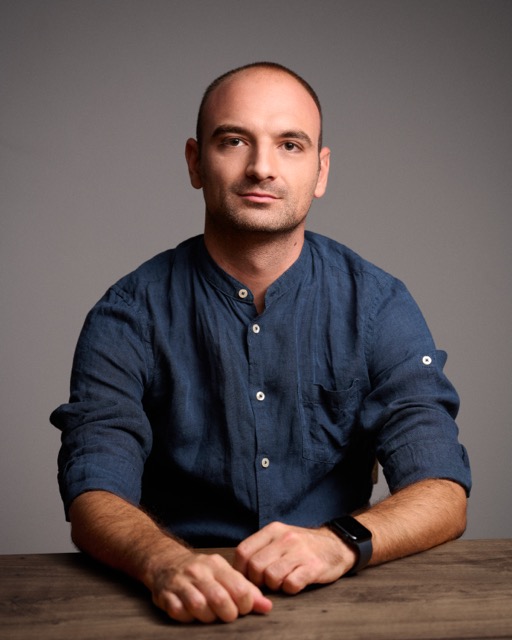
On 29 September, the working group recognised 19 valid nominators for Miroslav Milanović, a candidate for membership of the Council of Radio Television of Montenegro. However, the list of timely and complete candidate nominations, also dated 29 September, contains nine nominators, as local cultural institutions are no longer listed, producer and associate professor at the Faculty of Dramatic Arts of the University of Montenegro Vuk Vuković said in an address to chair of the Administrative Committee Jelena Nedović.
Vuković, who is also a candidate for membership of the Council, said in a request seeking clarification of several issues concerning the transparency and integrity of the procedure that this circumstance requires a straightforward institutional explanation.
- At the 29 September session, it was publicly stated that the working group had recognised 19 valid nominators for Miroslav Milanović, after which the Committee was asked to establish a list containing his name. However, the List of Timely and Complete Candidate Nominations for One Member of the Council, also dated 29 September, contains nine nominators, as local cultural institutions are no longer listed. This circumstance requires a straightforward institutional explanation: Which list did the Administrative Committee vote on, and when, on whose decision and on the basis of which legal interpretation, was the number of nominators changed from 19 to nine? Is this the final list, which MPs stand behind it, and who guarantees that it is correct - Vuković asked.
He added that this issue is particularly important because Article 24 of the Law on the National Public Broadcaster, Public Media Service of Montenegro, lists „national cultural institutions and non-governmental organisations in the field of culture“ as authorised nominators, rather than local cultural institutions.
- You initially recognised them as authorised nominators. If the initial error was subsequently corrected, I believe there should be a clear procedural record and an explanation of who made the correction and on what authority - Vuković said.
The second issue he raised, as he put it, not only as a candidate but also as a resident of Herceg Novi, concerns a possible impediment under Article 22 of the law in relation to candidate Milanović.
- During the session, one Committee member showed a document which was said to confirm Milanović’s resignation from the party in December 2022. At the same time, questions were raised publicly about his previous status as a member of the Herceg Novi Municipal Board of the Democrats, his participation in the board’s activities in July 2026, and the fact that his name was still listed on the party’s website at that time - Vuković said.
He said that by raising these questions, he was not prejudging the answer, but expected one.
- I believe the public should know whether the Administrative Committee, as a body, verified these contradictory pieces of information, established when any party position formally and substantively ceased to exist, and provided a written explanation of its conclusion in the minutes. In other words, did the Committee verify the publicly stated claim that Milanović’s name was still listed on 30 July 2026 on the Democrats’ official website among the members of the Municipal Board, and were photographs and public posts from July 2026 taken into consideration and, if so, what conclusion did the Committee reach - Vuković said.
He stressed that he does not accept the argument that these or other questions raised publicly constitute pressure on the work of the Committee or on MPs.
- I do not believe that holders of public office should be so sensitive to words spoken publicly. On the contrary, they should be sufficiently receptive to legitimate public criticism. This is particularly true when they are deciding on the appointment of members of the Council, following a series of procedures that have for years been subject to serious challenges and court proceedings, some of which have confirmed unlawful conduct in the decision-making process. That is precisely why public questions are not pressure, but the minimum of democratic accountability - Vuković concluded.