




VUJANOVIĆ FOR ETV PORTAL: Montenegro is eternal, emotions toward Serbia must not compromise the independence of state policy

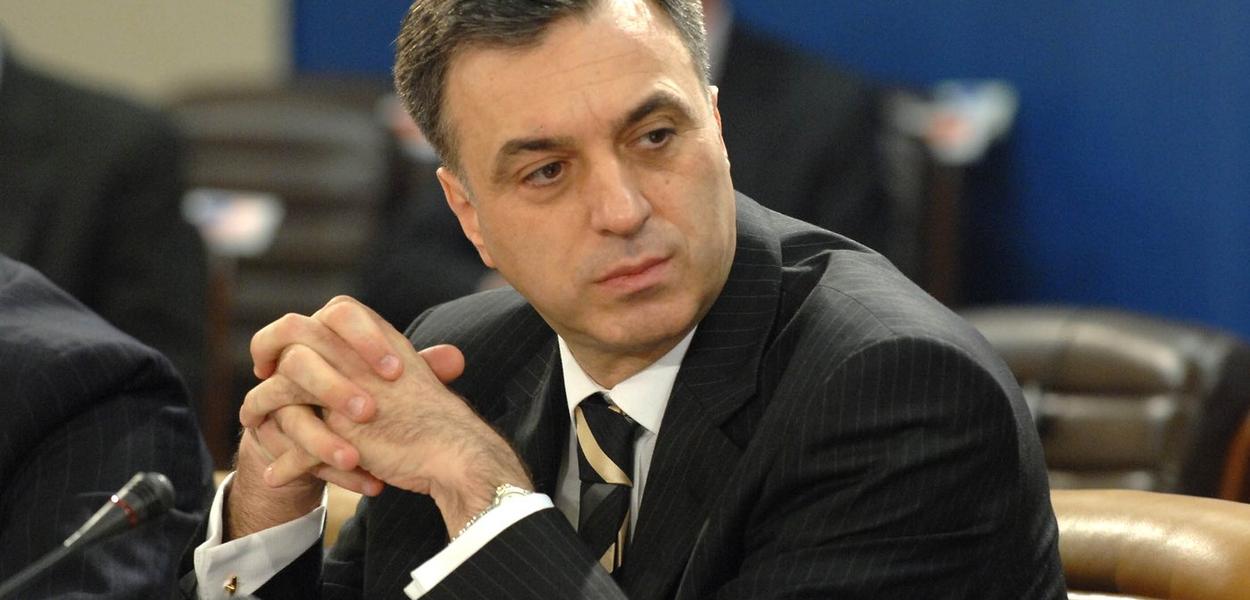
The first president of independent Montenegro after the restoration of statehood in 2006 - he was the person who, at one of the most important, most sensitive, and historically decisive moments of modern Montenegro, stood at the head of the state, and one of the key political actors who firmly, consistently, and without compromise advocated for the restoration of Montenegrin independence.
Two decades later, at a time when Montenegro is once again facing complex political and identity battles, when questions are being raised about the country’s direction, sovereignty, European future, and relations with its neighbors, Filip Vujanović, in an interview with Portal ETV, sends clear, powerful, and unequivocal messages: Montenegro made the historically right decision in 2006, its independence is permanent, unquestionable, and cannot be subject to revision - but challenges and risks to the independent conduct of state policy still exist. That is why his words today carry particular political and statesmanlike weight, both as a warning and as confirmation that preserving a sovereign, European, and civic Montenegro remains a matter of the highest national interest.
In the interview for Portal ETV, Vujanović speaks about the restoration of independence, whether he would change anything in his conduct while holding the highest state office, what threats he sees facing Montenegro, and why he believes the country’s European future is certain.
- I am certain of Montenegro’s eternity. I am convinced that its independence will never be threatened, but we have not protected ourselves from the risk of undermining its independence in conducting state policy - Vujanović said.
INDEPENDENCE AS A HISTORICAL CHOICE AND A MATTER OF STATE RESPONSIBILITY
PORTAL ETV: Did Montenegro make the right decision when it chose to restore its independence and become a sovereign and internationally recognized state?
VUJANOVIĆ: The decision to restore Montenegro’s independence is an expression of respect for its history and responsibility toward its future.
After the tragic breakup of former Yugoslavia, in the 1992 referendum citizens opted to attempt coexistence with Serbia within a common state. In making that choice, Montenegro took into great consideration the regional security context, which realistically could have been endangered by a unilateral declaration of independence.
Montenegro decided to attempt state coexistence with Serbia, even though it was clear that the enormous differences between the two states would be difficult to overcome.
That is why, in May 1999, the Government of Montenegro offered Serbia a new democratic arrangement for the state union of Montenegro and Serbia, in line with the South-East European Cooperation Process. That proposal aimed at integration into Southeast Europe. Of particular importance was that it also envisioned „broader Atlantic integration“. It is important to note that, precisely because of such a course, it was accepted by the People’s Party, which was part of the coalition government.
When Serbia rejected that proposal in August 1999, the Government of Montenegro proposed the Platform on New Relations Between Montenegro and Serbia, which envisaged a coordinated foreign policy that would ensure an efficient return to the international community, including integration into European and Euro-Atlantic structures.
Since Serbia rejected that proposal as well, in December 2000 the proposal for a Union of Independent States of Serbia and Montenegro was put forward. That union was intended as an opportunity to test the quality of coexistence between two independent states, with the possibility of either continuing or dissolving the union and proclaiming full state independence.
After that proposal was also rejected, preparations for the restoration of Montenegro’s independence began. This process required acceptance of the referendum outcome in Montenegro, Serbia, and the international community.
Through very careful and patient communication among Montenegro, Serbia, and the European Union, the Belgrade Agreement was signed in March 2002, guaranteeing Montenegro a referendum on independence, stability within Montenegro, good relations with Serbia, and - through acceptance of the referendum outcome by the European Union - swift recognition of independence by the wider international community.
PORTAL ETV: Looking back from today’s perspective, would you change anything in your conduct while serving in the highest state office? If so, what specifically and why?
VUJANOVIĆ: I would change nothing, because we acted with maximum patience and gradualism, taking all circumstances into account.
I believe that an agreement between two old Balkan states, with two closely connected peoples - both historically respected kingdoms that had lived together in a federation - was a better model and would guarantee better relations after the restoration of independence.
Such an agreement was reached by the Czechs and Slovaks through the so-called „Velvet Revolution“, transforming Czechoslovakia into the independent states of the Czech Republic and Slovakia.
But neither are we and the Serbs the Czechs and Slovaks, nor is the Balkans Central Europe, nor are we ready to learn from good experiences and choose easier paths toward a stable and prosperous future.
INDEPENDENCE IS NOT THREATENED, BUT RISKS TO AUTONOMY EXIST
PORTAL ETV: How do you view the state of the country today - are there threats to its progress and sovereignty and, if so, where do they come from?
VUJANOVIĆ: The past two decades have shown that the restoration of Montenegro’s independence was a magnificent success.
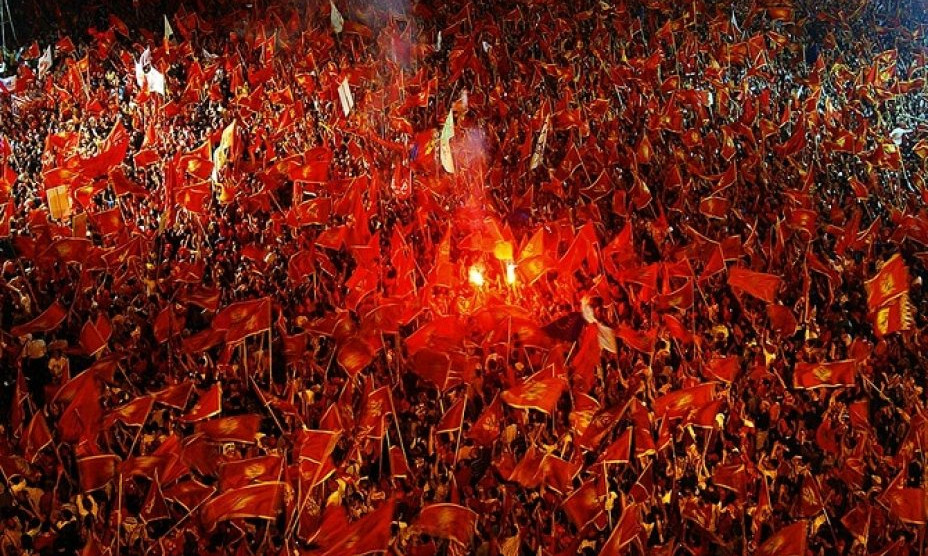
It was achieved thanks to anti-fascism, which during and after the Second World War restored Montenegro’s state name, and through the May 2006 referendum, which secured full independence and permanence for our state.
I am certain of Montenegro’s eternity and convinced that its independence will never be threatened.
Unfortunately, we have not protected ourselves from the risk of undermining its autonomy. From a clear and understandable emotional closeness with Serbia comes an unjustified risk to Montenegro’s independence in conducting state policy.
We do not respect lessons from history, we place emotion above what is rational and beneficial, and we fail to overcome the flaws of the Balkan mentality.
Instead of being closest to one another and turning toward each other within Montenegro, we often seek closeness outside Montenegro.
In doing so, we deepen and prolong divisions within Montenegro and distance ourselves from one another - unnecessarily and senselessly.
PORTAL ETV: Do you believe Montenegro will succeed in becoming a full member of the European Union?
VUJANOVIĆ: I am certain of it. Montenegro will become a member of the European Union - and it will be the next member after Croatia, which joined in June 2013.
On April 22 of this year, the Committee of Permanent Representatives of EU member states approved the establishment of a Working Group for drafting Montenegro’s EU Accession Treaty.
The previous working group was established in June 2011 to prepare Croatia’s Accession Treaty, which was signed in December of that same year.
So nearly 15 years have passed since the previous accession treaty. A great deal of time has passed - or rather, been lost - for enlargement.
That is why the enlargement process must be accelerated, and Montenegro has the privilege of becoming the next member. It should serve as an example to other aspirants and help make the European Union stronger, more stable, and more globally influential.
FIGHTING ABUSES YES, BUT WITHOUT HUMILIATION OR PREJUDGMENT
PORTAL ETV: Do you believe the current government is settling scores with its predecessors, or is this a legitimate process of prosecuting possible abuses?
VUJANOVIĆ: A serious and responsible state resolutely and non-selectively prevents abuses, and if they occur - it uncovers them, prosecutes them criminally, and adjudicates them in the interest of the common good, punishment, and the rehabilitation of offenders.
The more serious the abuse and the higher the position of the perpetrator, the more efficient the proceedings must be, the harsher the punishment, and the more successful the rehabilitation.
Proceedings must - without exception - respect the dignity of the suspect and the presumption of innocence.
Any public exposure and humiliation of potential perpetrators undermines the seriousness and responsibility of the state.
I fully understand when perpetrators of the gravest crimes against life and physical integrity are deprived of liberty with appropriate public exposure. Such exposure demonstrates the highest level of social danger posed by such crimes and offenders and has preventive value and full justification.
I do not understand why potential perpetrators of abuses should be publicly exposed during arrest, humiliated in that way, and why the presumption of innocence should be rendered meaningless, while public opinion is transformed from observer into arbiter.
Such public arrests rely on a misinterpretation of regulations that a responsible state must not allow itself.
I would be very pleased if the extremely clear European Union Directive obliging states not to publicly treat suspects as guilty were strictly respected, and if the media chose to anonymize suspects’ identities until a final verdict is reached.
PORTAL ETV: Where is the line between fighting corruption and selective justice?
VUJANOVIĆ: The line lies in the proper and non-selective application of the law by investigative authorities, prosecutors, and - ultimately and most importantly - the courts.
The court must be a court of law, not a court of necessity, and it must stand outside and above the influence of public opinion.
Since one of my synonyms for a „judge of law“ was Božidar Vuksanović, former president of the District Court in Podgorica, I will explain how I understand this.
After several decades, one of our emigrants returned from Canada and was immediately accused of abusing prisoners as a guard in the Kolašin prison during the war.
Božidar Vuksanović decided to preside over the case - a case that attracted enormous public attention and was attended directly by a representative of the Canadian Embassy in what was then Yugoslavia.
After the main trial, the defendant was acquitted. The verdict was upheld, and he returned to Canada.
Not long afterward, an international forum was held in France where, in the context of protecting rights in criminal proceedings, one participant claimed that such rights were not respected in certain countries, including Yugoslavia.
The Canadian representative opposed that claim, praising the Podgorica court ruling as an extremely positive example of rights protection and lawful conduct.
SECURITY SECTOR
PORTAL ETV: How do you assess the state of the security sector, particularly in the context of mass killings, clashes between criminal clans, and the overall fight against organized crime? Does the state have full control over the security situation?
VUJANOVIĆ: The security sector is of special importance to the functioning of the state and is an important indicator of its seriousness and responsibility.
Every country’s security system faces criminal groups, their conflicts, and the need to ensure citizens are not endangered by their activities and clashes.
No matter how well organized, efficient, and internationally connected a country’s security system may be, there will always be reasons to criticize it and express dissatisfaction.
That is why I do not wish to judge the current security services negatively solely through the effects of the fight against organized crime groups, because I believe there is no country that could not be criticized on those grounds.
Of course, regardless of assessments of the security sector’s effectiveness against organized crime, every serious state should carefully and responsibly consider all well-intentioned criticism of that sector and all suggestions for its improvement.
I am convinced that I share the disappointment and concern of all our citizens over the two horrific, mass, and difficult-to-comprehend killings in Cetinje.
Many innocent people died, many children among them; our royal capital was plunged into mourning, and the entire country grieved sincerely and deeply.
It is obvious that Cetinje should have had a stronger and better organized secret and public police force, stronger and more intensive coordination and oversight with the national level of security, and that after the first mass crime more effective preventive and protective measures should have been taken to prevent the second one.
All of this is sad and tragic, and I believe that no objective person, after those two mass crimes, can be satisfied with the state of the security sector.
RELATIONS WITH CROATIA SERIOUSLY DAMAGED, THE LABEL OF A RELIABLE PARTNER LOST
PORTAL ETV: How do you assess the current relations between Montenegro and Croatia, and do you believe the government’s actions could endanger those relations and the country’s international standing?
VUJANOVIĆ: I regret the current state of relations between Montenegro and Croatia.
I see the participation of our soldiers in the Dubrovnik battlefield as a dark chapter in Montenegro’s history.
The Croatian authorities understood and accepted our sincere and repeatedly expressed apology.
I believe we could have been an example of neighbors who achieved a high level of cooperation and partnership despite a difficult and tragic past, which I have often described as a dark side of our history.
Such relations with Croatia should have been carefully nurtured, always with the awareness that our army had left a tragic and painful mark on the unfortunate Dubrovnik battlefield.
Instead of limiting ourselves to the only unresolved issue - the permanent border demarcation at Prevlaka - we opened other interstate disputes that led Croatia to block the closure of an important negotiation chapter and declare three of our state officials persona non grata.
For more than 25 years, the demarcation at Prevlaka had a temporary character, and both we and the Croats emphasized that it was an open issue that did not burden interstate relations.
On the contrary, we emphasized that, as responsible states, we had temporarily resolved a serious interstate issue amicably and by agreement, and that it did not burden cooperation in any way.
That is no longer the case, and I would not dare predict when we will restore the previous level of relations with Croatia.
Montenegro has lost - and not only because of relations with Croatia - its reputation as a country with excellent relations with neighbors and as a reliable regional partner.
That is unfortunate, because we were sincerely and successfully devoted to cultivating such a perception of Montenegro, and it should have been preserved and further strengthened.
TIME WILL SHOW WHETHER THIS IS A REAL POLITICAL CHANGE OR CAMOUFLAGE
PORTAL ETV: Do you believe Andrija Mandić has genuinely changed politically and now shares a pro-European course, or is it political camouflage aimed at broader acceptability?
VUJANOVIĆ: Describing its origins, New Serb Democracy and its president Andrija Mandić proudly emphasize that they emerged from the People’s Party.
Within the coalition government „To Live Better“, I viewed the People’s Party as an extremely correct and constructive partner.
Like the People’s Party, New Serb Democracy advocated preserving the joint state during the referendum.
New Serb Democracy was also against NATO integration and advocated leaving the Alliance.
Now Speaker of Parliament Andrija Mandić claims that the same goals can be achieved through different paths.
So is his goal now to restore a union with Serbia through the „Serbian World“, and does he still want Montenegro to leave NATO, only by different political means?
Or has the Speaker of Parliament, in the name of pro-European ambitions and EU accession, abandoned those goals?
Time will tell, and I would refrain from making predictions.
CITIZENS WILL GIVE THE FINAL VERDICT ON THIS GOVERNMENT IN 2027
PORTAL ETV: Do you believe this government coalition can survive, and what do you think the 2027 elections might bring?
VUJANOVIĆ: I am certain that an independent Montenegro will endure and last forever. That it will remain a responsible and reliable member of NATO and the EU. That its interest lies in promoting good neighborly relations and regional cooperation.
I hope that such a Montenegro will be recognized as a unique and immeasurable value, a value that belongs to everyone. Both to those who wished for the restoration of its independence, and whose wish came true, and to those who wanted it to remain in a special union with Serbia, yet democratically accepted the outcome of the referendum.
Always respecting the electoral will of the citizens, and believing that in future elections they will choose our best possible future, let us not forget that we restored our independence through great patience and perseverance.
Let us protect Montenegro - because no one can protect it better than us.