




Spajić to rescue Bečić: A lifeline for the Democrats ahead of the 2027 elections

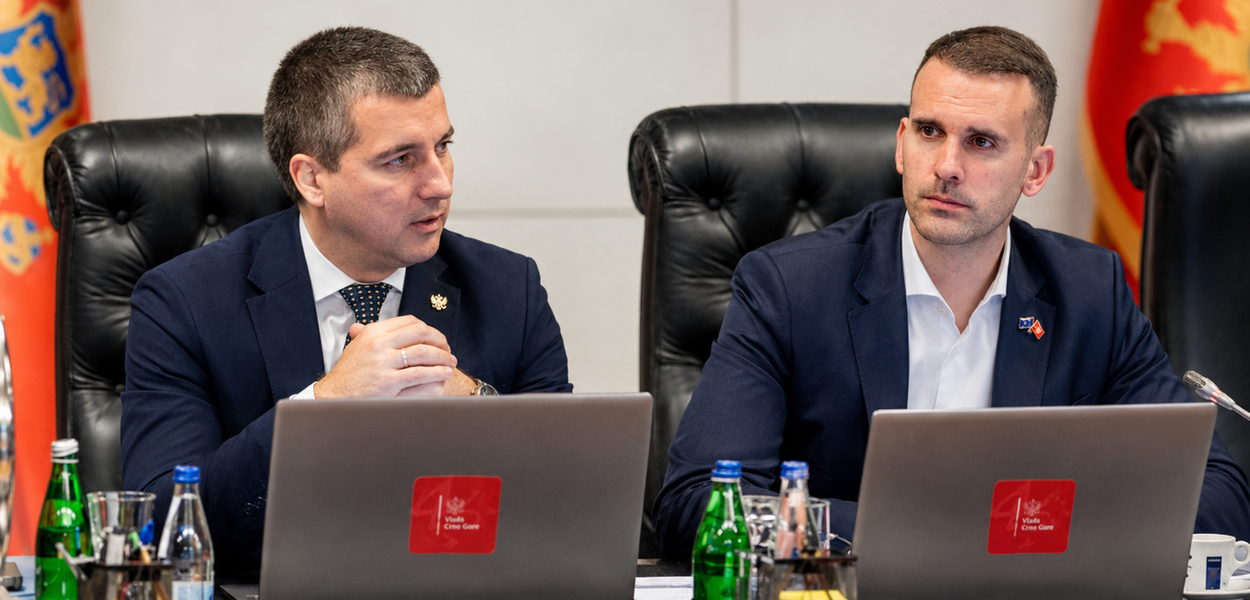
Will Milojko Spajić rescue Aleksa Bečić’s Democrats from political decline and spare them a struggle merely to clear the electoral threshold by forming a pre-election coalition for the 2027 parliamentary elections?
That is the question being raised with increasing frequency following speculation that the two political camps could extend their cooperation from the local to the national level and run together in the next parliamentary elections.
If that happens, an even more important question will arise: will Spajić, as the leader of currently the most significant political force in government, primarily seek through a joint electoral bid to save the Democrats politically - a party that, according to available polls, has recorded a serious decline in support in recent years? A steep decline.
Because the figures published so far leave little room for complacency.
A poll by Spektrum Analitika, published in April this year, showed that the Democrats had the support of 6.4 percent of citizens. That represents a serious drop compared with earlier polls, in which support for the party stood at around 10 or 11 percent.
If the trend continues, the Democrats could find themselves in a position at the next election where they are not fighting for power, but for their own political survival - for the right to cross the electoral threshold.
FROM GREAT AMBITIONS TO A FIGHT TO CLEAR THE THRESHOLD
Today, the Democrats have people heading or occupying senior positions in numerous state institutions - from the security and defence sectors to internal affairs, the media and culture. Aleksa Bečić, Dragan Krapović, Danilo Šaranović, Boris Bogdanović, Tamara Vujović and other party officials have been part of the government and political system for years.
Political influence, however, has clearly not automatically translated into increased support.
Quite the opposite.
If, according to available polls, the party has fallen from around 11 percent support to 6.4 percent, then it is legitimate to ask whether the Democrats’ political model has exhausted most of its capital.
Because a party that controls or participates in managing the country’s most important state systems while simultaneously sliding towards the electoral threshold faces a serious paradox: many positions, but increasingly less political support.
If this trend continues, running independently in the elections would carry a serious risk for the Democrats.
A pre-election coalition with the Europe Now Movement would significantly reduce that risk.
The Democrats’ decline in support would be less visible in a joint result, while the party would have an opportunity to retain part of its political influence and parliamentary seats.
In other words, what the Democrats might lose by running independently, they would seek to preserve through a coalition.
BEČIĆ: FROM POLITICAL HOPE TO POLITICAL LIABILITY?
Aleksa Bečić was once regarded as one of the most promising young politicians in Montenegro.
Today, his political position is inseparably linked to the fate of the Democrats, while the party’s decline in support has raised questions about how much of his former political capital remains.
The political model that for years rested on sharp rhetoric, confrontations with political opponents and a strong emphasis on the fight against corruption and crime has evidently failed to retain its previous level of support.
The public - or, more precisely, the voters - ultimately deliver the most important verdict.
And so far, the available figures do not favour the Democrats.
That is why the next election could be much more than just another electoral cycle.
For Bečić and the Democrats, it could represent a test of whether they still have the strength to be a serious political force on their own - or whether they need a much stronger partner for their political survival.
SPAJIĆ IS NOT JUST SAVING THE DEMOCRATS
Still, a potential coalition would not be a one-way street.
The Democrats would not be the only ones who could benefit from such an alliance.
Things are not exactly going smoothly for Milojko Spajić’s Europe Now Movement either, compared with the period when the party made its major electoral breakthrough. The Democrats could offer Spajić something that may be valuable to the Europe Now Movement - infrastructure, local networks, organisational capacity and part of the electorate.
A potential agreement could therefore be a political calculation in which both sides gain something.
The Democrats - protection from the risks of running independently.
The Europe Now Movement - additional infrastructure and an opportunity to improve its electoral position.
But the balance of power is not equal.
The Europe Now Movement is currently a significantly stronger political force than the Democrats. For that reason, a potential alliance would look more like an attempt by the weaker partner to protect itself than an equal partnership between two political forces.
And that is precisely where the key calculation lies.
If the Democrats cannot preserve their former standing on their own, a coalition with the Europe Now Movement could allow them to conceal their own decline behind a joint result.
WHO IS SAVING WHOM?
That is why the question is no longer simply whether the Europe Now Movement and the Democrats will run together.
The much more interesting question is: who stands to benefit more?
Will Spajić gain additional strength on the ground, or will he take on the political burden of a partner that is losing support?
Will the Democrats gain a new political opportunity through a coalition, or merely postpone confronting their own decline?
The 2027 election could reveal what we can only speculate about today: whether the Democrats will try on their own to regain the support they have lost, or whether they will form an alliance with the Europe Now Movement that would allow them to survive what running independently could make much more visible.
Because if a party with a significant number of government positions and levers of power reaches the point where it needs a stronger partner merely to cross the electoral threshold, then the problem is no longer just electoral.
It is a question of political weight.
And 2027 will show just how much of Aleksa Bečić’s former Democrats actually remains.