




Sonja Dragović (KANA) for Portal ETV: Velje Brdo is a deception - €3.5 billion for a baseless illusion

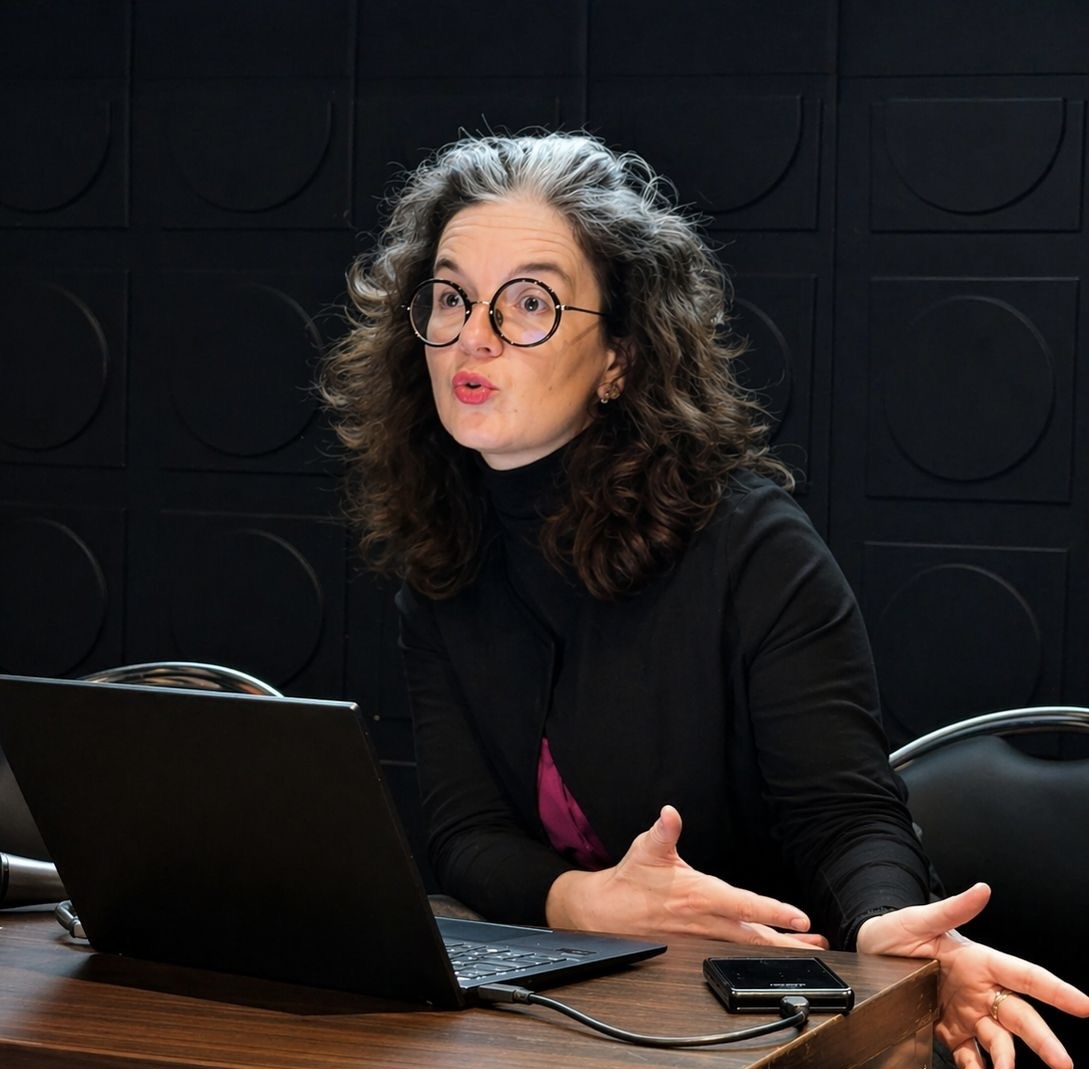
At a time when the government presents the „Velje Brdo“ project as a fast and accessible solution to the housing crisis, a strong warning is coming from the professional community that it is a promise without real foundation. Sonja Dragović, representing the group KANA / Who If Not an Architect, told Portal ETV that the project lacks basic technical, infrastructural, and financial conditions, that the timelines are unfeasible, and that the prices are unrealistic. She also points to a key contradiction: citizens are promised ownership of affordable apartments, while strategic documents foresee a model of permanent lease.
With an estimated cost of €3.5 billion, a lack of infrastructure, and potential consequences for space and resources, the warning is clear - this is not only a risky project for future residents, but a move that could burden Podgorica and Montenegro as a whole in the long term.
Promises without foundation
Portal ETV: What are the key reasons why you consider the Velje Brdo project a deception?
Sonja Dragović: When we say „deception“, we mean a situation in which one party (in this case, the Government) falsely presents its housing policy to another party (in this case, the Montenegrin public) and promises something that cannot be delivered. The „Velje Brdo“ project has been presented as a near-complete solution to the housing crisis, even though there are no, nor can there be in the foreseeable future, basic technical, infrastructural, or financial conditions for it. This is so clear that we expect that soon, in Montenegrin slang, the expressions „empty promise“ and „Velje Brdo“ will become synonymous.
There are numerous indicators: to begin with, let us look at what has been announced so far and then denied. In September 2024, the Government promised that the first apartments would be ready for occupancy by mid-2026, at a price of €1,000 per square meter. In January 2026, the deadline was moved to 2027, and in March and April, the construction of a boulevard was announced, along with the conceptual design for the first block, which won a competition of questionable validity due to a potential conflict of interest between the jury and the winners. But even if we ignore that, it remains certain that within the announced timelines it is technically impossible to turn a conceptual design into a main project and then build habitable residential buildings with basic infrastructure on this inaccessible, completely undeveloped, and disconnected terrain.
Another aspect should be added, which has not received much media attention so far: the Government promotes the project to the public exclusively as an opportunity to purchase an affordable apartment that will become the buyer’s property, while the Housing Policy Strategy until 2034 (adopted in June 2025) foresees a different model, under which residents pay up to 15% of the apartment’s value and gain the right to permanent lease, not ownership. Anyone can verify this: find the document online and see for yourself - after describing this model of affordable housing, the Strategy states: „A similar model is planned for the Velje Brdo Project“. This means that the Government tells the media one thing, what it assumes people want to hear, that they will finally have an apartment they can afford, while strategic documents foresee something else. We are aware that this is probably not widely known, as people, based on experience, do not have much trust in Montenegrin strategic documents, but that does not change the fact that there is a major contradiction that no one is discussing.
Risks for citizens and the city
Portal ETV: Does this mean that citizens should fear they could be misled or harmed?
Sonja Dragović: Yes, both on an individual and a collective level. The harm that individuals and families who have expressed interest in these apartments may face stems from the fact that the project is flawed and the promises cannot be fulfilled - the conditions have not been properly researched, there is no input data, infrastructure does not exist, the plans are deficient, and for now the entire story literally rests on the energetic appearances of Minister Radunović, who is trying to convince us not to trust our own eyes and that everything will surely turn out great. Even if some apartments are somehow built in this area, it will be years behind schedule - because it technically cannot happen as quickly as the Government claims - and without adequate infrastructure. We already know that septic tanks are planned and that it is unclear where water will come from, meaning that even if this happens sometime in the next decade - the quality of living would be far below what was promised. Then the question will arise: who is responsible to the people who waited, who may have missed other housing options, and who tied important life decisions to this promise?
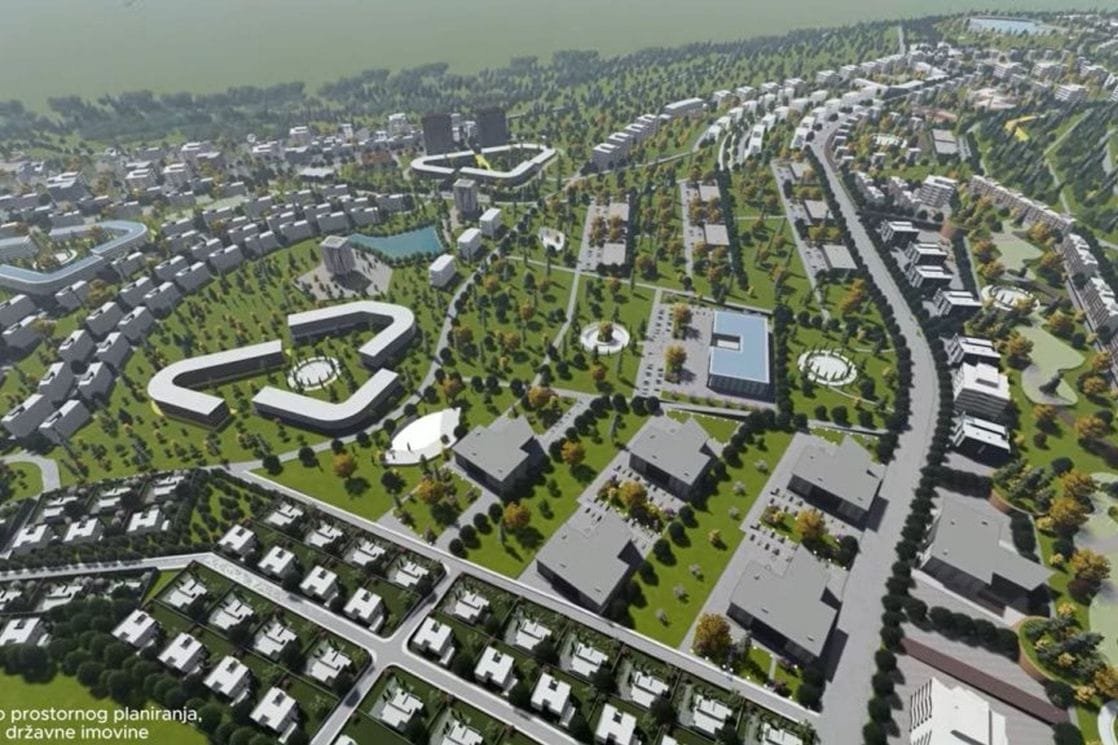
But all of that concerns individual risks, to which those who enter this process uncritically would be exposed. As for collective risk, all of us bear it, and the potential damage this project could cause to everyone is precisely the main motivation for the attention our organization gives it. We see an accumulation of urban, environmental, economic, and traffic problems that this project could only worsen, and which no one is addressing seriously. We emphasize again that the planned number of apartments (around 20,000) at just this one location - which has no water, roads, or sewage - is almost equal to the total growth of the housing stock in all of Podgorica over the past decade. Essentially, it is important not to lose sight of the fact that the „Velje Brdo“ project is not only risky for those who directly apply for apartments, but also infrastructure-wise threatens the entire city of Podgorica, and by tying the development resources of the entire country to such a poorly conceived move, it threatens the country as a whole.
An unsustainable model
Portal ETV: On what basis do you conclude that the project is unsustainable - economically, urbanistically, or environmentally?
Sonja Dragović: Economically: According to data from the selected conceptual design for Block A1, the construction of residential buildings alone amounts to about 2,691 euros per square meter of net residential area, and that is without the cost of communal infrastructure. If citizens are still being promised a price of €1,000 per square meter, or slightly more (as the Government has begun to suggest), the public must receive answers as to who covers the difference, from which budget, and under what subsidy model. It is not the same whether we are talking about apartments that will remain permanently owned by the state or city and available for rent to those who need them most in the decades to come, or apartments that will be heavily subsidized for individual private owners. Furthermore, the national Housing Policy Strategy states that €10 million was allocated for Velje Brdo in 2025, while only €105,490 is planned from the state budget for 2026. On the other hand, according to a UNECE report, the total cost of building the entire settlement is estimated at around €3.5 billion. Put simply: if Montenegro were to allocate €100 million annually exclusively for „Velje Brdo“, which is a huge amount for our small economy, it would take 35 years just to cover construction costs. It is no surprise that the Government avoids a more detailed economic analysis of this idea, because if they actually tried, they would not be able to justify what they are attempting to do.
Urban and infrastructural: We are talking about a hill with no roads, water supply, or sewage system, crisscrossed by power lines, and where the most demanding construction undertaking so far was the building of a fortress for observing the surrounding plain more than 150 years ago. The competition brief written by the Ministry itself states that temporary sewage solutions will be septic tanks, and we know how prone our system is to temporary solutions becoming permanent. It is also unclear how the new settlement would be connected by traffic to the rest of Podgorica - existing plans are incomplete and in conflict both with existing infrastructure and with plans for other road routes, as well as with obligations to protect the remains of Duklja.
Environmentally: Official planning documents for Podgorica recognize the Zeta valley, as well as the areas along the Sitnica River, Velje Brdo, and the Mareza spring as landscapes of special natural value, with recommendations to protect Mareza without disturbing its natural and landscape qualities. No one has yet even attempted to answer how urbanization on this scale would affect the protection of these areas, as well as the Mareza spring itself, which is the main source of drinking water for the entire city.
No clear accountability
Portal ETV: Who bears responsibility if it turns out that the promises related to the project are unrealistic or unachievable?
Sonja Dragović: Formally, the Government of Montenegro, as it is both the investor and initiator. However, in practice, we know that Montenegro’s institutional framework does not really offer mechanisms for establishing accountability in such cases; just look at what is happening with the current case in Baošići and the shifting of responsibility between different actors and institutions. As far as we know, the law does not contain provisions on how to punish, or whom to punish if the Government launches a massive construction project on the edge of a protected area without an economic analysis and feasibility study. If what is most likely to happen does occur - that the project fails and that apartments, if any buildings are built at all, are substandard - responsibility will be diffuse, everyone will point fingers at each other, and citizens, nature, and the public budget will bear the consequences.
For all these reasons, we insist on a critical view of this project and those who aggressively promote it. Our goal is not to undermine the idea of a state program for affordable housing, on the contrary - we believe it is necessary for the state to finally seriously address this serious issue. But what we are seeing is not a serious approach. These unrealistic promises can only deepen the housing crisis, because they delay discussion of real, feasible solutions, consume public resources, and - perhaps worst of all - give false hope to those citizens who have the least chance of securing a roof over their heads in such a system.