




Mugoša: Vaccines administered to children in Montenegro are of high quality, safe and effective
As she explained, the claim of a link between the MMR vaccine and autism originated from a study published in 1998 involving only 12 children, which was subsequently found to contain falsified data as well as serious methodological and ethical irregularities. The paper was retracted, and its author, Andrew Wakefield, lost his medical licence

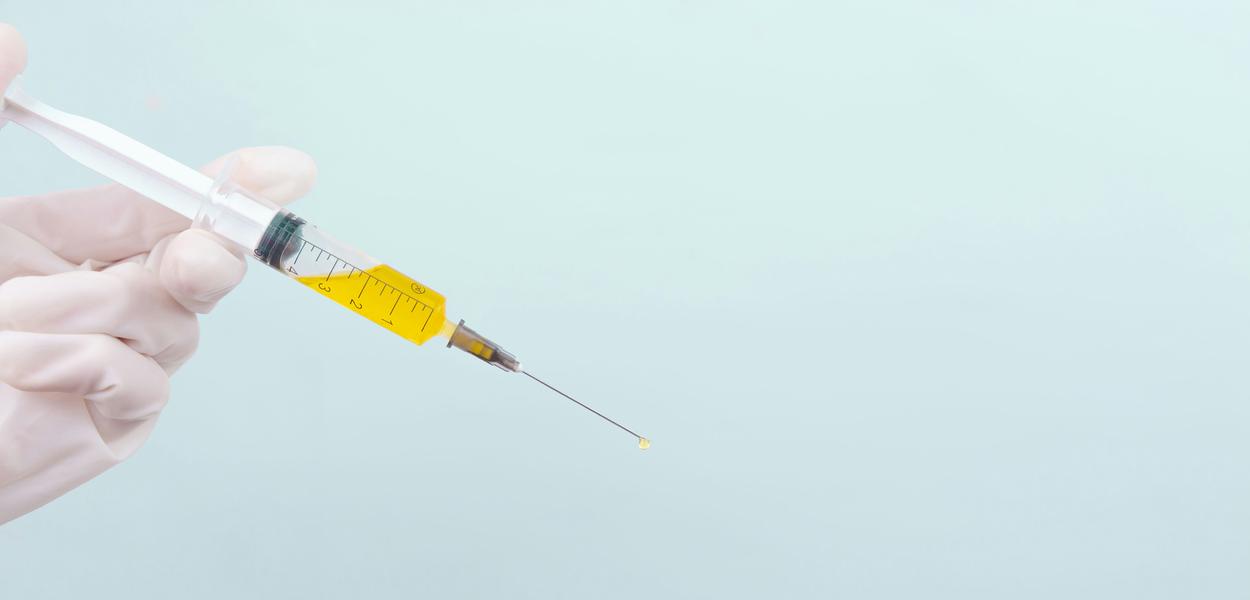
Vaccines are among the most strictly controlled medicines, and parents can be confident that the vaccines administered to children in Montenegro are of high quality, safe and effective – said Director of the Institute for Medicines and Medical Devices Snežana Mugoša.
In an interview with the MINA news agency, she said that before reaching patients, vaccines undergo rigorous quality, safety and efficacy controls by the Institute for Medicines and Medical Devices, while their safety continues to be monitored after they receive marketing authorisation.
Mugoša stressed that Montenegro uses well-established vaccines manufactured in the European Union and administered in EU countries and across the region.
- We additionally verify the quality of every individual batch of vaccines imported into Montenegro, as well as whether authorised pharmaceutical wholesalers comply with the prescribed requirements for their transport and storage, while vaccine safety is continuously monitored for as long as the vaccines remain on the market - Mugoša said.
As she emphasised, behind every dose of vaccine administered to a child in Montenegro stand years of research, rigorous professional and regulatory assessments, and continuous safety monitoring.
Vaccines have become victims of their own success
Asked how it came to be that people today are more afraid of vaccines than of the diseases they protect against, Mugoša said that vaccines have become victims of their own success, because today’s generations are no longer confronted on a daily basis with diseases that once claimed lives and left serious consequences.
People today, she added, live in a world that vaccines themselves have made safer.
- Diseases have not disappeared because we stopped being afraid of them. They have been suppressed because we vaccinated against them. When vaccination coverage falls, we create an opportunity for them to return - Mugoša warned.
According to her, we do not have to experience another epidemic or see seriously ill children in order to understand the value of the protection provided by modern medicine.
Mugoša recalled that, according to a major international study led by the World Health Organization, immunisation against 14 diseases has saved at least 154 million lives over the past 50 years.
That amounts, she said, to more than 8,000 lives saved every day, or around six every minute, while 101 million of the lives saved were infants.
MMR vaccine does not cause autism
Speaking about claims on social media concerning the ingredients of vaccines, Mugoša said that their composition is not a secret, but is listed in the officially approved documentation for each medicine and is available on the Institute's website.
- The substances contained in vaccines each have a specific role, and their safety and the quantities in which they are used are carefully assessed before a vaccine is approved for use in humans - Mugoša said.
She added that some vaccines, for example, contain aluminium salts that enhance the immune response.
- They have been used for decades, in strictly controlled quantities, and scientific evidence clearly shows that the aluminium in vaccines does not cause autism. It is also important to point out that the MMR vaccine, which is most often unjustifiably linked to autism, contains neither aluminium nor mercury compounds that may be used as preservatives in some vaccines - Mugoša said.
She also stressed that, when considering the composition of a vaccine, an individual substance should not be viewed outside its context: “In pharmacology, it is not only important which substance is involved, but also the quantity in which it is present, what purpose it serves, and what scientific evidence exists regarding its safety.”
Mugoša unequivocally stated that the MMR vaccine does not cause autism.
As she explained, the claim of a link between the MMR vaccine and autism originated from a study published in 1998 involving only 12 children, which was subsequently found to contain falsified data as well as serious methodological and ethical irregularities.
The paper was retracted, and its author, Andrew Wakefield, lost his medical licence.
- Contrary to that study, numerous studies involving millions of children in different countries have been conducted in the decades since, and none of those high-quality studies has confirmed that the MMR vaccine causes autism - Mugoša said.
The risk from the disease itself is far greater
Asked why vaccine leaflets list adverse reactions if vaccines are safe, Mugoša explained that medicine safety does not mean that there is absolutely no risk of adverse reactions. Rather, it is necessary to consider the magnitude of that risk in relation to the risk posed by the disease the vaccine protects against.
According to her, adverse reactions following vaccination are generally mild and temporary, such as pain and redness at the injection site, fever, fatigue or a mild rash, while serious reactions are extremely rare.
As an example of the balance between benefits and risks, she cited measles.
Mugoša pointed out that acute encephalitis occurs in approximately one in every 1,000 people who contract measles, while the risk of encephalitis following measles vaccination is less than one case per million doses administered.
- We are talking about a risk that is approximately 1,000 times higher following the disease itself than following vaccination - Mugoša said.
The key point, she emphasised, is that the choice is between the very small risk associated with vaccination and the incomparably greater risk posed by the infectious disease itself.
Mugoša stressed that a health problem occurring after vaccination does not automatically mean that it was caused by the vaccine.
- What happens after a vaccine is not the same as what happens because of a vaccine - she said, adding that the Institute uses its pharmacovigilance system to collect and professionally assess reports of suspected adverse reactions, monitor safety signals and exchange data internationally.
Thousands of views are not scientific evidence
Asked why people sometimes place more trust in a social media post than in a doctor, scientist or regulatory institution, Mugoša said that social media has enabled anyone to make claims without being required to prove them and often without being held accountable for their consequences.
- Personal experience is not the same as scientific evidence, nor is the popularity of a post proof of its accuracy. Thousands of views cannot replace high-quality clinical or epidemiological research - Mugoša stressed.
She advised parents not to believe blindly, but to ask questions, verify information and seek evidence, while also paying attention to who is speaking, what knowledge they possess and what they base their claims on.
- When our car breaks down, we go to a mechanic. When we establish a company, we do not check tax regulations in social media comments; we ask someone who deals with them professionally. Yet when it comes to something that is most precious to us - our child’s health - it sometimes happens that we place our trust in people online who lack professional knowledge and competence, rather than in those who have spent years studying to care for our health - Mugoša said.
Mugoša also pointed out that independent regulatory institutions exist precisely because of the commercial interests of pharmaceutical companies.
As she explained, a medicine is not granted authorisation because its manufacturer claims that it is good, but only after the Institute’s experts, based on documentation and scientific data from laboratory, preclinical and clinical studies, confirm its quality, safety and efficacy.
- Between the manufacturer’s commercial interest and the patient stands the independent professional assessment of the Institute’s experts, carried out in accordance with European regulatory standards - Mugoša said.
Vaccination protects others as well
She advised parents to seek reliable information primarily from their child’s chosen paediatrician, while official information on specific medicines or vaccines is available in the Institute's Human Medicines Database.
Mugoša told parents who are still afraid of vaccination that fear and evidence are not the same thing.
- We should not wait for measles, diphtheria or other diseases to return before we once again understand the value of vaccination - Mugoša said.
She stressed that by vaccinating, parents are not only protecting their own child, but also babies who are too young to be vaccinated, children who cannot receive certain vaccines because of illness or treatment, as well as people whose immune systems are unable to provide sufficient protection.
- Vaccination is therefore both an act of protecting one’s own child and an act of responsibility towards others. So vaccinate your child according to the vaccination schedule, and if you are late with any vaccine, do not delay any further - protect your child as soon as possible - Mugoša concluded.