




MIAI Institute Helps Launch First Global Indoor Air Quality Policy Database

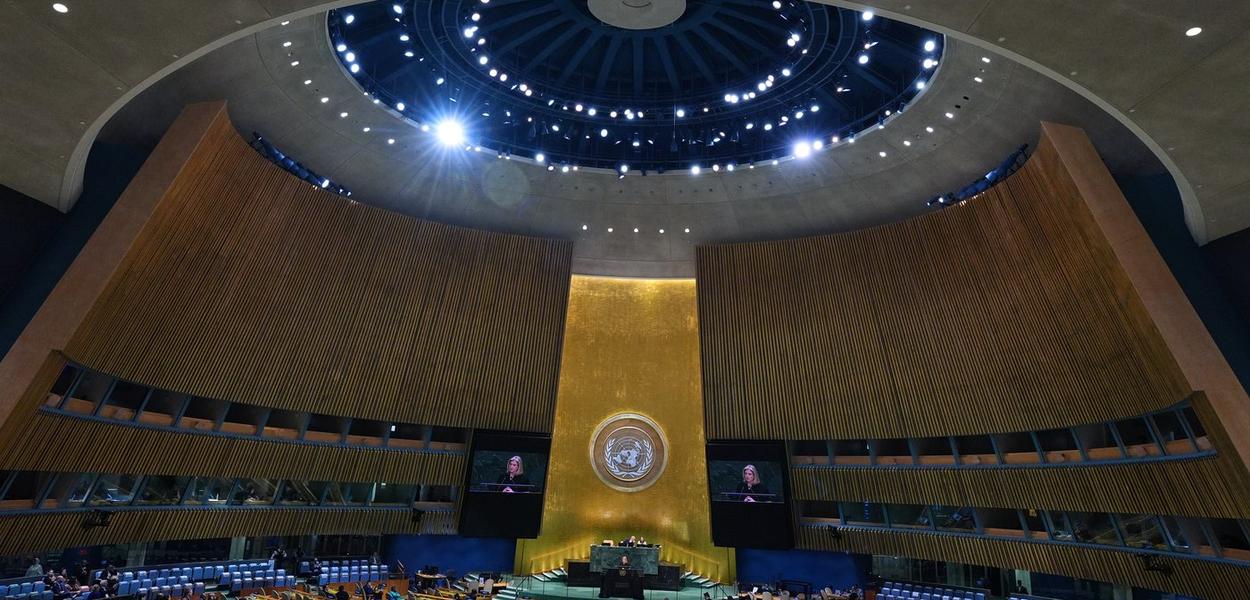
The Montenegrin Institute for Advanced Innovation (MIAI) is helping lead a global effort to strengthen indoor air quality policies, as world leaders gather at the 81st United Nations General Assembly to confront disease threats, wildfires, and extreme heat, as reported by wellcertified.com.
The Brown University Pandemic Center, Montenegrin Institute for Advanced Innovation (MIAI), Air Club and the International WELL Building Institute today released the Global Indoor Air Quality Policy Database, a tool to help governments strengthen resilience against many threats at once. It is the first comprehensive repository of country indoor air quality (IAQ) policies, cataloguing 253 policies across 53 countries.
Healthy indoor air is among the most practical measures available to governments: rather than asking people to change their behavior, it improves the buildings we already have. It builds resilience against pandemics and wildfire smoke while improving everyday health and student performance. Schools are a natural place to start, where children spend most of their waking hours. MIAI is providing a replicable blueprint for advancing healthy indoor air by deploying open-source air cleaning technologies across every school in Montenegro. The database will be spotlighted at the UNGA High-Level Side Event, "Healthy Indoor Air in Schools: Every Breath Shapes Learning,” co-sponsored by the governments of Montenegro, France and Eswatini.
A growing wave of indoor air policy
In many places, no health-based standards govern indoor air at all, leaving people exposed to pathogens, pollutants, and other unseen risks. That is changing fast: 42% of the policies in the database were enacted in 2020 or later, a wave of government action that accelerated in the wake of COVID-19.
The database also maps where the gaps remain:
- Responsibility is fragmented. Only 8 of 53 countries (15%) have a clear government lead on indoor air quality. In the rest, responsibility is scattered across health, energy, environment, education, housing, and labor agencies.
- Legal force is uneven. While 64% of policies are legally binding, most fall under workplace safety law, building codes, and energy regulation, where indoor air quality is a secondary concern. Health-based standards written to protect occupants remain far less common.
- Schools are largely uncovered. Only 25 of 253 policies address education settings, and fewer than half of those are binding.
An open-source resource built for collaboration
The database features:
- All 253 policies, filterable by country, domain, and instrument type.
- In-depth profiles of 17 countries leading the way on indoor air governance, showing how their approaches can be replicated.
- An IAQ Policy Maturity Framework for self-assessment across five criteria: coordination, monitoring, health-based standards, enforcement, and implementation support.
- Recommendations for policymakers across all five criteria, with exemplar countries.
- Published as Version 1.0, the database welcomes input from collaborators. Developed with financial support from the Montenegrin Institute for Advanced Innovation and Balvi, it is available at airclub.org/database.
About the Brown University Pandemic Center
The Pandemic Center at Brown University’s School of Public Health works to prevent, reduce vulnerabilities to, and increase resilience to pandemics, other biological emergencies, and the harms they pose to health, peace, security, and prosperity.
About Montenegrin Institute for Advanced Innovation
The Montenegrin Institute for Advanced Innovation (MIAI) is an independent, non-profit, philanthropic institute based in Podgorica, Montenegro, operating worldwide.
Building systems together with the communities and institutions, educating people who will operate them and generating evidence-based durable standards.
About Air Club
Air Club is a global coalition of indoor air quality champions working to make indoor air healthy. Air Club launched the Global Pledge for Healthy Indoor Air, which calls on governments and organizations to prioritize this crucial issue.
About the International WELL Building Institute
The International WELL Building Institute (IWBI) is a public benefit corporation and the global authority for transforming health and well-being in buildings, organizations and communities. In pursuit of its public-health mission, IWBI mobilizes its community through the development and administration of the WELL Building Standard (WELL), WELL for residential, WELL Community Standard, its WELL ratings and management of the WELL AP credential. IWBI also translates research into practice, develops educational resources and advocates for policies that promote people-first places for everyone, everywhere.