




Medojević: While mothers skip meals to feed their children, the government spends millions on travel and receptions
A state is not measured by the extravagance of its receptions, but by its ability to protect the dignity of its citizens. It is hypocritical to talk about European standards while people cannot afford bread, and every euro spent unnecessarily represents an additional injustice to those who are barely surviving - Medojević says

While higher wages, economic progress and European standards are being promised in Montenegro, everyday life is far harsher for many of its citizens: they struggle to put food on the table, pay their bills and afford essential medicines. As prices continue to rise relentlessly and government officials speak of the achievements of economic reforms, more than one-fifth of the population remains at risk of poverty. Behind these statistics are not merely percentages, but children whose parents cannot afford enough food, elderly people forced to choose between medicines and basic groceries, and families for whom each new day brings further uncertainty.
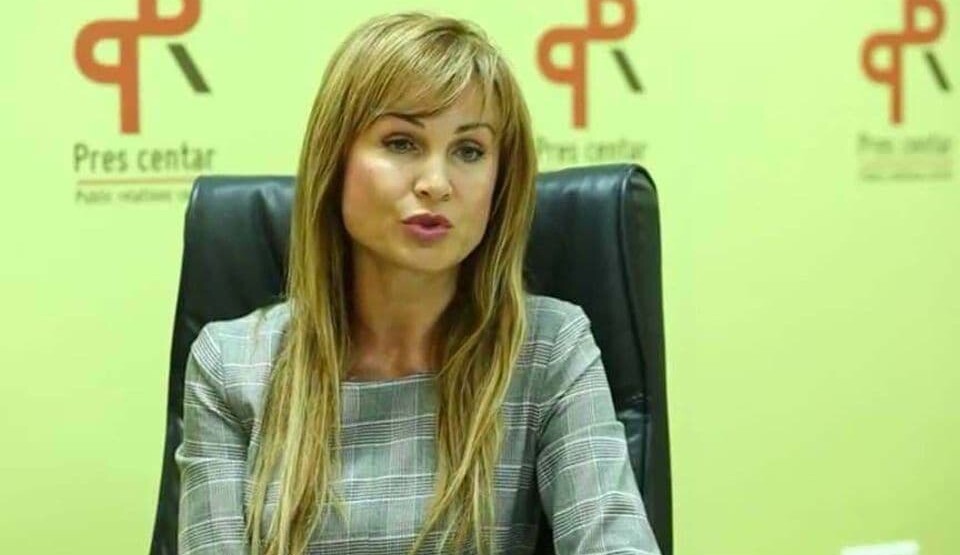
World Food Day, observed on 16 October, and the International Day for the Eradication of Poverty, marked on 17 October, are therefore more than just dates on the calendar; they are a wake-up call. We spoke with Marina Medojević, Director of the Food Bank of Montenegro, about poverty that often remains hidden behind statistics, hunger that is rarely discussed enough, the state's responsibility and the need for a fairer social policy. For years, she has warned that social protection must not be treated as charity, but as a right to a life worthy of human dignity.
ETV PORTAL: According to data from the Action for Social Justice organisation, the central government administration spent more than €4.6 million on official travel and almost €550,000 on hospitality and representation expenses in just six months. While the public sees photographs of smiling government officials on trips and at formal receptions, numerous families cannot even afford bread. How devastating is this contrast, and what message does the government send to citizens when millions are allocated to travel and hospitality while the poorest are barely surviving?
MEDOJEVIĆ: The contrast between millions of euros spent on official travel and hospitality and citizens who cannot afford even bread is not merely devastating. It raises serious questions about the state's priorities and its attitude towards people living in poverty.
While millions of euros are spent on official travel and hospitality, numerous families across Montenegro struggle every day to secure basic groceries, pay their bills and provide their children with a decent life. Even the most basic necessities have become a serious financial burden for them.
Every euro from the state budget is taxpayers' money, including money contributed by people who are barely making ends meet. The public therefore has the right to know what results official trips deliver, how necessary they really are and what benefits citizens derive from them.
What is particularly concerning is that poverty is often viewed exclusively through statistics, while real people stand behind those figures: parents who go without food so their children can eat; pensioners who must choose between medicines and groceries; and workers whose incomes are insufficient even to cover basic living expenses.
When these citizens see photographs of lavish receptions and official trips while being forced to turn to humanitarian organisations for food parcels, the message they receive is that their needs are not among the government's priorities. Such an attitude deepens public distrust of institutions and reinforces a sense of injustice.
The Food Bank believes that the state must demonstrate far greater social responsibility. Unnecessary expenditure must be reviewed, public spending must become more transparent, and more resources must be directed towards those who need them most: children, single parents, persons with disabilities, unemployed people, pensioners on low incomes and families living on the brink of poverty.
The state must not forget people who are barely surviving. It is not measured by the extravagance of its receptions, the number of trips its officials take or the sums spent on hospitality, but by its ability to protect the dignity of its citizens. No international visit and no formal reception can be more important than a person's right to sufficient food, a roof over their head and the conditions necessary for a life worthy of human dignity.
„The poor are required to prove their poverty, while millions in expenditure are taken for granted“
ETV PORTAL: For years, the Food Bank has warned that the eligibility criteria for social assistance are so strict that many people living in severe hardship are left without support. How is it possible for the state to spend hundreds of thousands of euros on hospitality while imposing almost insurmountable administrative barriers on the poorest? Is it not shameful that citizens must prove just how poor they are, while public spending on travel and receptions is virtually taken for granted?
MEDOJEVIĆ: The Food Bank of Montenegro has been warning for years that the eligibility criteria for social assistance are excessively strict and that many citizens living in severe hardship are left without support.
It is particularly distressing that the poorest people are required to continually prove their poverty, while public spending on official travel, receptions and hospitality is often taken for granted and insufficiently scrutinised.
The social protection system must be designed around the needs of the people it is supposed to help. Citizens who cannot afford basic necessities must not be subjected to exhausting procedures, repeated demands to prove their hardship and lengthy waits for decisions.
The state must develop a simpler, more accessible and fairer system that recognises the actual needs of families and individuals.
It is particularly important to align eligibility criteria with the real cost of living. The fact that someone formally owns a certain asset or receives a minimal income does not mean that they can afford food, medicines, housing and other basic necessities.
Many employed people, pensioners, single parents, persons with disabilities and families with children live on the poverty line but remain outside the support system because of the existing rules.
At the same time, the public has the right to full transparency when it comes to expenditure on hospitality, official travel and receptions. It must be clearly disclosed how much money has been spent, for what purpose, who benefited from these activities and what concrete results were achieved.
Citizens cannot be expected to accept such expenditure without question while insufficient funds are allocated to helping people who cannot even afford basic necessities.
The Food Bank believes that the state must establish clear priorities. No reception, trip or hospitality expense should take precedence over citizens' rights to food, decent housing, medicines and a dignified life.
Social protection must be a right available to every citizen in need, not charity that people have to beg for. A state is not measured by the extravagance of its receptions, but by its ability to protect the dignity and fundamental rights of the most vulnerable.
ETV PORTAL: The Food Bank has been calling for a systemic solution for years for families who do not know whether they will have a meal tomorrow. How devastating is it that the problem of hunger is left to humanitarian organisations and the goodwill of citizens, instead of being one of the government's foremost priorities?
MEDOJEVIĆ: It is devastating that the problem of hunger has been left for years to humanitarian organisations and the goodwill of citizens, instead of being one of the government's foremost priorities.
Families who do not know whether they will have a meal tomorrow must not have to depend on occasional food parcels. They must be able to rely on a social protection system that provides them with essential support in a timely manner.
The Food Bank of Montenegro has been calling for a systemic solution for years and warning about the scale of poverty. According to statistical data, as many as 20.9 per cent of the population are at risk of poverty.
This is a serious warning that the existing system does not provide sufficient security for a large number of citizens.
Humanitarian organisations can provide assistance, offer support and draw attention to problems, but they cannot assume responsibility that belongs to the state.
The state must expand the coverage of social benefits, provide assistance to people who fall outside the existing support system and guarantee that no one is deprived of basic necessities.
The fight against hunger must not be an occasional humanitarian initiative, but a lasting and unequivocal obligation of the state. No one should be left without food or a dignified life simply because they lack sufficient money or fail to meet an administrative requirement.
„Humanitarian organisations will not be able to meet the growing number of requests for assistance“
ETV PORTAL: Prices are rising every day, and even families with more stable incomes are finding it increasingly difficult to cope with higher costs. At the same time, reports of millions in government administrative expenditure are provoking public outrage. Are you afraid that the number of people needing assistance from the Food Bank will exceed the capacity of humanitarian organisations? What would you say to government officials who decide how public money is spent while some citizens are forced to choose between bread, medicines and paying their electricity bills? And how hypocritical is it to talk about European standards if the state fails to protect people who cannot even afford basic necessities?
MEDOJEVIĆ: The Food Bank of Montenegro fears that, if prices continue to rise, the number of citizens in need of assistance will continue to grow.
We are already being approached by families with children, pensioners, single parents, persons with disabilities, unemployed people, and even people who have jobs but whose incomes are insufficient to cover basic living expenses.
This is particularly concerning because it shows that having a job is no longer always a guarantee of protection against poverty.
Humanitarian organisations cannot and must not serve as a substitute for the state's social protection system. Their resources are limited, while people's needs continue to grow.
Families and individuals facing hardship must have the right to timely and adequate assistance from the state.
Our message to government officials is that public money must be spent responsibly, transparently and in accordance with citizens' actual needs.
The priorities must be protecting the most vulnerable, increasing social benefits, introducing measures to control the prices of essential food items and ensuring a decent standard of living for all citizens.
It is hypocritical to talk about European standards and social justice while citizens cannot afford basic groceries and the state fails to protect them from poverty.
European values are not measured solely by laws, strategies and the harmonisation of regulations. They are measured by how the most vulnerable are treated and by the willingness of institutions to direct public resources where they are needed most.
If we want a society that genuinely belongs to the European community of values, we must build a system in which no child faces hunger, no elderly person is forced to choose between food and medicines, and no working person lives in constant fear of poverty.
The fight against poverty must be a lasting, clear and accountable obligation of the state, not a matter of occasional measures and political promises.
„I would ask them: Do you know what it is like when a mother has nothing to feed her child?“
ETV PORTAL: Finally, Ms Medojević, imagine that today you brought before government officials, returning with smiles from official trips and formal receptions, a mother who has nothing to feed her child, a pensioner who cannot afford medicines, and a person who works but still goes hungry. What would you ask them? Do you think they would feel ashamed, or has citizens' poverty become just another statistic that is easiest to ignore?
MEDOJEVIĆ: I would ask government officials: Do you truly understand how these people live? Do you know what it means to choose between bread, medicines and paying the bills? And do you consider it acceptable for citizens to go hungry while public money is spent on expensive cars, official trips, formal receptions and hospitality?
I would also ask whether they feel even the slightest discomfort when they hear the stories of people who live in daily fear of hunger, or whether citizens' poverty has become just another statistic that is easiest to ignore.
The truth is painful. Behind every poverty statistic is a real person.
A mother who skips a meal so her child can eat. A pensioner who chooses between medicines and food. An employed citizen whose salary is insufficient to cover basic living expenses.
These are not numbers. They are human lives, families, parents and children - people who have the right to security and dignity.
I would remind government officials of something they know but often forget: public money must be spent responsibly, transparently and in accordance with citizens' actual needs.
When some people are forced to choose between bread, medicines and paying their electricity bills, every unnecessary and irrational expenditure represents an additional injustice.
The priorities must be protecting the most vulnerable, increasing social benefits, controlling the prices of essential food items and creating the conditions for a dignified life for all citizens.
The Food Bank of Montenegro has been calling for a systemic solution for years because no one should be deprived of food or a dignified life.
It is hypocritical to talk about European standards and social justice when citizens cannot afford basic groceries and the state fails to protect them from poverty.
European values are not measured solely by laws and declarations, but by how the most vulnerable are treated and by the willingness to direct public resources where they are needed most.
The fight against hunger must not be an occasional humanitarian initiative, but a lasting and unequivocal obligation of the state. The government must demonstrate that citizens are not merely numbers in a statistic, but human beings whose dignity, health and lives must take precedence over every unnecessary expense and every privilege.