




Grgić to ETV Portal: „Euro Model“ is Russian roulette, inflation will plug budget gaps

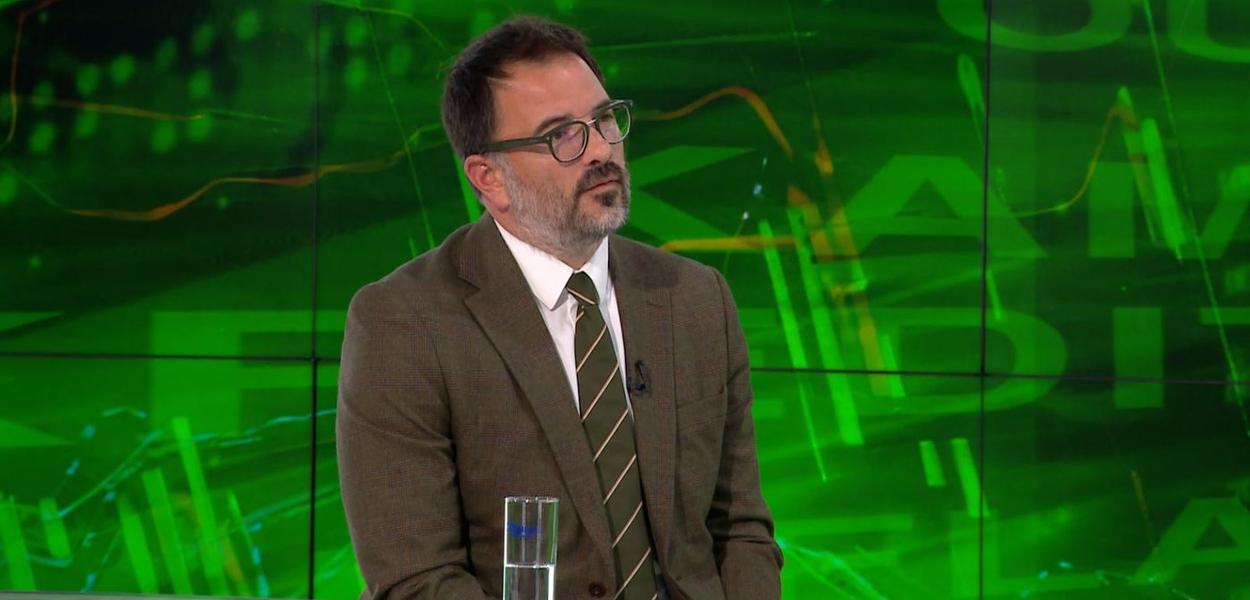
The planned wage increases under the „Euro Model“ could, instead of delivering the expected economic boost, deal another blow to micro and small businesses, lead to job losses and rising prices, and put additional pressure on public finances. Inflation, meanwhile, could serve as a means to plug budget gaps - according to doctor of international political economy and an associate at the Faculty of Political Science, Mladen Grgić.
He warns for Portal ETV that higher labour costs are not being accompanied by reforms, new investment or productivity growth that would justify such a move, and that a failure to achieve the anticipated economic growth could further exacerbate existing problems. He does not rule out additional borrowing or increases in VAT and other taxes, describing the introduction of economic measures ahead of elections as „Russian roulette“.
At the same time, he believes the public sector will become an even more attractive employer, while the private sector will be forced to rationalise operations, automate processes and reduce staffing wherever higher costs prove unsustainable.
MICRO AND SMALL BUSINESSES MOST AT RISK
- An increase in the minimum wage on this scale, combined with the introduction of an additional wage bracket, represents a serious blow in terms of labour costs. Yet it is not accompanied by significant economic reforms, new investment or corresponding productivity growth. These should be prerequisites for an increase of this kind - Grgić said.
According to him, micro and small businesses are the most vulnerable, particularly those engaged in manufacturing or operating in the tourism sector.
- Micro and small businesses, especially micro-enterprises, have less capital, face greater difficulties accessing finance and are often labour-intensive, leaving them with less room to absorb such an increase in costs. That is why they are the first to be hit by measures of this kind. The regional factor is also important: businesses in areas where opportunities to generate additional turnover are limited will be particularly affected. You can increase their costs by law, but you cannot increase their turnover - Grgić said.
He warned that industry has been losing competitiveness for years due to rising labour costs, limited technological progress and a business environment that is failing to improve.
Tourism, he noted, is also a labour-intensive sector, meaning that rising labour costs directly affect profitability and may be passed on to prices, undermining price competitiveness.
- There is a limit to how much can be offset by raising prices. If higher prices are not backed by better quality and greater productivity, we will fall behind our competitors - Grgić warned.
According to him, the consequences could include higher prices, a reduction in employment and even the closure of some businesses.
- In other words, both employers and employees could be affected - Grgić said.
PUBLIC SECTOR TO BECOME EVEN MORE ATTRACTIVE
Grgić believes the planned wage increases will make the public sector an even more desirable employer. In his view, it is already attractive because of both salaries and working conditions.
- It already is, and not solely because of pay, but also because of the greater comfort it offers, which is not characteristic of the private sector. It will now become even more attractive, on top of the job security it already provides - Grgić said.
In the private sector, by contrast, he expects businesses to adapt to the new costs.
- In the private sector, we should expect rationalisation, automation wherever possible, and job cuts where higher costs cannot be sustained - he warned.
ADDITIONAL BORROWING MAY BE NECESSARY
Commenting on the budgetary implications of implementing the „Euro Model“, Grgić said that estimating the costs was primarily the responsibility of the Ministry of Finance, but stressed that the calculations were far from straightforward and that many questions remained unanswered.
- That is primarily a question for the Ministry of Finance, because these are calculations it should have made long ago. But they are not straightforward, as the model itself raises numerous questions that even its creators - the so-called „N. L. team that wins“ - have failed to answer - Grgić said.
He believes additional funds will have to be secured to finance the commitments already made and does not rule out further borrowing.
- Money will certainly have to be injected into the system. I fear that, alongside the pressure on the capital budget and the quality of public services, additional borrowing will also prove necessary - he said.
He assessed that the projected deficit of five per cent of gross domestic product (GDP), announced by the prime minister, might not account for all the potential consequences of implementing the model.
- The deficit forecast of 5% of GDP announced by the prime minister strikes me as conservative, and I fear that many knock-on effects have not been taken into account - Grgić said.
He also made another important observation.
- Of course, once again, the Government’s „best friend“ will be inflation, which will help plug budget gaps through higher nominal tax revenues, while eroding the real value of people’s wages - he said.
He also warned that the model’s sustainability depended on the assumed rate of economic growth, which might fail to materialise if businesses closed and workers were laid off.
- The model’s authors assume that the economy will grow. But if a negative scenario unfolds - involving business closures, layoffs and similar developments - the indicators will start moving downwards. This model offers so many wrong turns that even the most optimistic scenario gives us no reason for long-term optimism - the ETV Portal interviewee said.
WHY DOES THE GOVERNMENT ALWAYS RESORT TO PRE-ELECTION SHOCKS?
Grgić believes that phasing in the wage increases and introducing a transition period could ease the pressure on the economy.
- A gradual rollout and a transition period could ease the pressure, but the key question is why the Government does not develop a gradual and sustainable wage-increase policy alongside an economic reform agenda. Why does it always resort to pre-election shocks - the economist asked.
He believes the aim of such measures is to improve the Government’s standing ahead of elections.
- There are various ways for a government - which presumably expects to remain in office for its full term - to offer an economic policy designed to last that entire term - Grgić said.
Reflecting on the economic policies pursued so far, he recalled the „Europe Now 2“ programme, which, he said, had been an election promise that was only partially fulfilled and had produced a series of negative effects.
- We had „Europe Now 2“ as an election promise, its partial implementation, a series of negative effects and three years of the Government being asleep at the wheel when it came to economic policy. Dealing with the economy only before elections and for electoral purposes is precisely what leads us to this kind of Russian roulette - Grgić said.
IT DOES NOT RULE OUT INCREASES IN VAT AND OTHER TAXES
Speaking about the possibility of tax increases to secure additional budget revenue, Grgić said such pressure could emerge if revenues proved insufficient to cover the commitments already made.
- If it turns out that revenues cannot cover the commitments already made, it is reasonable to expect pressure to increase VAT or other taxes, particularly if international institutions insist on reducing the deficit - Grgić said.
He stressed, however, that a more detailed analysis would be needed to assess any potential tax rate increases, as the size of the budget shortfall that would need to be covered remained unknown.
- Now, determining any potential rates requires a more in-depth analysis and depends on the size of the gap that needs to be filled. No one knows yet how large it would be. Even those who devised the so-called „European“ model, which does not exist anywhere in Europe, are speculating - just as those of us who criticise it are. The former, however, bear a greater responsibility - Grgić concluded.