




European Commission Rule of Law Report: Pressure and attacks on prosecutorial authorities and their decisions continue

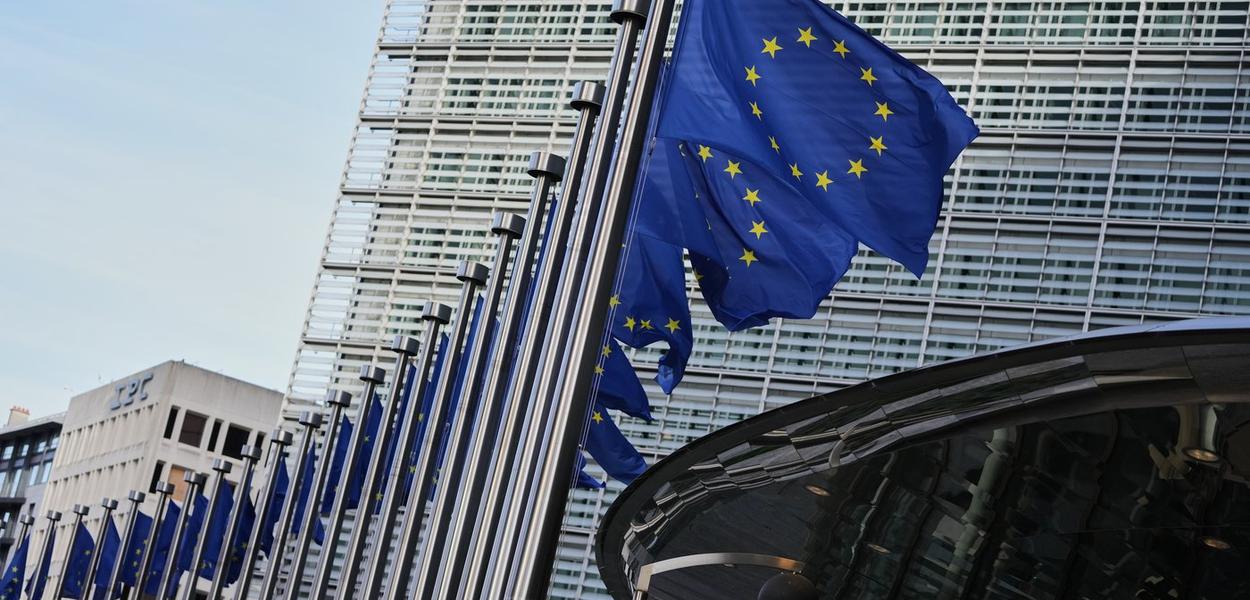
The European Commission has presented its annual Rule of Law Report, which covers not only EU member states but also countries participating in the EU enlargement process.
In the chapter on Montenegro, the report focuses on the judiciary, the prosecution service, corruption, political party financing, access to information, the media and civil society, the Public Broadcaster's correspondent in Brussels reported.
In the section on media pluralism and media freedom, the report states that transparency of media ownership in Montenegro has improved, but notes growing concerns over the influence of media outlets owned by companies from Serbia. It adds that the authorities continue efforts to implement a zero-tolerance policy toward violence against journalists, although isolated incidents of attacks continue to occur.
Regarding judicial independence, the report states that pressure and attacks on prosecutorial authorities and their decisions have continued in Montenegro, despite the fact that the Judicial and Prosecutorial Council has established a mechanism for reporting undue influence. It also notes that Montenegro has adopted constitutional amendments aimed at strengthening the independence of the Judicial Council and the Prosecutorial Council.
The report concludes that Montenegro continues to face challenges in ensuring sufficient human resources within the judiciary.
It further highlights that the number of final judgments and convictions in high-level corruption cases has increased.
The report also states that law enforcement institutions responsible for combating corruption have become more effective and better coordinated.
In the area of public procurement, it notes that safeguards in high-risk sectors have been strengthened through the introduction of electronic procurement, although monitoring the effectiveness of those measures remains difficult due to a lack of relevant data.
With regard to political party financing, the report states that Montenegro's legal framework has not yet been fully aligned with the recommendations of the OSCE Office for Democratic Institutions and Human Rights (OSCE/ODIHR) and the Council of Europe's Group of States against Corruption (GRECO), particularly in relation to improving transparency and oversight of political party spending.
The report also notes that Montenegro adopted new amendments to the Law on Free Access to Information in December 2025, but that challenges remain in the law's implementation and enforcement.
In the section on civil society, the report states that the Montenegrin authorities have committed to aligning national legislation with the EU acquis within the existing framework for inclusive legislative processes. However, challenges remain in legislative planning and in ensuring effective public consultations.
The document explains that the participation of enlargement countries in the Rule of Law Report, alongside EU member states, and the gradual inclusion of additional enlargement partners as they become ready, further supports their reform efforts to firmly and irreversibly entrench the rule of law before accession and to ensure that these high standards are maintained after joining the European Union.
The country chapters are based on the Commission's independent qualitative assessment, focusing on a synthesis of significant developments since July 2025.
While the Rule of Law Report includes country-specific recommendations for EU member states, recommendations for candidate countries are issued separately as part of the European Commission's annual Enlargement Package.