




Businesses call for an impact assessment and a phased implementation of the Euro model, as well as support for domestic production
The message from the business community is clear: wage increases must bring genuine and long-term improvements in living standards, rather than generate additional inflationary pressures, job losses and a weakening of domestic businesses - the statement said

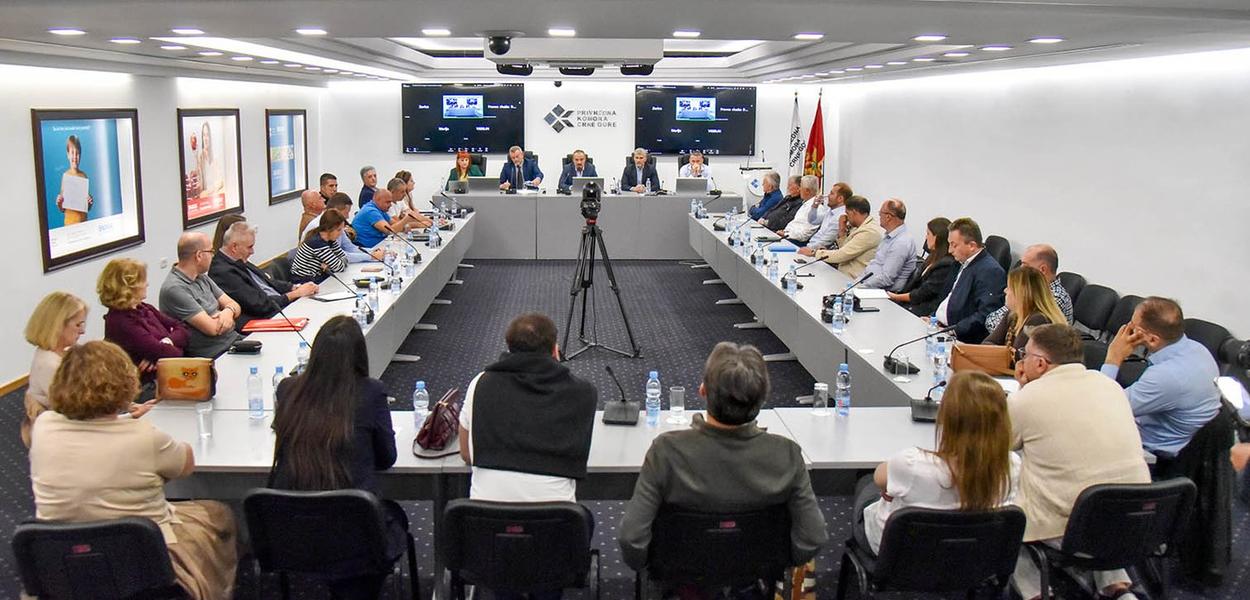
Sustainable wage growth cannot rely solely on changes to the tax calculation system or the administrative setting of wage levels. Instead, it must be accompanied by conditions that safeguard production, competitiveness and jobs, the Board of the Association of Metallurgy and Metal Processing Industry concluded at a joint session with the Board of the Association of Small and Medium-Sized Enterprises and the Association of Accounting Agencies.
According to the Chamber of Economy of Montenegro, the business community’s message is that wage growth must be accompanied by higher productivity and the creation of added value, while taking into account the real economic capacity of businesses.
- Improving employees’ living standards is an important goal, but the manner and pace of implementing the proposed measures must be carefully defined in order to avoid negative consequences for companies’ operations, employment and investment / the meeting concluded.
President of the Board of the Association of Small and Medium-Sized Enterprises, Aleksandar Minić, said that businesses were deeply concerned about the announced Euro model, as they believed that wage increases were not aligned with productivity growth, which could jeopardise companies’ operations.
As stated in the press release, he stressed that businesses were not opposed to wage increases, but that any such increases had to be based on the economy’s actual capacity.
Otherwise, he warned, the measures could lead to inflation, lower employment, the closure of some small businesses and a decline in investment. He also emphasised that small and medium-sized enterprises did not have sufficiently large capital reserves to absorb additional financial burdens without serious consequences.
Minić said that the Board advocated gradual wage increases over a longer period, supported by clear and precise information on how the announced model would be implemented.
Boban Stanić, President of the Board of the Association of Metallurgy, said that the metal processing industry was a sector with specific characteristics and that the significant role industrial production had played in Montenegro’s development should not be overlooked.
According to him, some of the country’s current problems stem precisely from the lack of production, making it necessary to provide additional incentives for economic development and strengthen productive industries.
- Employers are surprised by the announced model and concerned about the lack of sufficiently precise details, particularly regarding additional operating costs. A partnership between the state and the business community must be established, with clear information enabling employers to assess the consequences of the proposed measures - Stanić said.
Businesses support wage growth and improvements in employees’ living standards, but believe that these must be underpinned by higher productivity, competitiveness and added value.
- They therefore call for analyses of the expected effects of the measures on operating costs, prices, employment, investment and competitiveness to be presented to the business community, while taking into account differences between sectors. They particularly emphasise the need for timely and meaningful dialogue with businesses before decisions are made that significantly alter operating conditions. Without clear economic analyses, dialogue with the business community and concrete measures to increase productivity, the proposed model cannot be supported - the Chamber of Economy of Montenegro said.
According to businesses, rising labour costs could feed through into the prices of raw materials, intermediate goods and services, intensify inflationary pressures and weaken the competitiveness of domestic producers.
- This is particularly pronounced among export-oriented companies, which cannot always pass higher costs on to customers in international markets. Consequently, there is a risk of reduced investment, production and employment. Particular concern was raised over the risk of a substantial increase in total labour costs, which, according to estimates from the business community, could be exceptionally high in certain sectors and companies. Increases in the minimum wage affect not only employees earning the minimum wage but also put pressure on the entire wage structure, including professional and managerial staff - the statement noted.
It is therefore essential to assess the overall financial impact of the proposed model rather than focus solely on the nominal increase in the minimum wage.
- Attention was also drawn to the potential knock-on effects of rising operating costs. Higher labour costs may be passed on through the prices of goods and services, further fuel inflation, reduce citizens’ purchasing power and weaken the competitiveness of domestic companies against imported goods and foreign competitors. Micro and small enterprises are particularly vulnerable, as they have limited financial reserves and considerably less capacity to absorb sudden cost increases - the statement said.
Board and association members also pointed to an expected decline in hiring, particularly among young people and university graduates, as well as the potential outflow of capital and labour. Additional concerns were raised about the position of small and medium-sized enterprises and their suppliers, which could be particularly exposed to the consequences of the new costs.
- They therefore believe that wage increases must be accompanied by a broader support programme for domestic production, focused on equipment modernisation, automation, digitalisation, energy efficiency, workforce skills development and more favourable financing for investment. They also highlighted the need to increase the existing funding of €3.5 million allocated to the Programme for Improving the Competitiveness of the Economy for 2026 several times over in the following year, so that it is sufficient to achieve the necessary productivity gains, while establishing additional support instruments - the statement said.
Businesses warned that, without appropriate adjustments and accompanying measures, investment, development projects and existing jobs could be jeopardised, while the risks of declining employment, some business activities moving into the informal economy and the closure of the most vulnerable enterprises could increase.
- As an additional reason for caution, they cited macroeconomic indicators and international comparisons highlighting the need to assess wage levels in relation to productivity, GDP per capita and the country’s overall economic strength. It was stressed that a sustainable wage policy must be based on the economy’s real capacity to generate added value and maintain competitiveness - the Chamber of Economy of Montenegro said.
The key demands include the preparation of detailed economic analyses and projections of the new model’s impact on the economy and public finances, consideration of the possibility of implementing the measures in phases, and the development of concrete support mechanisms for businesses.
- They also stressed the need for a clearer development policy that will stimulate domestic production, strengthen export competitiveness and reduce dependence on imports - the statement specified.
An appeal was made for detailed analyses to be conducted and open dialogue between the Government and business representatives to be ensured before the model is finalised.
- The message from the business community is clear: wage increases must bring genuine and long-term improvements in living standards, rather than generate additional inflationary pressures, job losses and a weakening of domestic businesses. The goal of economic measures must be to strike a balance between employees’ interests and employers’ ability to operate sustainably, while creating conditions for productivity growth, new investment and the long-term competitiveness of Montenegro’s economy - the statement concluded.